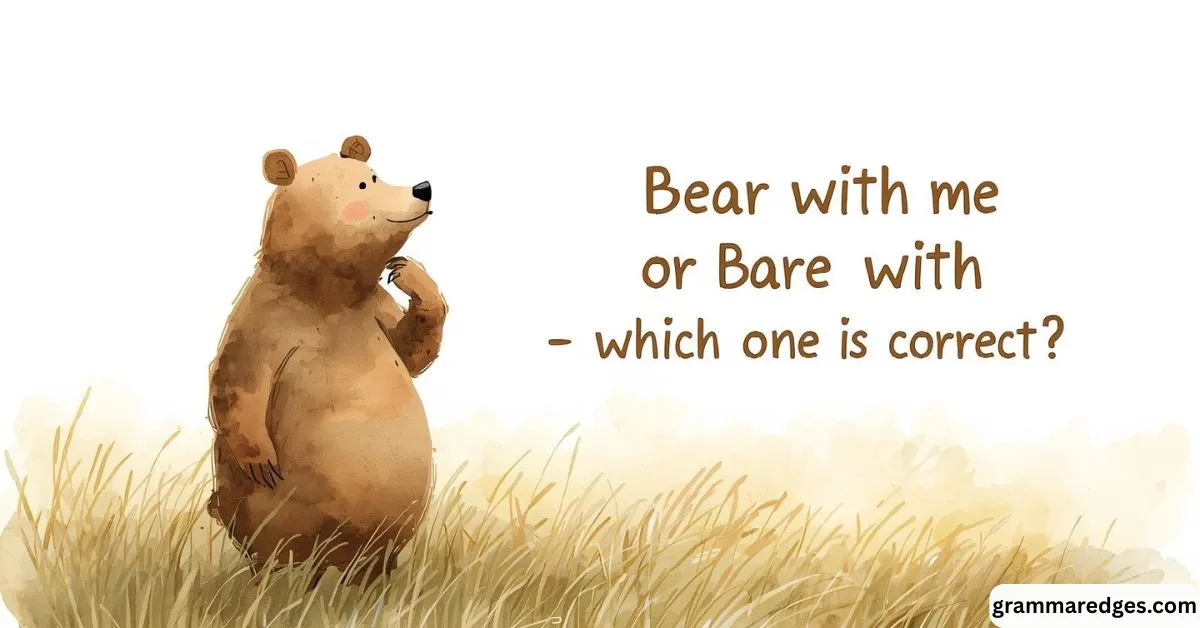
If you’ve ever paused while typing “bear with me or bare with me”, you’re not alone. This is one of the most searched English confusion phrases online. People hear it often in meetings, emails, and customer support messages—but spelling it correctly feels tricky.
Both bear and bare are real English words, which makes the confusion even worse.
The problem is simple: the phrase sounds the same, but the meanings are very different. One is polite and professional. The other can sound awkward or even embarrassing if used the wrong way. That’s why people search this keyword—to avoid mistakes in emails, social posts, and formal writing.
This article solves that confusion once and for all. You’ll get a quick answer, learn the origin, see British vs American usage, explore real-life examples, and understand which spelling you should use based on your audience. By the end, you’ll never second-guess this phrase again.
Bear With Me or Bare With Me – Quick Answer
✅ Correct phrase: Bear with me
❌ Incorrect in most cases: Bare with me
Bear with me means “please be patient”.
Examples:
- “Bear with me while I check the details.”
- “Please bear with us during the update.”
Bare with me literally means “get naked with me”. It is almost never correct in normal writing.
The Origin of Bear With Me or Bare With Me
The word bear comes from Old English beran, meaning to carry or to endure. Over time, “bear with me” came to mean endure this moment with me.
The word bare comes from Old English bær, meaning naked or uncovered. It has nothing to do with patience.
The confusion exists because:
- Both words sound the same
- Spellcheck doesn’t always catch it
- Many people learn the phrase by hearing it, not reading it
British English vs American English Spelling
There is no spelling difference between British and American English for this phrase.
Both follow the same rule:
| English Type | Correct Phrase |
|---|---|
| American English | Bear with me |
| British English | Bear with me |
| Australian English | Bear with me |
| Canadian English | Bear with me |
❗ Bare with me is incorrect in all standard English forms.
Which Spelling Should You Use?
Use bear with me for all audiences:
- US audience → Bear with me
- UK/Commonwealth audience → Bear with me
- Global or professional audience → Bear with me
If you’re writing:
- Emails
- Blog posts
- Customer support replies
- News articles
- Social media captions
👉 Always choose bear with me.
Common Mistakes with Bear With Me or Bare With Me
Here are frequent errors people make:
❌ Bare with me for a moment
✅ Bear with me for a moment
❌ Please bare with us during maintenance
✅ Please bear with us during maintenance
❌ Kindly bare with me
✅ Kindly bear with me
Tip:
If you mean patience, use bear.
If you mean naked, use bare (rarely appropriate).
Bear With Me or Bare With Me in Everyday Examples
Emails
“Bear with me while I review your request.”
News & Media
“Officials asked citizens to bear with them during the transition.”
Social Media
“Bear with me—big news coming soon!”
Formal Writing
“Readers are requested to bear with the author during the initial chapters.”
Bear With Me or Bare With Me – Google Trends & Usage Data
Search data shows:
- “Bear with me” is widely used in the US, UK, Canada, and Australia
- “Bare with me” spikes due to spelling mistakes, not correct usage
- Most searches happen in:
- Email writing
- Grammar checks
- Professional communication
This confirms one clear rule: bear with me is the correct and accepted phrase worldwide.
Comparison Table: Bear With Me vs Bare With Me
| Phrase | Meaning | Correct Usage |
|---|---|---|
| Bear with me | Please be patient | ✅ Yes |
| Bare with me | Get naked with me | ❌ No (in normal writing) |
FAQs – Bear With Me or Bare With Me
1. Is “bare with me” ever correct?
Only if you literally mean being naked, which is very rare.
2. Why do people confuse bear and bare?
They sound the same but have different meanings.
3. Is bear with me formal or informal?
It works in both formal and informal writing.
4. Can I use it in business emails?
Yes, it’s polite and professional.
5. Does British English use a different spelling?
No. Both British and American English use bear with me.
6. Is bear with me grammatically correct?
Yes, completely correct.
7. What’s a safer alternative?
“Please be patient” or “Thank you for your patience.”
Conclusion:
The confusion between bear with me or bare with me is common, but the rule is simple. If you’re asking someone for patience, bear with me is the only correct choice. The word bear means to endure or tolerate, which fits the context perfectly. On the other hand, bare refers to being uncovered or naked and almost never belongs in everyday writing.
This phrase is used across emails, social media, news articles, and professional documents worldwide—with no difference between British and American English. Remembering this rule will help you sound clear, confident, and professional every time you write.
If you ever feel unsure, replace the phrase with “please be patient.” If it still makes sense, bear with me is the right answer.