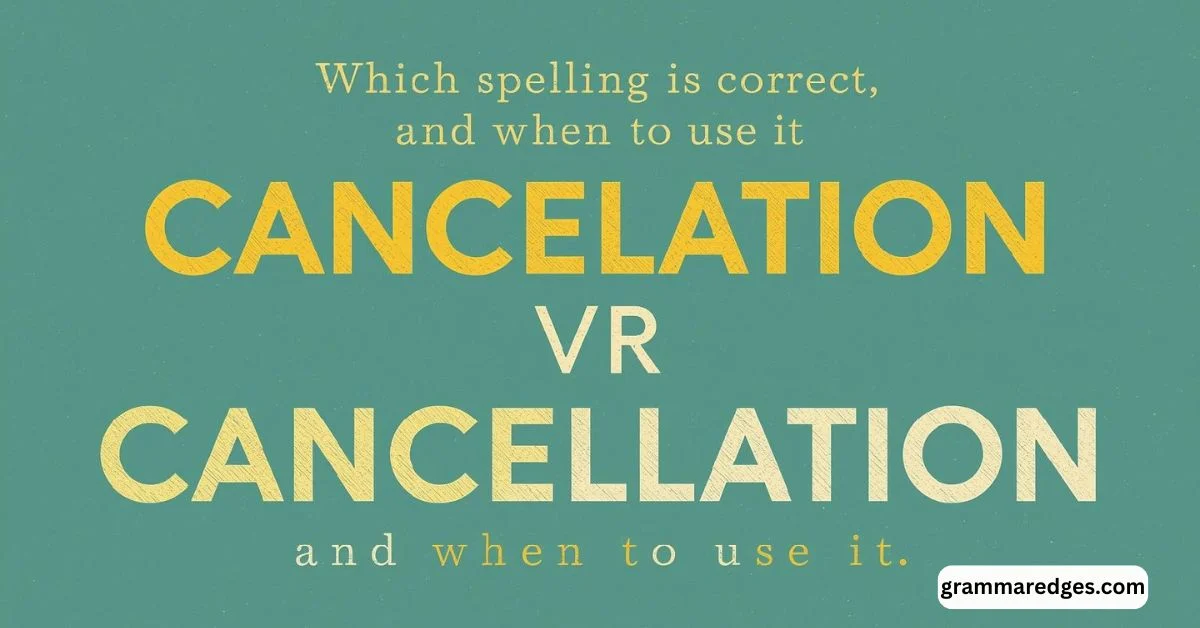
If you’ve ever typed “cancelation or cancellation” into Google, you’re not alone. This is one of the most confusing spelling questions in modern English. Both words look right. Both are used online. And both appear in real documents, emails, and websites. So why is there confusion—and which one should you use?
The confusion exists because English spelling rules change based on region. American English and British English follow different patterns, especially when adding suffixes like -ation. People searching this keyword usually want a quick answer for writing emails, blog posts, legal documents, or SEO content without making mistakes.
This article clears the confusion once and for all. You’ll get a fast answer, simple explanations, real-life examples, and professional advice based on your audience. Whether you’re a student, writer, business owner, or content creator, this guide will help you choose the correct spelling with confidence—every single time.
Cancelation or Cancellation – Quick Answer
Both spellings are correct, but they are used in different types of English.
- Cancelation → American English (US)
- Cancellation → British English and most of the world
Examples:
- US: Your flight cancelation was confirmed.
- UK: Your flight cancellation was confirmed.
The Origin of Cancelation or Cancellation
The base word cancel comes from Latin cancellare, meaning “to cross out.” Over time, English added -ation to form a noun.
Here’s where it changed:
- American English prefers simpler spellings
- British English keeps double consonants
That’s why American English drops one “L” (cancelation) while British English keeps two (cancellation).
British English vs American English Spelling
The difference follows a common rule in English spelling.
Key Rule
- American English: Drop the extra “L”
- British English: Keep the double “L”
Comparison Table
| English Type | Spelling | Example Sentence |
|---|---|---|
| American English | Cancelation | The hotel cancelation fee applies. |
| British English | Cancellation | The booking cancellation was approved. |
Which Spelling Should You Use?
Choose based on your audience.
- US audience → Use cancelation
- UK, Australia, Canada → Use cancellation
- Global or SEO content → Use cancellation (more widely accepted)
💡 Pro tip: If unsure, cancellation is the safest global option.
Common Mistakes with Cancelation or Cancellation
Many writers make small but important errors.
Frequent Mistakes
- Mixing both spellings in one article ❌
- Using US spelling for UK clients ❌
- Assuming one spelling is “wrong” ❌
Correct Usage
- Stay consistent ✔️
- Match your audience ✔️
- Follow brand or style guides ✔️
Cancelation or Cancellation in Everyday Examples
Here’s how the word appears in daily life.
Emails
- Due to weather, your flight cancellation has been processed.
News
- The event cancellation affected thousands.
Social Media
- Sorry for the last-minute cancelation!
Formal Writing
- Policy cancellation requires written notice.
Cancelation or Cancellation – Google Trends & Usage Data
Search trends show clear patterns:
- Cancelation is mostly searched in the United States
- Cancellation dominates globally
- Legal, travel, and business content prefer cancellation
This shows users want clarity, not correction.
Spelling Comparison Table
| Variation | Region | Correct? | Popularity |
|---|---|---|---|
| Cancelation | USA | ✅ Yes | Medium |
| Cancellation | UK & Global | ✅ Yes | High |
FAQs
1. Is cancelation wrong?
No. It is correct in American English.
2. Why does cancellation have two Ls?
British English keeps double consonants before suffixes.
3. Which spelling does Google prefer?
Cancellation is more common worldwide.
4. Can I use both in one article?
No. Always stay consistent.
5. Which spelling is best for SEO?
Use cancellation for global reach.
6. What about legal documents?
Follow the region’s official language rules.
Conclusion:
The debate around cancelation or cancellation is not about right or wrong—it’s about where and who you are writing for. Both spellings are correct, but they serve different audiences. American English favors simplicity, while British English sticks to traditional spelling rules.
If your content targets the United States, cancelation is perfectly acceptable. For UK readers or global audiences, cancellation is the smarter and safer choice. Consistency matters more than preference. Mixing spellings can reduce clarity and professionalism, especially in business, legal, or SEO-focused writing.
Understanding this difference saves time, avoids embarrassment, and builds trust with your readers. Now that you know the rule, you can choose confidently—and never second-guess this spelling again.