Many people search for “truely or truly” because both spellings look right at first glance. When you write fast—an email, a post, or a blog—it is easy to add -ly and assume the spelling follows the base word true. This small doubt can slow you down and hurt confidence, especially in professional writing.
The confusion matters because spelling affects trust. A single wrong word can make an email look careless or a blog less credible. Students worry about marks. Bloggers worry about SEO. Professionals worry about first impressions. That is why this keyword is so popular.
This article solves that confusion once and for all. You will get a quick answer, clear examples, and simple rules you can remember. We will also explain the word’s history, compare British and American English, and show how it appears in real life—emails, news, and social media. By the end, you will know which spelling is correct, why it is correct, and how to use it with confidence every time.
Truely or Truly – Quick Answer
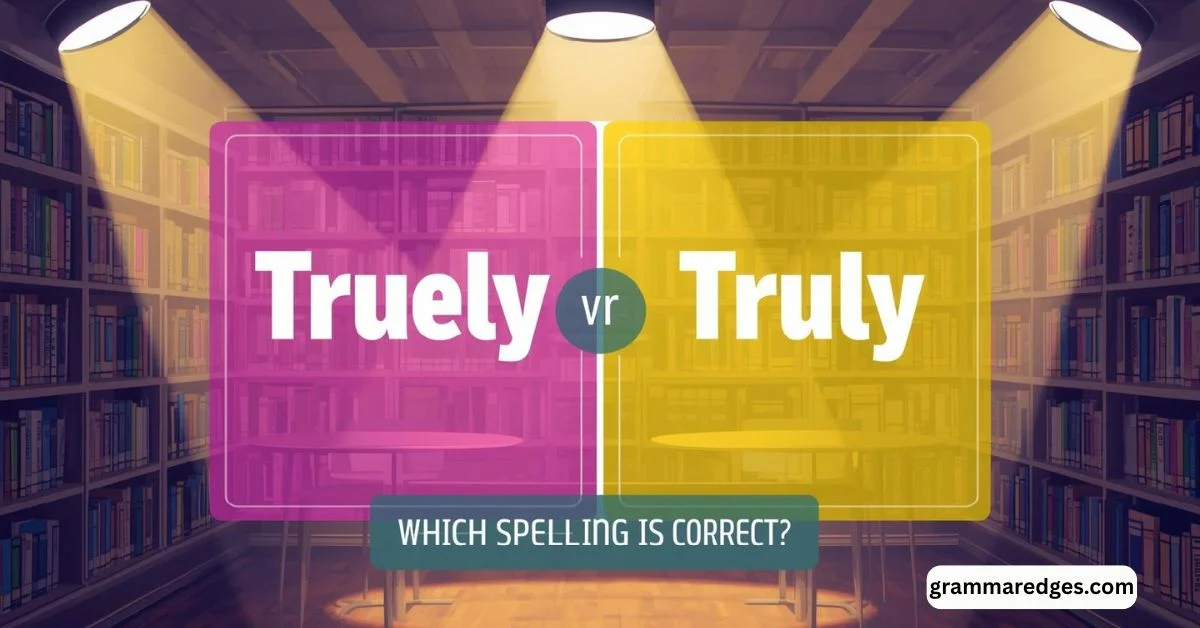
The correct spelling is truly.
Truely is incorrect.
Examples:
- ✅ I truly appreciate your help.
- ❌ I truely appreciate your help.
Even though the base word is true, the adverb drops the e and becomes truly.
The Origin of Truely or Truly
The word truly comes from Old English trēowlīce, meaning “faithfully” or “honestly.” Over time, English simplified the spelling.
Many English adverbs add -ly without changes. But some words drop a letter to keep the sound smooth. True is one of them. The final e disappears before -ly, giving us truly, not truely.
This is why spelling differences exist. English grew from many languages and changed over centuries. Some forms stayed regular. Others did not.
British English vs American English Spelling
There is no difference between British and American English for this word.
| English Type | Correct Spelling | Example |
|---|---|---|
| British English | truly | I truly agree with you. |
| American English | truly | She truly cares. |
| Australian English | truly | This is truly amazing. |
Both systems accept truly only.
Which Spelling Should You Use?
- US audience: Use truly
- UK audience: Use truly
- Commonwealth countries: Use truly
- Global or SEO content: Always use truly
There is never a case where truely is correct.
Common Mistakes with Truely or Truly
Here are frequent errors and fixes:
- ❌ Truely yours
✅ Truly yours - ❌ I truely believe you
✅ I truly believe you - ❌ She was truely happy
✅ She was truly happy
Tip: Think of due → duly. Both drop the e.
Truely or Truly in Everyday Examples
Emails
- I truly appreciate your quick reply.
News
- The report truly reflects public opinion.
Social Media
- This view is truly unreal!
Formal Writing
- The data truly supports the claim.
Truely or Truly – Google Trends & Usage Data
Search data shows “truely or truly” is popular in:
- The United States
- The United Kingdom
- India
- Pakistan
People often search it while writing emails, essays, or blogs. The wrong spelling appears less in published content because editors and tools flag it. Truly is the standard in books, news, and academic writing.
Spelling Comparison Table
| Variation | Correct? | Usage |
|---|---|---|
| truly | ✅ Yes | All English writing |
| truely | ❌ No | Common spelling mistake |
FAQs about Truely or Truly
1. Is “truely” ever correct?
No. It is always wrong.
2. Why does “true” become “truly”?
The final e is dropped before -ly.
3. Do British people spell it differently?
No. British and American English both use truly.
4. Is “truly” formal or informal?
It works in both styles.
5. Can spellcheck catch “truely”?
Yes. Most tools flag it as incorrect.
6. Is “truly yours” correct in letters?
Yes. That is the correct phrase.
7. How can I remember the spelling?
Think: due → duly, true → truly.
Conclusion
The confusion around truely or truly is common, but the rule is simple. Truly is the only correct spelling. The word drops the final e from true before adding *-ly. This rule applies in every form of English—American, British, and global.
Using the correct spelling matters more than people think. It builds trust, improves clarity, and keeps your writing professional. A small error like truely can distract readers and weaken your message. That is why knowing this difference is useful for students, bloggers, and professionals alike.
If you want a quick check, remember similar words like duly. English is not always logical, but patterns help. When in doubt, choose truly. It is safe, correct, and accepted everywhere. With this guide, you can now write with confidence and never second-guess this word again.