
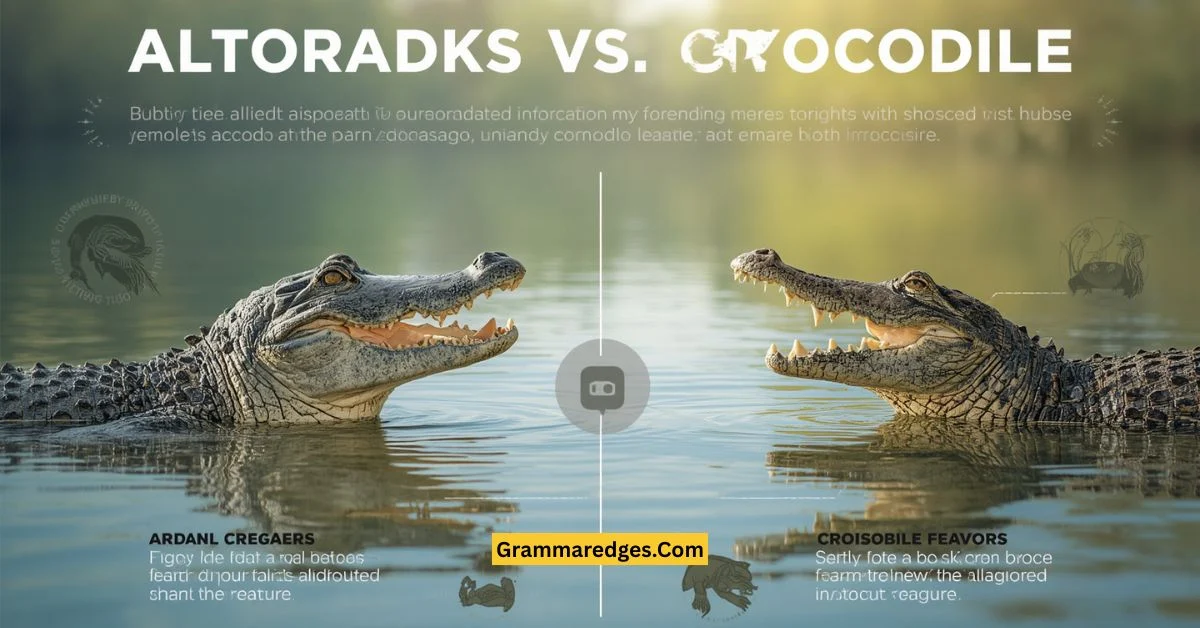
Have you ever looked at a large reptile and wondered, is it an alligator or crocodile? You’re not alone. Thousands of people search for this question because these two animals look very similar at first glance. Both have long snouts, powerful tails, sharp teeth, and spend much of their lives in the water. Because of these shared features, it’s easy to confuse them.
The good news is that telling an alligator or crocodile apart is much easier once you know a few simple facts. Their snout shape, teeth, color, habitat, and behavior all offer helpful clues. Whether you’re watching a wildlife documentary, reading the news, visiting a zoo, or planning a trip to places where these reptiles live, understanding the difference can help you identify them correctly.
This guide gives you a quick answer first and then explains everything in simple language. You’ll also learn about the history of their names, common mistakes people make, real-life examples, Google search trends, and answers to the most common questions.
Alligator or Crocodile – Quick Answer
The easiest way to tell an alligator or crocodile apart is by looking at their snout and teeth.
- Alligator: Wide, U-shaped snout.
- Crocodile: Narrow, V-shaped snout.
- Alligator: Usually dark gray or black.
- Crocodile: Usually olive, tan, or light brown.
- Alligator: Likes freshwater.
- Crocodile: Can live in both freshwater and saltwater.
Quick Comparison
| Feature | Alligator | Crocodile |
|---|---|---|
| Snout | Wide and rounded | Narrow and pointed |
| Teeth | Mostly hidden when mouth is closed | Teeth remain visible |
| Color | Black or dark gray | Olive or brown |
| Habitat | Freshwater | Freshwater and saltwater |
| Temperament | Usually less aggressive | Often more aggressive |
Example:
- If you see a reptile with a broad nose in a Florida lake, it’s probably an alligator.
- If you see one with a pointed snout near a tropical river or coast, it’s likely a crocodile.
The Origin of Alligator or Crocodile
The names alligator and crocodile have different historical origins.
Origin of “Alligator”
The word alligator comes from the Spanish phrase “el lagarto,” meaning “the lizard.” Early Spanish explorers used this name when they saw these reptiles in the Americas. Over time, English speakers changed the pronunciation until it became “alligator.”
Origin of “Crocodile”
The word crocodile comes from the ancient Greek word “krokodeilos.” It later passed through Latin and French before becoming the modern English word.
Why the Names Are Different
The names do not describe different spellings of the same animal. Instead, they are two different species that belong to the crocodilian family.
British English vs American English Spelling
Unlike words such as “color” and “colour,” there is no spelling difference between British English and American English for alligator or crocodile.
People in both countries use exactly the same spellings.
Comparison Table
| English Version | Alligator | Crocodile |
|---|---|---|
| American English | ✅ Alligator | ✅ Crocodile |
| British English | ✅ Alligator | ✅ Crocodile |
| Canadian English | ✅ Alligator | ✅ Crocodile |
| Australian English | ✅ Alligator | ✅ Crocodile |
Example
American News:
An alligator was seen crossing the road.
British News:
A crocodile escaped from a wildlife park.
The spelling stays exactly the same.
Which Spelling Should You Use?
Since there are no spelling differences, choosing the correct word depends on the animal you mean.
Use “Alligator” When
- Talking about American alligators
- Referring to Chinese alligators
- Discussing freshwater habitats
Use “Crocodile” When
- Talking about Nile crocodiles
- Referring to saltwater crocodiles
- Discussing crocodile species around the world
Audience-Based Advice
| Audience | Best Choice |
|---|---|
| United States | Use the correct animal name |
| United Kingdom | Use the correct animal name |
| Australia | Use the correct animal name |
| International Audience | Use the scientifically correct animal |
Always identify the animal rather than guessing.
Common Mistakes with Alligator or Crocodile
Many people mix these reptiles up.
Mistake 1
❌ Every large reptile is a crocodile.
✅ Not true. Many are alligators.
Mistake 2
❌ Alligators live in oceans.
✅ Most alligators prefer freshwater.
Mistake 3
❌ Crocodiles only live in rivers.
✅ Many crocodiles also live in coastal areas and saltwater.
Mistake 4
❌ Their teeth look the same.
✅ Crocodiles usually show more teeth when their mouths are closed.
Mistake 5
❌ Their snouts have the same shape.
✅ Alligators have broad snouts while crocodiles have pointed ones.
Alligator or Crocodile in Everyday Examples
You may see these words used in many situations.
We spotted an alligator during our boat tour yesterday.
News
Wildlife officers safely removed a crocodile from the riverbank.
Social Media
I finally saw an alligator in Florida today!
Formal Writing
Crocodiles are adapted to both freshwater and marine environments.
Travel Blog
Visitors should learn the difference between an alligator and a crocodile before exploring wetlands.
Alligator or Crocodile – Google Trends & Usage Data
Search interest for alligator or crocodile stays strong throughout the year because people often want to know how to identify these reptiles.
Popular Countries
| Country | Common Search |
|---|---|
| United States | Alligator vs Crocodile |
| Australia | Crocodile |
| South Africa | Crocodile |
| India | Alligator or Crocodile |
| Canada | Difference between alligator and crocodile |
Why People Search
People usually search this keyword when they:
- Watch wildlife documentaries
- Visit zoos
- Travel to Florida or Australia
- Read news about reptile sightings
- Help children with school projects
Comparison Table
| Feature | Alligator | Crocodile |
|---|---|---|
| Scientific Family | Alligatoridae | Crocodylidae |
| Snout Shape | U-shaped | V-shaped |
| Teeth Visible | Mostly hidden | Visible |
| Water Type | Freshwater | Freshwater and saltwater |
| Color | Dark gray | Olive or brown |
| Habitat | United States, China | Africa, Australia, Asia, Americas |
| Temperament | Usually calmer | Usually more aggressive |
| Bite Strength | Extremely strong | Extremely strong |
FAQs
Is an alligator the same as a crocodile?
No. They belong to different families of crocodilians and have different physical features and habitats.
Which is more dangerous?
In general, crocodiles are considered more aggressive than alligators, although both are dangerous wild animals.
Can alligators live in saltwater?
They can tolerate saltwater for short periods, but they mainly live in freshwater.
Which has the stronger bite?
Both have incredibly powerful bites. The difference is small enough that both should be treated with caution.
Where do alligators live?
Most live in the southeastern United States and parts of China.
Where do crocodiles live?
Crocodiles are found across Africa, Australia, Asia, and the Americas.
How can I quickly tell them apart?
Look at the snout.
- Wide U-shape = Alligator
- Narrow V-shape = Crocodile
Conclusion
Knowing the difference between an alligator or crocodile is easier than many people think. While these reptiles share many features, a few simple details make identification much simpler.
The shape of the snout is one of the quickest clues, with alligators having broad, rounded snouts and crocodiles having narrower, pointed ones. Their teeth, body color, preferred habitats, and behavior also help tell them apart.
Unlike many English words, there is no British or American spelling difference between alligator and crocodile. The correct word depends entirely on which animal you are describing.
Understanding these differences is useful for travel, education, wildlife watching, and everyday conversations. Whether you’re reading the news, exploring nature, or helping a child with homework, using the correct name shows accuracy and confidence.
Keep these simple identification tips in mind, and you’ll be able to recognize an alligator or crocodile with ease.