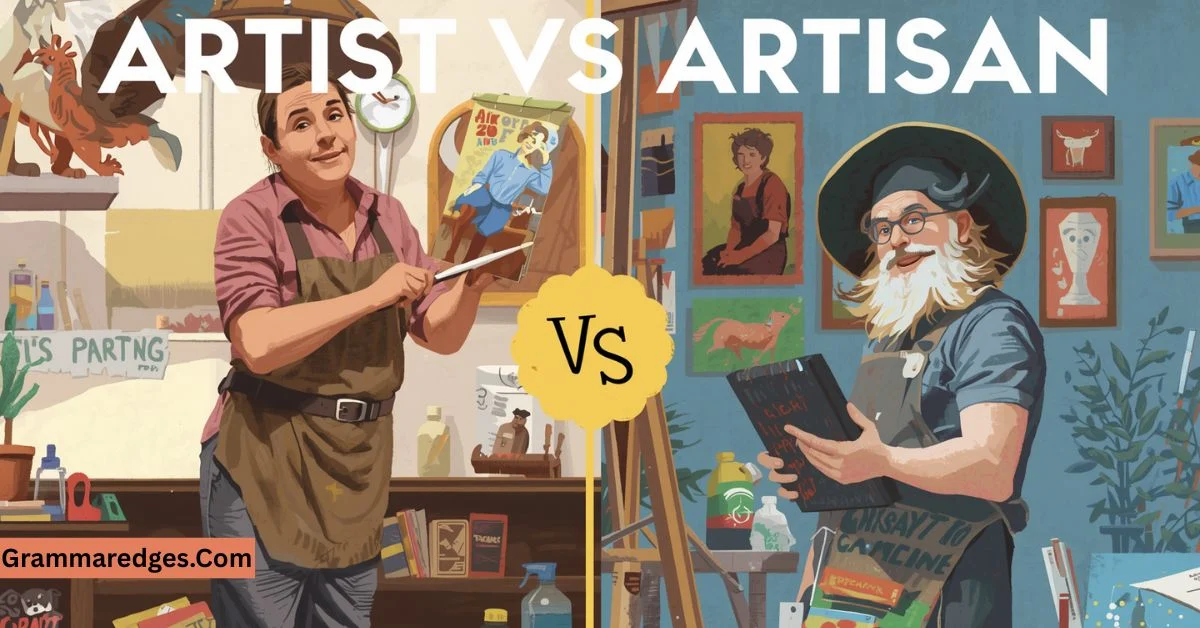
People often search for artist vs artisan because the two words sound similar but are not the same. Many users get confused when describing creative professionals, handmade product makers, or skilled workers. In modern content writing, job descriptions, branding, and education, using the wrong word can completely change meaning.
An artist is usually linked with creativity, imagination, and self-expression through forms like painting, music, sculpture, or digital art. An artisan, on the other hand, is connected with skilled manual work, craftsmanship, and making high-quality handmade goods such as pottery, jewelry, or woodwork.
This confusion is common because both roles involve creativity, but the type of creativity is different. One is expressive and conceptual, while the other is practical and skill-based. People also mix them up in resumes, business branding, and social media captions.
In this article, you will clearly understand the difference between artist and artisan, their origins, correct usage, and real-life examples so you never confuse them again.
Artist vs Artisan – Quick Answer
An artist is a person who creates creative or expressive works like paintings, music, or digital art. An artisan is a skilled worker who makes handmade, functional, or decorative items like crafts, furniture, or pottery.
Examples:
- Artist: A painter creating abstract art.
- Artisan: A potter making handmade ceramic bowls.
The Origin of Artist vs Artisan
The word artist comes from the Latin “ars” meaning skill or craft, later evolving in French as “artiste”. It came to mean someone who expresses creativity in visual or performing arts.
The word artisan also comes from Latin “artitus”, meaning skilled. It passed through French as “artisan” and refers to a person who works with hands to create useful or decorative objects.
Key idea:
- Both words share the root “art”
- But they evolved into different meanings: expression vs craftsmanship
Artisan Meaning
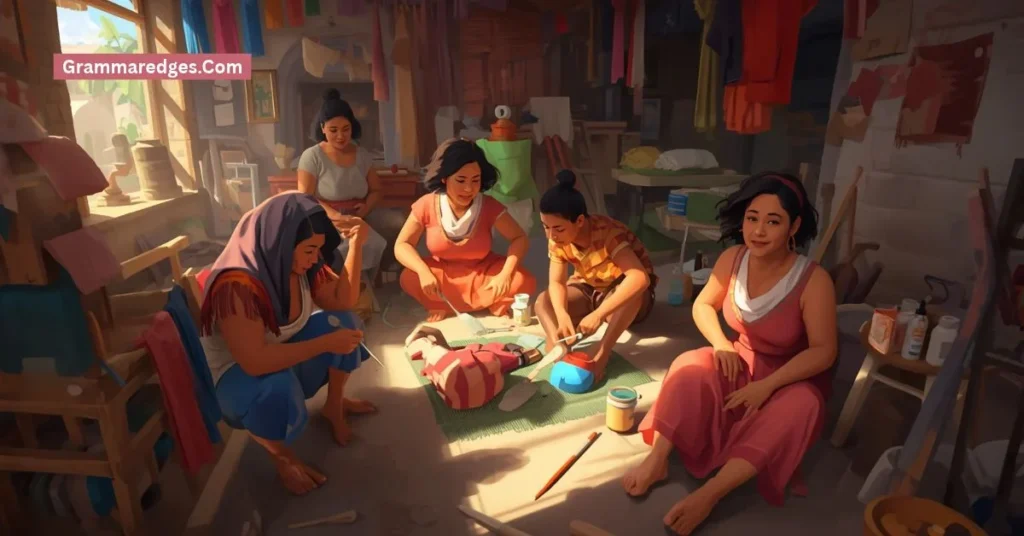
Artisan means a skilled person who makes things by hand, usually with special care and traditional techniques. An artisan may create items such as pottery, jewelry, furniture, clothing, bread, or other handmade products.
The word often suggests more than simply “someone who makes things.” It highlights skill, craftsmanship, creativity, and attention to detail.
For example:
The village is known for its talented artisans who make handmade pottery.
She bought an artisan wooden bowl from a local craft shop.
Artisan as a Noun
As a noun, artisan refers to the person who creates or produces something:
- a skilled artisan
- a local artisan
- a jewelry artisan
- a pottery artisan
- a furniture artisan
Example:
The artisan spent several days carving the wooden table by hand.
Artisan as an Adjective
artisan meaning can also describe something made by skilled craftspeople, especially when the product is handmade or produced in a traditional way.
Examples include:
- artisan bread
- artisan cheese
- artisan chocolate
- artisan furniture
- artisan jewelry
For example:
This bakery is famous for its artisan bread.
Here, artisan bread means bread made with care and traditional or specialized methods, rather than simply referring to a type of bread.
Artisan vs. Craftsperson
Although artisan and craftsperson are close in meaning, they are not always used in exactly the same way. Craftsperson is a broad term for someone skilled at making things, while artisan often carries a stronger sense of handmade work, traditional skills, and craftsmanship.
British English vs American English Spelling
There is no spelling difference between British and American English for “artist” and “artisan.” The words are spelled the same in both versions of English.
However, usage frequency may differ slightly in context.
| Term | Meaning Type | Usage Example (UK/US) |
|---|---|---|
| Artist | Creative expression | “She is a famous digital artist.” |
| Artisan | Skilled craftsman | “He is an artisan baker.” |
Which Spelling Should You Use?
Since both words are spelled the same globally, your choice depends on context, not region.
- US English: Common in creative industries and marketing
- UK/Commonwealth: Often used in education and craft industries
- Global use: No change in spelling, only meaning matters
Simple rule:
Use artist for creativity and expression.
Use artisan for handmade skill and craftsmanship.
Common Mistakes with Artist vs Artisan
- Using “artisan” for painters ❌
Correct: painter is an artist ✔️ - Using “artist” for bakers or carpenters ❌
Correct: skilled baker is an artisan ✔️ - Thinking both mean the same ❌
They are related but not interchangeable ✔️ - Using them as synonyms in branding ❌
This can confuse customers ✔️
Artist vs Artisan in Everyday Examples
Emails:
- “We are hiring a digital artist for our game design team.”
- “We are working with a local artisan to create handmade packaging.”
News:
- “The artist unveiled a new modern art exhibition.”
- “Artisans in the village are preserving traditional pottery techniques.”
Social Media:
- “Supporting local artisans helps small communities grow.”
- “This artist’s work is going viral on Instagram.”
Formal Writing:
- “The museum features works by contemporary artists.”
- “The market promotes handmade products from skilled artisans.”
Artist vs Artisan – Google Trends & Usage Data
Search interest shows that:
- “Artist” is far more popular globally due to entertainment and digital media.
- “Artisan” is more niche, often used in food, crafts, and luxury handmade goods.
- Countries like the US, UK, India, and Pakistan show higher searches for “artist.”
- “Artisan” spikes during food trends (artisan bread, artisan coffee, etc.).
Comparison Table: Artist vs Artisan
| Feature | Artist | Artisan |
|---|---|---|
| Focus | Creativity & expression | Skill & craftsmanship |
| Work type | Painting, music, design | Pottery, baking, woodworking |
| Output | Abstract or expressive work | Functional handmade products |
| Skill type | Creative imagination | Technical manual skill |
| Example | Painter, musician | Carpenter, baker |
FAQs :
1. What is the main difference between artist and artisan?
An artist creates expressive work, while an artisan creates handmade, functional items.
2. Can a person be both artist and artisan?
Yes, many people combine creativity and craftsmanship in their work.
3. Is a chef an artist or artisan?
A chef is usually considered an artisan, especially in handmade cooking.
4. Is there any spelling difference in UK and US English?
No, both words are spelled the same in British and American English.
5. Which is more valuable, artist or artisan?
Neither is more valuable; they serve different creative purposes.
6. Is photography an art or artisan skill?
Photography is generally considered an art form, so the person is an artist.
7. Why are people confused between artist and artisan?
Because both involve creativity, but they apply it in different ways.
Conclusion :
Understanding artist vs artisan is important because both words describe creativity, but they represent different types of skill and work. An artist focuses on imagination, expression, and emotional impact through visual, musical, or digital creations.
An artisan focuses on craftsmanship, precision, and making handmade products that are often functional as well as beautiful.
The confusion between these terms comes from their shared root in “art,” but their meanings evolved differently over time. Today, the difference is especially important in job descriptions, branding, education, and content writing. Using the wrong word can misrepresent a person’s profession or skill.
The key takeaway is simple: if the work is expressive and creative, use artist. If the work is handmade and skill-based, use artisan. Both are valuable in society, and both contribute to culture in unique ways.
Once you understand this difference, you can use these terms confidently in writing, conversation, and professional communication without confusion.
Read More Posts: