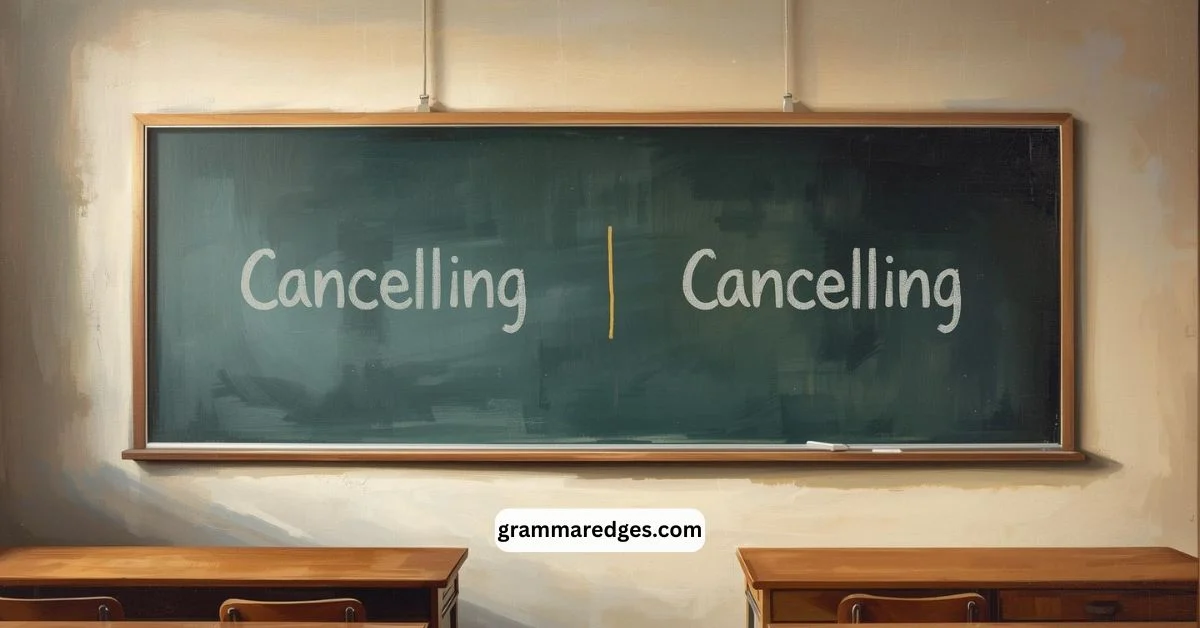
Many people search for “cancelling or canceling” because they are unsure which spelling is correct. You may see both versions online, in emails, or in official documents—and that creates confusion. Is one wrong? Is one British and the other American? Or can you use both?
This confusion usually appears when writing professionally. Students, bloggers, SEO writers, and office workers often want to avoid spelling mistakes. A single wrong spelling can make content look unprofessional, especially in formal writing or business communication.
The good news is simple: both spellings are correct, but they are used in different types of English. This article clearly explains the difference between cancelling and canceling, why both exist, and which one you should use based on your audience. You’ll also see real-life examples, common mistakes, and practical advice so you can use the right spelling with confidence every time.
Cancelling or Canceling – Quick Answer
Both “cancelling” and “canceling” are correct spellings.
- Cancelling is used in British English
- Canceling is used in American English
Examples:
- UK: The airline is cancelling the flight.
- US: The airline is canceling the flight.
The Origin of Cancelling or Canceling
The word cancel comes from the Latin word cancellare, meaning “to cross out.” Over time, English adopted this word and added verb endings like -ing and -ed.
The spelling difference exists because:
- British English often doubles the final “L” before adding -ing or -ed
- American English usually does not double the “L”
This spelling split happened in the 18th and 19th centuries when American English was simplified to reduce complexity.
British English vs American English Spelling
British and American English follow different spelling rules for verbs ending in -L.
| English Type | Present Participle | Past Tense |
|---|---|---|
| British | cancelling | cancelled |
| American | canceling | canceled |
More examples:
- UK: travelling, modelling
- US: traveling, modeling
Which Spelling Should You Use?
Your choice depends on your audience:
- United States audience → Use canceling
- UK, Australia, Canada → Use cancelling
- Global or SEO content → Choose one style and stay consistent
👉 Tip: If your website targets US traffic, use canceling for better clarity and consistency.
Common Mistakes with Cancelling or Canceling
Here are frequent errors people make:
❌ Mixing both spellings in one article
✅ Use only one spelling style
Using British spelling in US-focused content ❌
Match spelling to your audience ✅
❌ Thinking one spelling is wrong
✅ Both are correct—context matters
Cancelling or Canceling in Everyday Examples
Emails
- I am canceling the meeting scheduled for Friday. (US)
- I am cancelling my subscription. (UK)
News
- The company is canceling the product launch.
- The train service is cancelling several routes.
Social Media
- Thinking of canceling my plans tonight.
- They are cancelling the event due to rain.
Formal Writing
- The contract allows canceling within 14 days.
- The policy covers cancelling fees.
Cancelling or Canceling – Google Trends & Usage Data
Search data shows:
- Canceling is more popular in the United States
- Cancelling dominates in the UK and Commonwealth countries
In global searches, both terms appear often. People usually search this keyword to check correctness, not meaning. That’s why clear guidance is important.
Spelling Comparison Table
| Variation | English Type | Usage Region |
|---|---|---|
| cancelling | British English | UK, Australia, Asia |
| canceling | American English | United States |
FAQs :
1. Is cancelling wrong?
No. It is correct in British English.
2. Is canceling correct in exams?
Yes, if you follow American English rules.
3. Which spelling is better for SEO?
Use the spelling your audience searches for most.
4. Can I use both spellings together?
No. Stay consistent in one article.
5. Does Grammarly accept both?
Yes, based on your selected language setting.
6. What about cancelled vs canceled?
Same rule applies—British vs American English.
Conclusion:
The confusion around cancelling or canceling is common, but the solution is simple. Both spellings are correct. The difference depends on whether you are using British English or American English. British English doubles the “L,” while American English keeps it single.
When writing, always think about your audience. If your readers are in the United States, choose canceling. If they are in the UK or Commonwealth countries, go with cancelling. For global content, pick one style and use it consistently throughout your work.
Understanding this difference improves clarity, professionalism, and SEO performance. Now that you know the rule, you can confidently use the correct spelling without second-guessing yourself.