
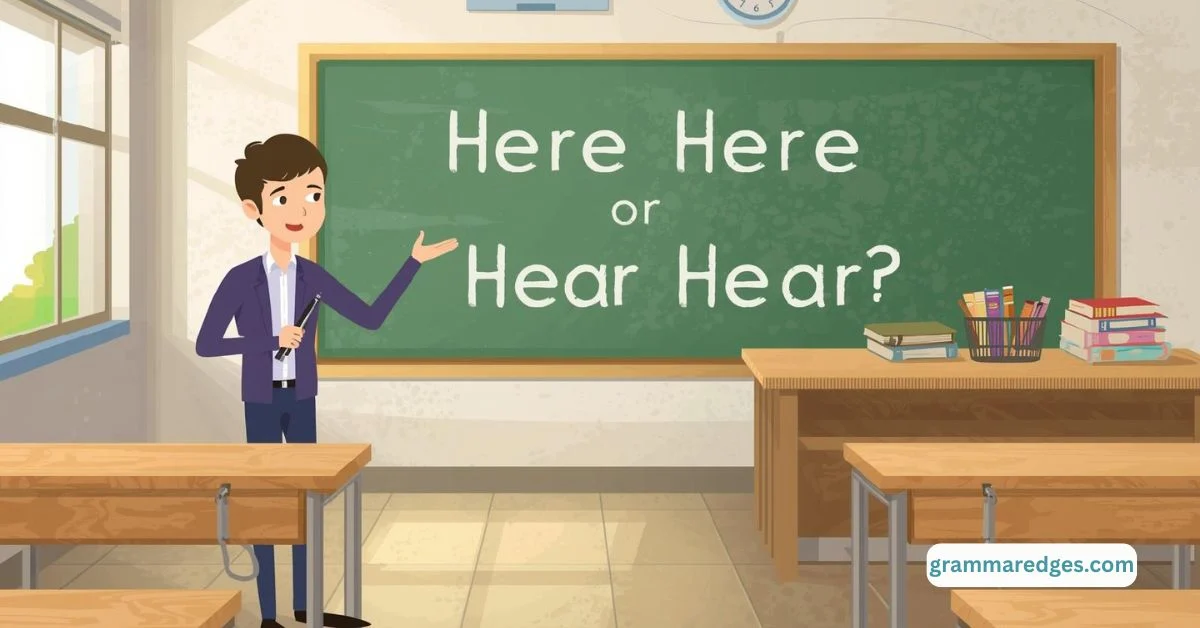
You may have seen people write “here here” in comments, emails, or social media—and others quickly correct them to “hear hear.” This small difference causes big confusion. Many users search for “here here or hear hear” because both phrases sound exactly the same when spoken, but only one is correct in standard English.
The confusion usually appears during applause, agreement, or support—especially in meetings, speeches, online discussions, and news quotes. When someone strongly agrees with a statement, they want the right phrase to show approval. But spelling it wrong can make your writing look unprofessional or careless, even if your meaning is clear.
This article solves that confusion once and for all. You’ll get a quick answer, learn the origin of the phrase, understand British vs American usage, avoid common mistakes, and see real-life examples. By the end, you’ll know exactly which spelling to use, when to use it, and why—without overthinking it.
Here Here or Hear Hear – Quick Answer
Correct phrase: ✅ Hear, hear
Incorrect phrase: ❌ Here, here
Hear, hear is used to show strong agreement or approval with what someone has said.
Examples:
- “We should protect free speech.” — Hear, hear!
- “This policy helps everyone.” — Hear, hear!
Here here is incorrect because here refers to a place, not listening or agreement.
The Origin of Here Here or Hear Hear
The correct phrase “hear, hear” comes from British parliamentary language in the 17th century. It originally meant:
“Hear him! Hear him!”
People used it to encourage others to listen closely to a speaker. Over time, it became a fixed phrase used to show approval or agreement.
Because hear and here sound identical, many people started writing it incorrectly as “here here.” This spelling mistake spread widely, especially online, but it has never been grammatically correct.
British English vs American English Spelling
There is no spelling difference between British and American English for this phrase.
| Version | British English | American English |
|---|---|---|
| Correct | Hear, hear | Hear, hear |
| Incorrect | Here, here | Here, here |
Both UK and US style guides agree: only “hear, hear” is correct.
Which Spelling Should You Use?
Your choice depends on correctness, not location.
- US audience: Use hear, hear
- UK audience: Use hear, hear
- Global audience: Use hear, hear
✅ Always use hear, hear in formal, informal, spoken, or written English.
Common Mistakes with Here Here or Hear Hear
❌ Here here!
✅ Hear, hear!
❌ I say here here to that idea.
✅ I say hear, hear to that idea.
❌ Here here for the winner!
✅ Hear, hear for the winner!
Tip: If the meaning is listening or agreement, use hear.
Here Here or Hear Hear in Everyday Examples
Emails
- “Your proposal is clear and effective—hear, hear!”
News & Speeches
- “The crowd shouted hear, hear after the announcement.”
Social Media
- “This message needs to be shared. Hear, hear! 👏”
Formal Writing
- “Several members responded with cries of hear, hear.”
Here Here or Hear Hear – Google Trends & Usage Data
Search interest for “here here or hear hear” is highest in:
- English-speaking countries
- Academic writing searches
- Grammar and spelling queries
Most users search this keyword to:
- Check the correct spelling
- Avoid embarrassing mistakes
- Improve professional writing
Usage appears most often in:
- Political contexts
- Opinion pieces
- Online discussions
Comparison Table: Keyword Variations
| Phrase | Correct? | Meaning |
|---|---|---|
| Hear, hear | ✅ Yes | Agreement or approval |
| Here, here | ❌ No | Incorrect spelling |
| Hear hear | ⚠️ Acceptable | Missing comma |
| Here here | ❌ No | Common error |
FAQs: Here Here or Hear Hear
1. Is “here here” ever correct?
No. It is always a spelling mistake.
2. Why do people confuse here and hear?
They sound the same but have different meanings.
3. Do Americans use “hear, hear”?
Yes. It is correct in both US and UK English.
4. Should I use a comma in “hear, hear”?
Yes. The comma is standard and recommended.
5. Can I use “hear, hear” in formal writing?
Yes, especially in quoted speech or commentary.
6. Is “hear hear” without a comma wrong?
It’s acceptable, but the comma is preferred.
7. What does “hear, hear” really mean?
It means “I strongly agree.”
Conclusion:
The confusion between here here or hear hear is common, but the rule is simple. Hear, hear is the only correct phrase. It comes from historical usage meaning listen closely and later evolved to express agreement. Here, here has never been correct and should always be avoided.
No matter where you live—US, UK, or anywhere else—the spelling does not change. If you want to sound clear, confident, and professional, always choose hear, hear. This applies to emails, articles, speeches, comments, and formal writing.
Understanding small details like this improves your credibility and communication. Now that you know the difference, you can use the phrase confidently and help others avoid the same mistake. Hear, hear!