Have you ever paused while writing and wondered: Is it “tear” or “tare”? You’re not alone. These two words look similar, sound alike, and often confuse even confident English users. Many people search for “tear or tare” because they want a quick answer—especially when writing emails, captions, or formal documents.
The confusion usually comes from pronunciation and context. “Tear” can mean ripping something or liquid from your eyes. “Tare,” on the other hand, is a technical word used in weight measurement. One tiny spelling change can completely shift the meaning of your sentence.
This article clears up that confusion once and for all. You’ll learn the difference, origin, correct usage, and common mistakes. By the end, you’ll know exactly which word to use—and when.
Tear or Tare – Quick Answer
“Tear” and “tare” are different words with different meanings.
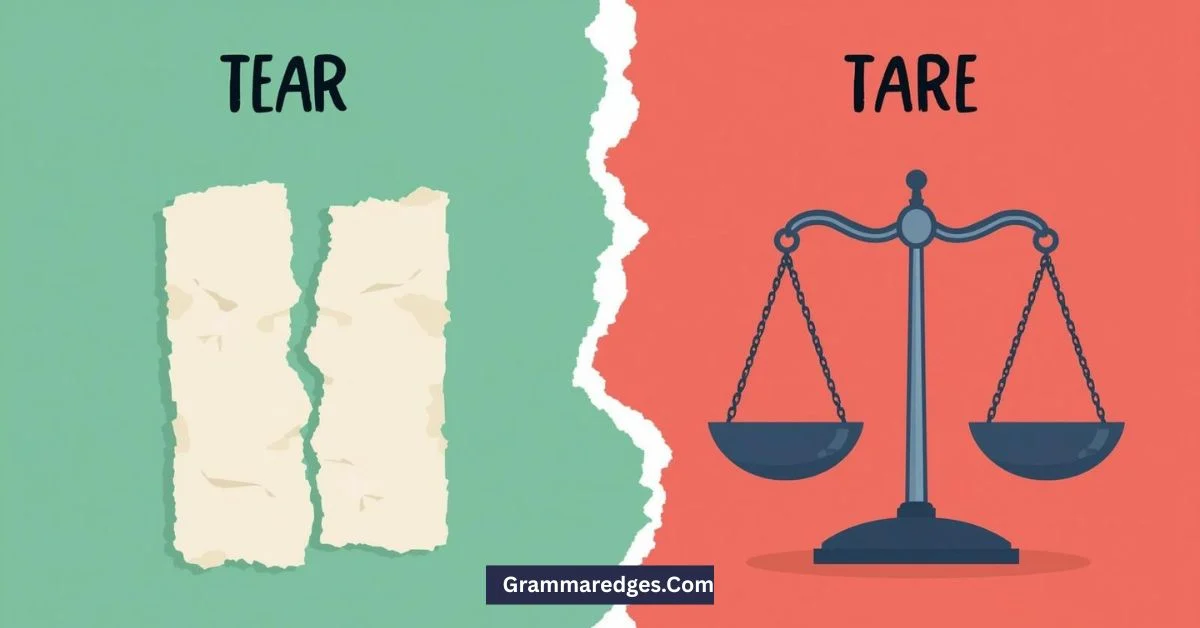
- Tear → To rip something OR a drop from your eye
- Example: I accidentally tore the paper.
- Example: A tear rolled down her face.
- Tare → The weight of a container (used in measurements)
- Example: Subtract the tare to find the net weight.
👉 Simple rule:
- Use tear for emotions or ripping.
- Use tare for weight calculations.
The Origin of Tear or Tare
Tear
The word tear comes from Old English:
- “teran” meaning “to rip apart”
- Another form relates to “tear” (eye drop), from “tæher”
Over time, both meanings stayed, even though they are pronounced differently:
- “teer” (rip)
- “tair” (eye liquid)
Tare
The word tare comes from:
- Old French “tare” meaning “defect or deduction”
- It entered English in trade and measurement contexts
It became common in shipping, cooking, and weighing systems.
👉 That’s why tare feels more technical, while tear feels everyday.
British English vs American English Spelling
Good news: There is no spelling difference between British and American English for “tear” or “tare.”
Both forms are the same worldwide. The difference is meaning, not region.
Comparison Table
| Word | Meaning | British English | American English |
|---|---|---|---|
| Tear | Rip / eye liquid | Tear | Tear |
| Tare | Container weight | Tare | Tare |
👉 Unlike words like “color/colour,” this is not a regional spelling issue.
Which Spelling Should You Use?
Your choice depends on context, not location.
- Use “tear” if:
- You are writing stories, emails, or daily content
- You mean ripping or crying
- Example: Don’t tear the document
- Use “tare” if:
- You are dealing with weights or measurements
- You are writing technical, shipping, or cooking content
- Example: Press the scale to remove the tare
Audience Tip
- US audience → Same usage
- UK/Commonwealth → Same usage
- Global writing → Choose based on meaning
👉 Always ask: Am I talking about ripping/crying or measuring weight?
Common Mistakes with Tear or Tare
Here are frequent errors people make:
❌ Incorrect: Please tare this paper carefully
✔ Correct: Please tear this paper carefully
❌ Incorrect: The scale shows tear weight
✔ Correct: The scale shows tare weight
❌ Incorrect: She had a tare in her eye
✔ Correct: She had a tear in her eye
Why these mistakes happen:
- Same pronunciation in some accents
- Typing fast without checking meaning
- Auto-correct confusion
👉 Tip: If it’s emotional or physical damage → tear
👉 If it’s math or weight → tare
Tear or Tare in Everyday Examples
Emails
- Please do not tear the envelope.
- Make sure to remove the tare before weighing.
News
- The fabric began to tear under pressure.
- Officials checked the tare weight of cargo.
Social Media
- That movie made me tear up 😢
- Don’t forget to reset the tare on your scale!
Formal Writing
- The material may tear if stretched too far.
- The net weight excludes the tare.
Tear or Tare – Google Trends & Usage Data
- “Tear” is searched much more often
- Used in daily language
- Common in emotional and physical contexts
- “Tare” is less common
- Mostly searched by:
- Students
- Engineers
- People using weighing machines
- Mostly searched by:
Popularity by Region
- Global → “Tear” dominates
- Industrial regions → “Tare” appears more
- Search intent →
- “Tear” → emotional or action-based
- “Tare” → technical or measurement-related
👉 That’s why many people search “tear or tare”—they want clarity between common vs technical usage.
Comparison Table: Tear vs Tare
| Feature | Tear | Tare |
|---|---|---|
| Meaning | Rip / eye liquid | Weight of container |
| Usage Type | Everyday language | Technical/measurement |
| Frequency | Very common | Less common |
| Context | Emotions, damage | Weighing, shipping |
| Example | Don’t tear the page | Remove the tare weight |
FAQs
1. Is “tear” and “tare” the same word?
No. They are different words with different meanings.
2. How do I remember the difference?
Think:
- Tear = Emotion or ripping
- Tare = Technical weight
3. Can “tear” have two meanings?
Yes. It can mean ripping or liquid from the eyes.
4. Is “tare” used in daily conversation?
Not usually. It’s mostly used in technical contexts.
5. Do British and American English use different spellings?
No. Both use “tear” and “tare” the same way.
6. Why do people confuse “tear” and “tare”?
Because they sound similar and are often typed quickly.
7. Which one is more common in writing?
“Tear” is far more common than “tare.”
Conclusion :
The confusion between tear or tare is simple once you understand the context. These words may sound alike, but their meanings are completely different. “Tear” belongs to everyday language—it describes emotions and actions like ripping. “Tare,” on the other hand, is a technical term used in measuring weight.
There is no regional spelling difference, which makes things easier. The real key is understanding what you want to say. If you are talking about feelings, damage, or physical action, choose “tear.” If you are dealing with weights or calculations, go with “tare.”
Mistakes happen when people rely on sound instead of meaning. A quick check can save you from confusion and make your writing clearer. Whether you are writing an email, a caption, or a formal report, choosing the right word shows attention to detail.
Now you can confidently use both words the right way—no second guessing needed.