Have you ever seen a large flying insect in your garden and wondered, “Is that a wasp or hornet?” You are not alone. Many people use these words interchangeably, but they are not exactly the same thing. This confusion is one of the main reasons people search for the keyword wasp or hornet online.
At first glance, wasps and hornets look very similar. Both have narrow bodies, wings, and painful stings. Because of their similar appearance, many people struggle to tell them apart. Understanding the difference is useful for safety, pest control, gardening, and general knowledge.
This guide explains everything you need to know about wasp or hornet. You’ll learn the key differences, where the words came from, how people use them, and which term is correct in different situations. We will also compare their characteristics, highlight common mistakes, provide real-world examples, and answer frequently asked questions.
By the end of this article, you’ll know exactly how to identify a wasp or hornet and use the correct term with confidence.
Wasp or Hornet – Quick Answer
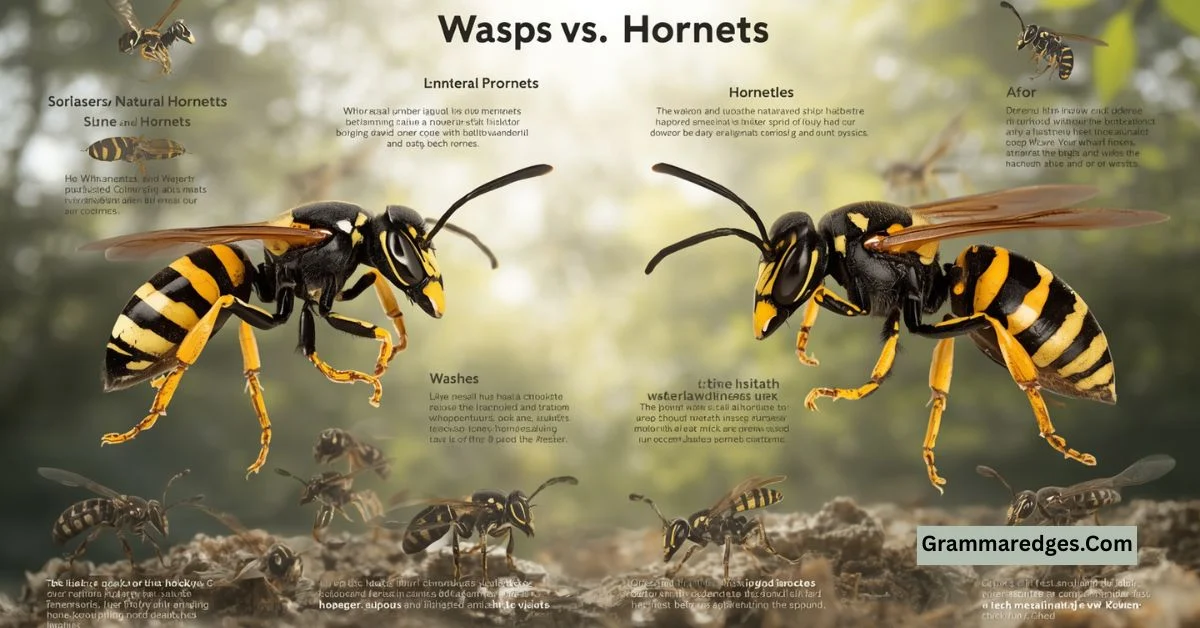
The simple answer is that all hornets are wasps, but not all wasps are hornets.
A hornet is a specific type of wasp that belongs to the genus Vespa. Hornets are generally larger, heavier, and often less brightly colored than many common wasps.
Quick Examples
| Insect | Description |
|---|---|
| Wasp | General term for many species of stinging insects |
| Hornet | A larger type of wasp belonging to the Vespa family |
Example
- Yellow jacket = Wasp
- European hornet = Hornet
- Paper wasp = Wasp
- Asian hornet = Hornet
So when comparing wasp or hornet, remember that a hornet is actually a subgroup within the larger wasp family.
The Origin of Wasp or Hornet
Understanding the history of these words helps explain why people often confuse them.
Origin of “Wasp”
The word wasp comes from Old English wæps or wæfsp. It has been used for more than a thousand years to describe stinging insects with narrow waists.
Over time, the spelling became standardized as wasp.
Origin of “Hornet”
The word hornet comes from Old English hyrnet and later Middle English forms. The name likely referred to the insect’s strong sting or pointed appearance.
Hornets have been recognized as a separate type of wasp for centuries.
Why the Confusion Exists
The confusion exists because:
- Hornets are technically wasps.
- Both insects sting.
- Both build nests.
- Their body shapes are similar.
- Many people use the names interchangeably.
As a result, people often search online for wasp or hornet when trying to identify an insect.
British English vs American English Spelling
Unlike many English words, wasp and hornet have the same spelling in both British and American English.
There is no spelling difference between regions.
Comparison Table
| Term | British English | American English |
| Wasp | Wasp | Wasp |
| Hornet | Hornet | Hornet |
| Wasps | Wasps | Wasps |
| Hornets | Hornets | Hornets |
Examples
British English:
- There is a wasp in the garden.
- The hornet nest was removed safely.
American English:
- A wasp flew into the house.
- A hornet was seen near the tree.
The spelling remains identical across English-speaking countries.
Which Spelling Should You Use?
Since there is no spelling difference, choosing between wasp or hornet depends on the insect you are describing.
Use “Wasp” When
- Referring to the general insect group.
- You are unsure of the exact species.
- Talking about common stinging insects.
Example:
“Several wasps were flying around the picnic.”
Use “Hornet” When
- The insect belongs to the hornet group.
- The insect is identified as a species of Vespa.
- You want to be scientifically accurate.
Example:
“A hornet nest was discovered in the attic.”
For Global Audiences
If you are writing for a broad audience and are unsure of the species, use wasp because it is the broader and more widely understood term.
Common Mistakes with Wasp or Hornet
Many people make errors when discussing wasps and hornets.
Mistake 1: Thinking They Are Different Families
❌ Wrong:
“Hornets are not wasps.”
✅ Correct:
“Hornets are a type of wasp.”
Mistake 2: Calling Every Large Wasp a Hornet
❌ Wrong:
“That large wasp must be a hornet.”
✅ Correct:
“Large size alone does not make it a hornet.”
Mistake 3: Assuming Hornets Are Always More Aggressive
❌ Wrong:
“Hornets attack more than wasps.”
✅ Correct:
“Behavior depends on the species and situation.”
Mistake 4: Using the Terms Interchangeably
❌ Wrong:
“Wasp and hornet mean exactly the same thing.”
✅ Correct:
“Hornets are a specific category within the wasp family.”
Mistake 5: Identifying by Color Alone
❌ Wrong:
“It’s yellow, so it’s a hornet.”
✅ Correct:
“Identification requires more than color.”
Wasp or Hornet in Everyday Examples
People use these terms in many situations.
In Emails
“Please contact pest control because a wasp nest has appeared near the entrance.”
“Maintenance found a hornet nest behind the storage building.”
In News Reports
“Residents reported increased wasp activity during the summer.”
“Officials removed a hornet nest from a public park.”
On Social Media
“Just got chased by a wasp!”
“I think I spotted a hornet in my backyard.”
In Formal Writing
“Wasps play important roles in ecosystems by controlling other insect populations.”
“Hornets are social insects that live in organized colonies.”
In Pest Control Reports
“The property contained multiple wasp nests.”
“A hornet colony was identified and safely removed.”
Wasp or Hornet – Google Trends & Usage Data
Search interest for wasp or hornet increases during warmer months when insect activity rises.
Countries with High Interest
- United States
- United Kingdom
- Canada
- Australia
- New Zealand
Common Search Intent
People usually search for:
- Identification help
- Sting concerns
- Nest removal advice
- Pest control information
- Differences between species
Most Popular Related Searches
- Wasp vs hornet
- Hornet compared to wasp
- How to identify a hornet
- Are hornets dangerous
- Difference between wasp and hornet
Why the Topic Is Popular
People often encounter flying insects unexpectedly and want quick identification. Since hornets and wasps look similar, search engines receive many questions about the difference between them.
Wasp or Hornet Comparison Table
| Feature | Wasp | Hornet |
| Meaning | General group of insects | Specific type of wasp |
| Scientific Category | Many families and species | Genus Vespa |
| Size | Small to medium | Usually larger |
| Body Shape | Slim | Heavier and broader |
| Nest Type | Various nest styles | Large paper nests |
| Sting | Painful | Painful |
| Population | Thousands of species | Fewer species |
| Common Usage | Broad term | Specific term |
FAQs About Wasp or Hornet
1. Is a hornet a wasp?
Yes. Every hornet is a type of wasp.
2. Are all wasps hornets?
No. Most wasps are not hornets.
3. Which is bigger, a wasp or a hornet?
Hornets are generally larger than many common wasp species.
4. Do hornets sting more than wasps?
Both can sting. Aggression varies by species and situation.
5. Can I identify a hornet by size alone?
No. Size helps, but accurate identification requires examining several characteristics.
6. Which term is more accurate?
The most accurate term depends on the species. If the insect is a hornet, use “hornet.” Otherwise, “wasp” may be more appropriate.
7. Why do people confuse wasps and hornets?
They look similar, behave similarly, and belong to the same insect group.
Conclusion
The debate around wasp or hornet is really about understanding classification rather than spelling. A hornet is not separate from the wasp family—it is a specific type of wasp. This is the key fact that clears up most confusion.
When identifying an insect, remember that “wasp” is the broader term. It covers thousands of species around the world. “Hornet” refers to a smaller group of larger social wasps within the genus Vespa. While hornets often appear bigger and more intimidating, they still belong to the wasp family.
For everyday conversations, using “wasp” is usually safe when you are unsure of the species. If you know the insect is a hornet, then using “hornet” provides greater accuracy. Whether you are writing an email, posting on social media, reading news reports, or researching pest control, understanding the difference helps you communicate clearly and correctly.
Knowing the distinction between a wasp and a hornet can improve identification, reduce confusion, and help you make informed decisions when encountering these insects.