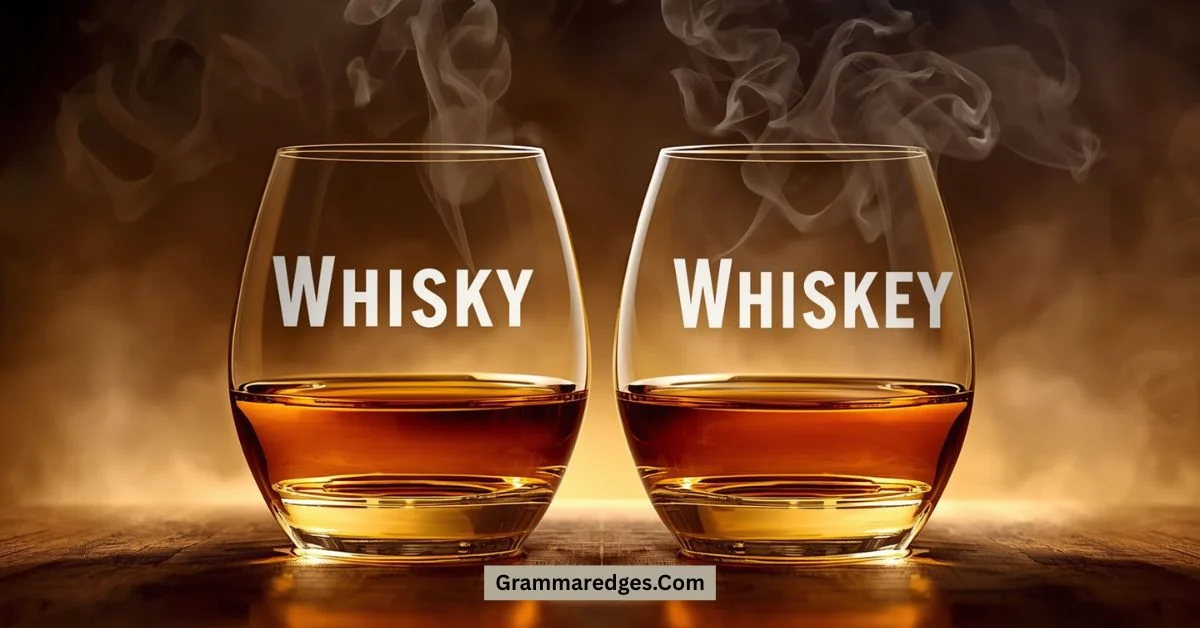
Have you ever wondered whether it should be “whisky” or “whiskey”? You are not alone. Many people search this keyword because both spellings appear on bottles, in menus, online articles, and even in news reports.
The confusion grows because both words are correct — but they are used in different places and traditions.
If you see Scotch whisky from Scotland, it usually has no “e.” But if you drink Irish whiskey or most American brands, you will often see the extra “e.” This small spelling difference has a long history linked to language, culture, and the countries where the drink is made.
In this guide, you will learn the quick answer, the origin of both spellings, the difference between British and American English, and which version you should use in different situations. You will also see common mistakes, real-life examples, trend data, and simple tips to avoid confusion.
Whisky or Whiskey – Quick Answer
The quick answer is simple:
- Whisky is mainly used in Scotland, Canada, and Japan.
- Whiskey is mainly used in Ireland and the United States.
Examples
- Scotch whisky
- Canadian whisky
- Japanese whisky
- Irish whiskey
- Tennessee whiskey
- Bourbon whiskey
Both spellings refer to the same alcoholic drink made from fermented grain. The difference is mostly regional and cultural.
The Origin of Whisky or Whiskey
The word comes from the Gaelic phrase “uisge beatha,” which means “water of life.” Over time, the phrase became shorter and easier to pronounce. Eventually, it turned into the modern word “whisky” or “whiskey.”
Why Did the Spellings Change?
In the 1800s, Scottish and Irish distillers wanted to separate their products from each other.
- Scottish makers used “whisky.”
- Irish makers used “whiskey.”
Later, American producers followed the Irish spelling because many Irish immigrants worked in the US whiskey industry.
That is why today:
- Scotland uses whisky
- Ireland uses whiskey
- Most US brands use whiskey
The spelling became part of national identity and branding.
British English vs American English Spelling
British and American English often use different spellings. Examples include:
| British English | American English |
|---|---|
| colour | color |
| favourite | favorite |
| organise | organize |
| travelled | traveled |
The same idea applies to whisky and whiskey, but this difference is more about geography and tradition than grammar rules.
Whisky vs Whiskey Comparison Table
| Spelling | Main Countries | Example Brands |
|---|---|---|
| Whisky | Scotland, Canada, Japan | Glenfiddich, Macallan |
| Whiskey | Ireland, United States | Jameson, Jack Daniel’s |
Important Note
Not every American brand uses “whiskey.” Some choose “whisky” for branding reasons. Always check the official product spelling.
Which Spelling Should You Use?
The best spelling depends on your audience.
Use “Whisky” When:
- Writing for a UK audience
- Talking about Scotch products
- Referring to Canadian or Japanese products
- Following British English style
Use “Whiskey” When:
- Writing for an American audience
- Talking about Irish products
- Referring to bourbon or Tennessee brands
- Following American English style
Best Option for Global Writing
If your article discusses all types together, you can use both forms carefully.
Example:
“Whisky or whiskey both refer to distilled grain spirits, but the spelling depends on the country of origin.”
Consistency matters. Do not switch spellings randomly in the same article.
Common Mistakes with Whisky or Whiskey
Many writers make small but common mistakes.
Mistake 1: Thinking One Is Wrong
❌ “Whiskey is incorrect.”
✅ Both spellings are correct.
Mistake 2: Using the Wrong Regional Spelling
❌ Scotch whiskey
✅ Scotch whisky
Mistake 3: Mixing Spellings in One Sentence
❌ Japanese whiskey and Scottish whiskey are popular whiskys.
✅ Japanese whisky and Scottish whisky are popular drinks.
Mistake 4: Adding an “e” Everywhere
Some people believe “whiskey” is always the modern spelling. That is not true.
Scottish brands proudly use “whisky.”
Mistake 5: Wrong Plural Form
❌ whiskys
✅ whiskies or whiskeys
Use the plural that matches the spelling style.
Whisky or Whiskey in Everyday Examples
Here is how the word appears in daily life.
In Emails
“Please bring a bottle of Irish whiskey for dinner.”
“The restaurant now serves Japanese whisky.”
In News Headlines
“Scottish whisky exports increase worldwide.”
“American whiskey sales rise this year.”
On Social Media
“Weekend mood: good friends and smooth whiskey.”
“Trying new Japanese whisky tonight.”
In Formal Writing
“Scotch whisky remains one of Scotland’s top exports.”
“Irish whiskey has seen strong global growth.”
Whisky or Whiskey – Google Trends & Usage Data
Search popularity changes by country.
Countries That Mostly Use “Whisky”
- Scotland
- Canada
- Japan
- Australia
Countries That Mostly Use “Whiskey”
- United States
- Ireland
Global Search Behavior
Many users search:
- “whisky vs whiskey”
- “difference between whisky and whiskey”
- “why is whiskey spelled with an e”
This shows people mainly want:
- A quick answer
- Regional spelling rules
- Product differences
Usage Contexts
| Context | Common Spelling |
|---|---|
| Scotch products | Whisky |
| Bourbon | Whiskey |
| Irish drinks | Whiskey |
| Japanese drinks | Whisky |
| Canadian drinks | Whisky |
Whisky or Whiskey Comparison Table
| Feature | Whisky | Whiskey |
|---|---|---|
| Extra “e” | No | Yes |
| Main Regions | Scotland, Japan, Canada | Ireland, USA |
| Common Products | Scotch whisky | Irish whiskey |
| Language Style | British/Commonwealth | American/Irish |
| Example Phrase | Single malt whisky | Tennessee whiskey |
FAQs About Whisky or Whiskey
1. Is whisky the same as whiskey?
Yes. Both words describe the same type of distilled alcoholic drink. The spelling changes by region and tradition.
2. Why do some brands use whisky and others use whiskey?
The spelling depends on the country and historical tradition of the producer.
3. Which spelling is correct in America?
Most American brands use whiskey with an “e.”
4. Why does Scotland use whisky?
Scottish distillers traditionally removed the “e” and kept the spelling “whisky.”
5. Is Scotch spelled whisky or whiskey?
Scotch is always spelled whisky.
6. Is Irish whiskey spelled with an “e”?
Yes. Irish producers usually spell it whiskey.
7. Can I use both spellings in one article?
Yes, but only when discussing regional differences. Stay consistent where possible.
Conclusion
The difference between whisky or whiskey is mainly about geography, tradition, and branding. Scotland, Canada, and Japan prefer whisky, while Ireland and the United States usually use whiskey. Neither spelling is wrong. The correct choice depends on the audience and the product you are discussing.
If you write for an American audience, “whiskey” is often the better option. If your topic focuses on Scotch or British English, “whisky” is the correct form. In global writing, it is helpful to explain both spellings clearly so readers understand the difference.
The key is consistency. Choose the spelling that matches your topic and keep using it throughout your writing. Once you know the regional rules, the confusion becomes much easier to understand.