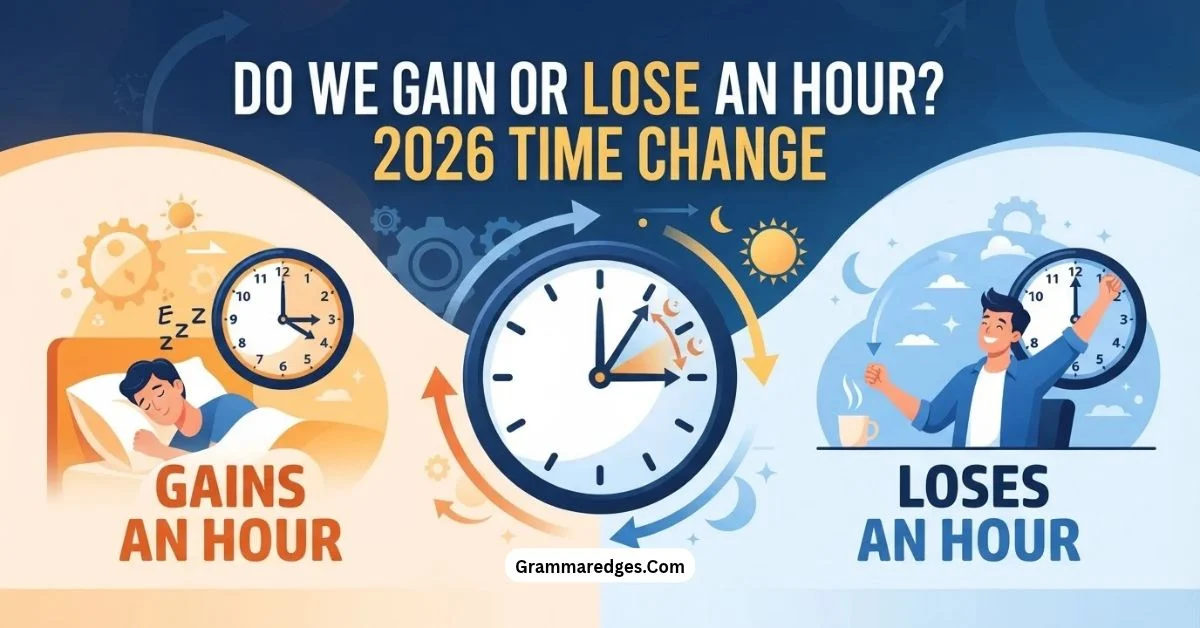
Do we gain or lose an hour? In the United States, we gain an hour when clocks fall back in November and lose an hour when clocks spring forward in March. In 2026, most Americans will turn their clocks back on November 1, gaining an extra hour. The next spring-forward change will happen on March 14, 2027.
Key Takeaways
- November 1, 2026: Clocks move back one hour, giving you an extra hour on the clock.
- March 14, 2027: Clocks move forward one hour, making the night shorter.
- Most Americans observe daylight saving time, but Hawaii and most of Arizona do not.
- Smartphones and computers usually update automatically when daylight saving time changes.
- Remember the phrase “spring forward, fall back” to know which direction the clocks move.
Do We Gain or Lose an Hour in November 2026?
If you are wondering whether we gain or lose an hour in November, the answer is simple: we gain an hour.
On Sunday, November 1, 2026, most of the United States will return to standard time. At 2:00 a.m., clocks will move backward to 1:00 a.m. local time. This means the hour between 1:00 and 2:00 a.m. happens twice.
For many people, this change feels like a small gift because they can enjoy an extra hour in bed.
For example, imagine you usually go to sleep at 11:00 p.m. on Saturday and wake up at 7:00 a.m. on Sunday. If you follow the same clock times after the change, the night will contain an extra hour compared with a normal night.
Here is what happens:
- Clock change: Move the clock back one hour.
- Sleep: You may get an extra hour of sleep if your schedule stays the same.
- Daylight: Mornings become lighter, while evenings become darker earlier.
The exact effect on your sleep depends on your routine. The clock change creates an extra hour in the local day, but you do not automatically have to sleep through it.
The National Institute of Standards and Technology confirms that daylight saving time ends at 2:00 a.m. on the first Sunday in November. Source: NIST
Do We Lose an Hour in March 2027?
Yes. In the United States, most people lose an hour when daylight saving time begins in March.
In 2027, daylight saving time will begin on Sunday, March 14. At 2:00 a.m., clocks will jump forward to 3:00 a.m. The hour between 2:00 and 3:00 a.m. is skipped.
This change is often called “spring forward.”
For example, suppose you go to bed at 11:00 p.m. on Saturday and wake up at 7:00 a.m. on Sunday. If you follow those same clock times, you will have one less hour available for sleep than you would on an otherwise comparable night without the clock change.
Here is what changes in March:
- Clock change: Move the clock forward one hour.
- Sleep: You may lose an hour of sleep if you keep your usual schedule.
- Daylight: Evenings stay lighter for longer, while mornings become darker.
This is why some people find the March change more difficult than the November change. Your body may need time to adjust to the new schedule.
Daylight Saving Time Dates for 2026 and 2027
If you want to know when you will gain or lose an hour, keep these dates handy.
| Date | What happens? | Result |
|---|---|---|
| March 8, 2026 | Clocks move forward | Lose an hour |
| November 1, 2026 | Clocks move backward | Gain an hour |
| March 14, 2027 | Clocks move forward | Lose an hour |
| November 7, 2027 | Clocks move backward | Gain an hour |
These dates apply to most US locations that observe daylight saving time. The change takes place at 2:00 a.m. local time. Source: US Naval Observatory
As of October 2026, the next time change for most Americans is November 1, 2026. You will gain an hour when daylight saving time ends.
What Does “Spring Forward, Fall Back” Mean?
“Spring forward, fall back” is an easy way to remember how daylight saving time works.
Spring forward means moving clocks ahead by one hour in March. You lose an hour on the clock, but evenings gain more daylight.
Fall back means moving clocks backward by one hour in November. You gain an hour on the clock, and mornings become lighter.
Here is a quick comparison:
| Feature | Spring Forward | Fall Back |
|---|---|---|
| Usual month | March | November |
| Clock direction | Forward | Backward |
| Hour gained or lost | Lose one hour | Gain one hour |
| Sleep effect | May lose an hour | May gain an hour |
| Daylight effect | More evening light | More morning light |
One important detail: changing the clocks does not create more total sunlight. It changes how daylight lines up with the clock and people’s daily routines.
Why Does Daylight Saving Time Change?
Daylight saving time shifts the clock forward during part of the year so that more daylight falls in the evening.
During spring and summer, the change allows people to enjoy more evening daylight according to the clock. When daylight saving time ends in autumn, the United States returns to standard time.
The system follows a federal schedule. Under current US rules, daylight saving time begins on the second Sunday in March and ends on the first Sunday in November.
Supporters value the longer evenings for activities such as walking, shopping, sports, and spending time outdoors. However, the overall benefits and drawbacks of daylight saving time, including its effects on energy use and sleep, remain subjects of discussion.
It is also important to understand that daylight saving time is not the same as adding daylight to the day. The amount of daylight changes naturally with the seasons. The clock adjustment changes when that daylight appears on your schedule.
Do All US States Change Their Clocks?
No. Most of the United States observes daylight saving time, but some places stay on standard time throughout the year.
According to the US Department of Transportation, daylight saving time is not observed in:
- Hawaii
- Most of Arizona
- American Samoa
- Guam
- The Northern Mariana Islands
- Puerto Rico
- The US Virgin Islands
Most of Arizona does not change its clocks, although the Navajo Nation observes daylight saving time. These exceptions mean that not everyone in the United States gains or loses an hour on the same schedule. Source: US Department of Transportation
If you live in a location that does not observe daylight saving time, you generally do not need to adjust your clock for the March and November changes.
If you live near a state border or regularly travel between time zones, check the local time rules before planning an appointment, flight, or online meeting.
How to Prepare for the Time Change
A little preparation can make the transition easier, especially when clocks move forward in March.
1. Check Your Clocks
Most smartphones, computers, and internet-connected devices update automatically when their time zone settings are correct.
However, you may need to adjust traditional wall clocks, watches, car clocks, and some appliances manually.
2. Adjust Your Sleep Schedule
If the change affects your sleep, try shifting your bedtime gradually over the days leading up to the transition.
A consistent bedtime and wake-up time can also help your body settle into the new schedule.
3. Check Your Appointments
Review early-morning appointments, work shifts, travel plans, and online meetings around the clock change.
This is particularly useful if you communicate with people in other time zones, where the difference between locations may change.
4. Expect Different Sunrise and Sunset Times
After clocks fall back in November, mornings generally become lighter according to the clock, but sunsets happen earlier.
After clocks spring forward in March, evenings generally stay lighter later, while mornings become darker.
Understanding these changes can help you plan outdoor activities, commutes, and your daily routine.
Frequently Asked Questions
Do we gain an hour of sleep in November?
You can gain an hour of sleep when clocks move backward in November, provided you maintain the same sleep schedule. The local clock repeats an hour, creating an extra hour in that day. However, your actual sleep duration depends on when you go to bed and wake up.
Do we lose an hour of sleep in March?
Most people who observe daylight saving time lose an hour of potential sleep when clocks move forward in March. At 2:00 a.m., the clock jumps to 3:00 a.m. Keeping your usual bedtime and wake-up time can therefore shorten your sleep that night.
What time do clocks change?
In the United States, the daylight saving time transition officially occurs at 2:00 a.m. local time. In March, clocks jump from 2:00 to 3:00 a.m. In November, clocks move from 2:00 back to 1:00 a.m.
Does every state observe daylight saving time?
No. Hawaii and most of Arizona do not observe daylight saving time. Several US territories also remain on standard time throughout the year. Most other US states follow the federal schedule, changing their clocks in March and November.
When is the next time change in the United States?
The next time change for most Americans is Sunday, November 1, 2026. Clocks will move back one hour, marking the end of daylight saving time. The next spring-forward change will occur on Sunday, March 14, 2027.
Conclusion
So, do we gain or lose an hour? We gain an hour in November and lose an hour in March in most parts of the United States that observe daylight saving time.
On November 1, 2026, clocks will move backward, giving people an extra hour on the clock. On March 14, 2027, clocks will move forward, making the night shorter. Remembering “spring forward, fall back” makes the difference easy to understand.
Check your clocks, prepare your sleep schedule, and review important appointments before each change so you can adjust without unnecessary confusion.