
We prefer branded or bare link anchors, for example: RadioRed or “radiored.com.mx”.
RadioRed – a leading online store in Mexico specializing in a wide range of communication radios and accessories. The website primarily features products from top brands like Kenwood, ICOM, and Motorola. Your content should be in Spanish and cater to a Mexican audience. Focus on topics related to portable, mobile, marine, aerial, and intrinsically safe radios, as well as repeaters and radio accessories. Highlight the latest deals, product features, and technological advancements in radiocommunication.
What Is a Portable Radio?
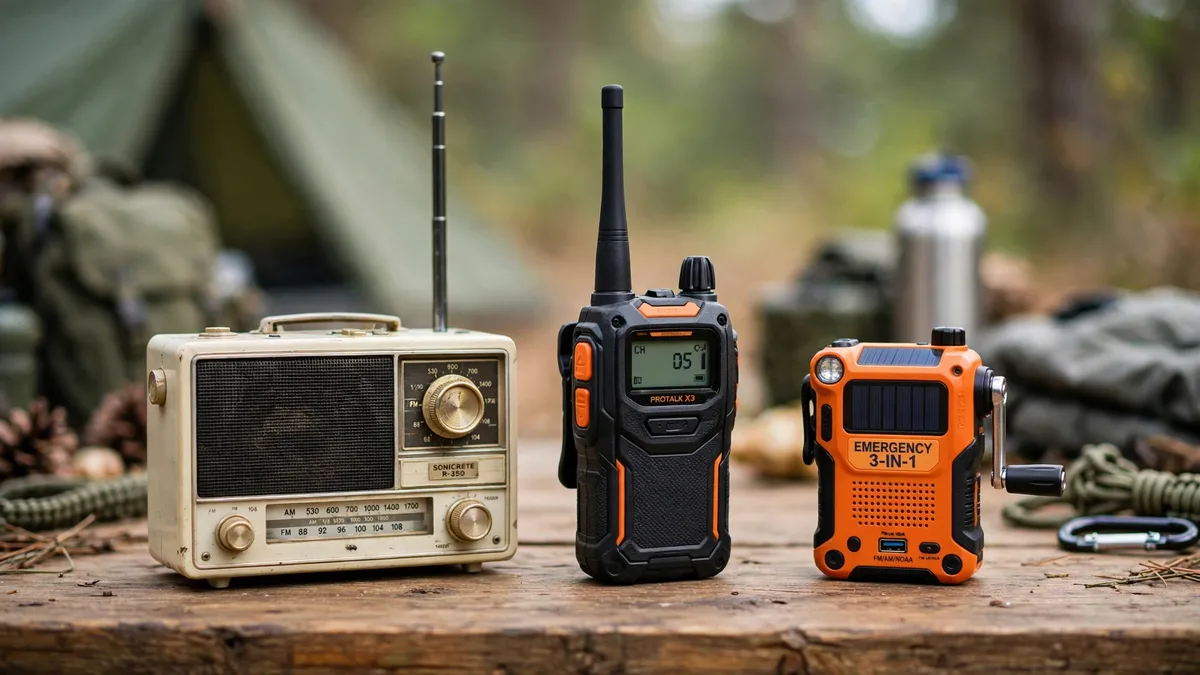
A portable radio is a compact, lightweight receiver designed to be used anywhere without a fixed connection to the mains. It runs on batteries, rechargeable cells, or even solar power and a hand crank, and it usually comes with a telescopic antenna and a headphone jack.
Its biggest advantage is independence: you can carry it in your pocket, backpack or glove compartment and have instant access to news, sports, music and weather alerts.
Types of Portable Radios
Not all portable radios are the same. These are the main categories:
Classic AM/FM Radios
These are the most common and affordable. They pick up medium wave (AM) and frequency modulation (FM) stations. They are simple, reliable, and perfect for everyday use at home, in the workshop or in the field.
Digital DAB/DAB+ Radios
They offer better sound quality, no interference, and more available stations. They also show information on screen, such as the song or program name. However, they depend on digital coverage being available in your area.
Shortwave Radios
Designed for people who want to tune in to international or distant stations. They are popular with hobbyists and travelers, and they usually have better sensitivity and more precise tuning.
Solar and Hand-Crank Radios
These are the favorites for emergencies and hiking. They charge via a solar panel or by turning a crank, and many include a flashlight and a USB port for charging your phone.
Bluetooth Radios
They combine traditional radio with the ability to play music from your phone. They are very versatile and also work as a portable speaker.
Advantages of Portable Radios
- Real autonomy: many models offer dozens of hours of use on just a few batteries.
- No internet required: the signal arrives over the air, not through mobile data.
- Information in emergencies: when phone networks fail, the radio keeps informing you.
- Affordable price: reliable options are available at very low prices.
- Small size: they fit in any backpack and weigh very little.
- Ease of use: no setup or apps required.
How to Choose a Portable Radio
Before buying, be clear about what you will use it for. These are the most important criteria.
1. Reception Quality
Sensitivity and the antenna determine how many stations you will pick up and how clearly. A long telescopic antenna usually improves the signal, especially on FM. If you live in a rural or mountainous area, prioritize models with good sensitivity.
2. Power Source
Decide whether you prefer batteries, a rechargeable battery, or solar charging. Batteries are convenient and easy to replace; a rechargeable battery is cheaper in the long run; and solar or hand-crank charging is ideal as an emergency backup.
3. Size and Weight
If you will take it traveling or hiking, look for a compact, lightweight model. If you will mostly use it at home or in the workshop, you can opt for a larger one with a more powerful speaker.
4. Durability
For outdoor activities, look for water, dust and shock resistance. Some models have a rubberized casing or an IPX rating for extra protection.
5. Sound
A decent speaker makes a big difference. Check that it has good volume without distortion and, if you like music, acceptable bass. A headphone jack is an essential extra.
6. Additional Features
Some radios include:
- LED flashlight
- Alarm and clock
- Station presets
- Digital display with clock
- USB port or microSD card slot
- Weather alerts
Choose only the ones you will actually use so you don’t overpay.
Most Common Uses
At home: a portable radio is perfect for the kitchen, bedroom or garden. It takes up no space and moves easily from room to room.
Traveling and camping: it lets you follow local news, weather or music without using up data or your phone’s battery.
At work: many construction, maintenance and agricultural workers use them to keep them company during the day.
In emergencies: during blackouts, storms or natural disasters, a radio with batteries or a hand crank can be the only way to receive official instructions.
For sports and events: following a live game while walking or at the stadium is a very popular experience among fans.
Tips to Get the Most Out of It
- Extend the antenna fully and try different orientations until you find the best signal.
- Place it near a window if you are inside a building with thick walls.
- Keep it away from electronic devices that can cause interference, such as routers or microwaves.
- Save your favorite stations if your model allows it.
- Keep spare batteries in a dry, easy-to-reach place.
Care and Maintenance
- With minimal attention, a reliable portable radio like those from RadioRed can last many years:
- Remove the batteries if you won’t use it for long periods, to prevent leaks.
- Clean it with a soft, dry cloth; avoid chemical products.
- Protect it from moisture and extreme temperatures.
- If it has a rechargeable battery, don’t leave it fully discharged for months.
- Store it in a case or bag to avoid knocks while traveling.
Frequently Asked Questions
Do portable radios need the internet? No. AM/FM and DAB radios work through radio-frequency signals. Only models with an internet radio function require a connection.
How long do portable radio batteries last? It depends on the model and the volume, but many can run between 20 and 100 hours on one set of batteries.
Which is best for emergencies? A solar or hand-crank radio with a flashlight and USB port, since it doesn’t depend on batteries or mains electricity.
Is a DAB digital radio worth it? If there is good digital coverage in your area, yes: it improves the sound and the range of stations. If not, a quality AM/FM radio is enough.
Conclusion
Portable radios combine simplicity, autonomy and usefulness like few other devices. There is a model for every need: the classic AM/FM for everyday use, the digital one for those who want better sound, the solar one for emergencies, and the Bluetooth one for those who want versatility.
Before buying, think about how you will use it, check the reception quality and power source, and choose only the features you really need. With a good choice and basic care, you will have a reliable companion for years, both at home and away.