Have you ever paused while writing and wondered “drier or dryer – which one is correct?” You’re not alone.
This is a very common English spelling confusion, especially for writers, students, bloggers, and non-native English speakers. Both words look right. Both appear in dictionaries. Yet they are not always interchangeable.
People usually search for “drier or dryer” because they want a quick, clear answer. They may be writing an email, an article, or a social media post and don’t want to make a grammar mistake. Others are confused by British vs American English spelling rules, which often change small details like -er and -ier endings.
This article solves that confusion completely. You’ll learn the quick answer, the real difference, and when each spelling is correct.
We’ll also explain the history behind these words, show real-life examples, compare UK and US usage, and help you choose the right spelling for your audience. By the end, you’ll never hesitate again when choosing drier or dryer.
Drier or Dryer – Quick Answer
Both “drier” and “dryer” are correct, but they are used differently.
- Drier is the comparative form of “dry”
👉 Example: This towel is drier than the other one. - Dryer is usually a noun that names a machine or person
👉 Example: Put the clothes in the dryer.
Simple rule:
- Adjective = drier
- Noun (machine/person) = dryer
The Origin of Drier or Dryer
The confusion between drier or dryer comes from English word formation rules. The base word is “dry,” which comes from Old English drȳge, meaning “free from moisture.”
When English forms comparative adjectives, it often adds -er.
But when a word ends in -y, that y usually changes to i.
- dry → drier
- happy → happier
- busy → busier
However, English also adds -er to create nouns that describe tools or people who perform an action.
- bake → baker
- wash → washer
- dry → dryer
That’s why both spellings exist—they come from different grammatical rules.
British English vs American English Spelling
In this case, British and American English mostly agree, but usage matters more than location.
Key Difference
- Both UK and US English use drier as the adjective.
- Both use dryer as the noun for the appliance.
Comparison Table
| Usage | British English | American English |
|---|---|---|
| Comparative adjective | drier | drier |
| Clothes machine | dryer | dryer |
| Hair machine | dryer | dryer |
| Weather comparison | drier | drier |
✅ No major spelling conflict—only grammar matters.
Which Spelling Should You Use?
Your choice depends on how the word functions, not where you live.
Use drier if:
- You are comparing dryness
- You are describing weather, clothes, or air
👉 The climate is getting drier each year.
Use dryer if:
- You mean a machine or device
- You refer to a person who dries things
👉 The hair dryer is on the table.
Audience-based advice:
- US audience: Follow standard grammar rules
- UK/Commonwealth: Same rules apply
- Global readers: Use drier for description, dryer for machines
Drier Than or Dryer Than
Drier than correct form hai jab aap do cheezon ki dryness compare kar rahe hon.
- ✅ This towel is drier than the other one.
- ✅ The air is drier than it was yesterday.
- ✅ This summer is drier than last summer.
- ❌ This towel is dryer than the other one.
The adjective dry ka comparative form drier hota hai:
dry → drier → driest
Isliye jab meaning “more dry” ho, drier use karein. Cambridge bhi drier ko dry ka comparative form list karta hai.
Drier or Dryer for Washing Machine
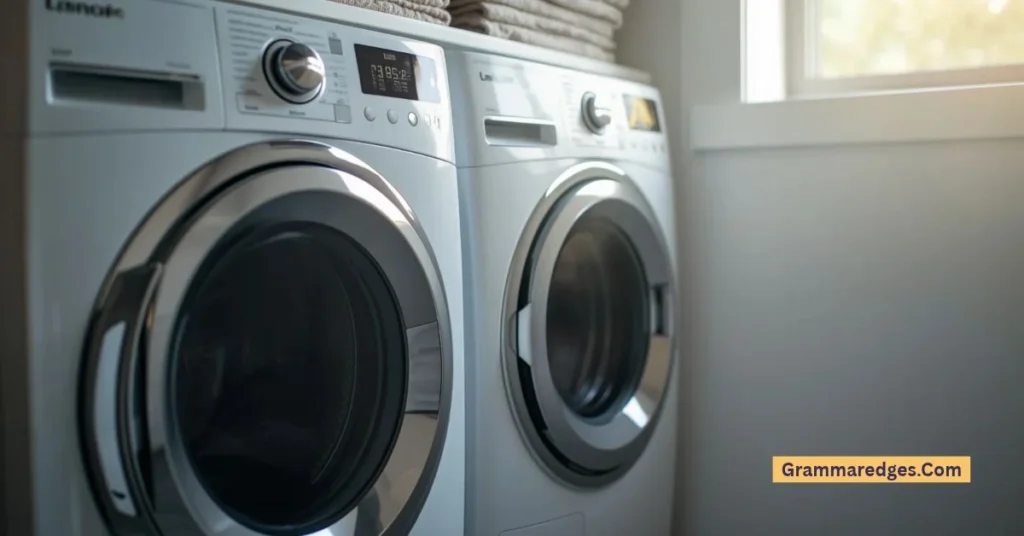
Washing machine khud kapre wash karti hai, jabki kapre dry karne wali separate machine ko dryer kaha jata hai.
Correct:
- ✅ clothes dryer
- ✅ tumble dryer
- ✅ washer-dryer
- ❌ clothes drier (modern standard usage mein less preferred)
Examples:
- I put the wet clothes in the dryer.
- Our dryer stopped working yesterday.
- We bought a new washing machine and dryer.
Easy rule:
Machine = dryer
Comparison of dryness = drier
Cambridge defines dryer as a machine that dries things, while Collins notes that drier can also occur as a variant noun, but dryer is the standard modern choice for the appliance.
Dryer or Drier Weather
Weather ke liye drier correct choice hai because you are comparing the amount of moisture or rain.
Correct:
- ✅ drier weather
- ✅ The weather is drier this year.
- ✅ We are expecting drier weather next week.
- ❌ dryer weather (when the intended meaning is less wet)
More Examples:
- The western region has drier weather than the coast.
- Farmers are worried about drier weather this summer.
- The climate is becoming drier.
Yahan drier ka meaning hai less wet or less humid.
Drier or Dryer UK
British English mein basic distinction bhi simple hai:
Drier → comparative adjective
Dryer → machine/device
British English Examples:
- The climate is getting drier. ✅
- This towel is drier now. ✅
- Put the clothes in the dryer. ✅
- We need a new hair dryer. ✅
British English mein tumble dryer common hai, although tumble drier bhi dictionary-recognized British variant hai. Oxford specifically tumble dryer ke saath tumble drier ko bhi British English form ke taur par lists karta hai.
So for a modern grammar website, the clearest advice is:
Use drier when comparing dryness and dryer when naming a machine.
Drier or Dryer for Wine
Wine ke context mein answer meaning par depend karta hai.
Agar aap wine ka taste or style describe kar rahe hain, drier use hota hai.
Examples:
- This wine is drier than the other one.
- I prefer drier wine with dinner.
- Red wine can taste drier depending on its tannins.
- This is a drier style of wine.
Yahan drier ka meaning machine nahi hai. It describes a wine with less perceived sweetness.
Important:
❌ dryer wine — normally wrong when you mean less sweet wine.
✅ drier wine — correct.
So:
Wine comparison → drier
Drying machine → dryer
Tumble Drier or Dryer
Dono forms mil sakti hain, especially British English mein.
Common modern form:
✅ tumble dryer
Also recognized in British English:
✅ tumble drier
Oxford lists both tumble dryer and tumble drier as British English forms.
Collins also gives tumble dryer, with tumble drier as an alternative, and notes that American English commonly uses dryer.
Examples:
- I bought a new tumble dryer.
- The clothes are in the tumble dryer.
- Our tumble dryer needs repairing.
For general international and modern web writing, tumble dryer is the safest choice.
Quick Drier vs Dryer Rule
| Situation | Correct Word | Example |
|---|---|---|
| Comparing dryness | Drier | This room is drier. |
| Weather | Drier | We expect drier weather. |
| Climate | Drier | The climate is drier. |
| Wine | Drier | I prefer drier wine. |
| Clothes machine | Dryer | Put clothes in the dryer. |
| Hair machine | Dryer | I need a hair dryer. |
| Tumble machine | Tumble dryer | The tumble dryer is full. |
Common Mistakes with Drier or Dryer
Here are mistakes people often make—and how to fix them.
❌ This towel is dryer than yesterday.
✅ This towel is drier than yesterday.
The drier is broken (meaning machine) ❌
The dryer is broken. ✅
❌ Summer days are dryer
✅ Summer days are drier
Tip: If you can replace the word with “more dry,” use drier.
Drier or Dryer in Everyday Examples
Emails
- Please leave the files in a drier place.
- The office dryer is not working.
News
- Experts warn of drier weather this year.
- Energy-efficient dryers save power.
Social Media
- These towels feel drier already!
- Just bought a new dryer 😍
Formal Writing
- The region experienced drier conditions.
- The dryer was tested for safety compliance.
Drier or Dryer – Google Trends & Usage Data
Search data shows that “dryer” is more popular overall because people often search for appliances like clothes dryers and hair dryers.
- USA & Canada: “dryer” searched more (appliance-related)
- UK & Australia: Balanced searches
- Weather & climate content: “drier” appears more
Context matters more than country.
Drier vs Dryer – Side-by-Side Comparison
| Feature | Drier | Dryer |
|---|---|---|
| Part of speech | Adjective | Noun |
| Meaning | More dry | Machine/person |
| Example | Drier air | Clothes dryer |
| Grammar rule | Comparative | Agent/tool |
| Common mistake | Used as noun | Used as adjective |
FAQs:
1. Is “drier” a real word?
Yes. It is the correct comparative form of “dry.”
2. Is “dryer” always a machine?
Mostly yes, but it can also mean a person who dries things.
3. Which is correct: drier weather or dryer weather?
Drier weather is correct.
4. Can British people say “dryer”?
Yes. Both UK and US English use “dryer” for machines.
5. Which spelling should I use in SEO writing?
Use both, but correctly and in context.
6. Is “hair drier” correct?
Grammatically, hair dryer is standard and preferred.
7. Does Grammarly flag this mistake?
Yes, if used incorrectly in context.
Conclusion :
The confusion around drier or dryer is common, but the solution is simple once you understand the grammar. Drier is an adjective used for comparison, while dryer is a noun, usually referring to a machine or person. This rule applies in both British and American English, making it easy to follow no matter your audience.
If you’re describing weather, clothes, air, or conditions, choose drier. If you’re talking about appliances like a clothes dryer or hair dryer, choose dryer. Remembering this small difference can instantly improve your writing and help you sound more professional and confident.For SEO writers, bloggers, and students, using the correct form also builds trust and authority.
When in doubt, ask yourself one question: Am I describing dryness, or naming a thing? The answer will guide you every time.