
Many people get confused about emigrate vs immigrate because both words describe moving from one country to another. They sound similar, they are often used in the same conversation, and both involve international relocation. This can make it hard to know which one to use.
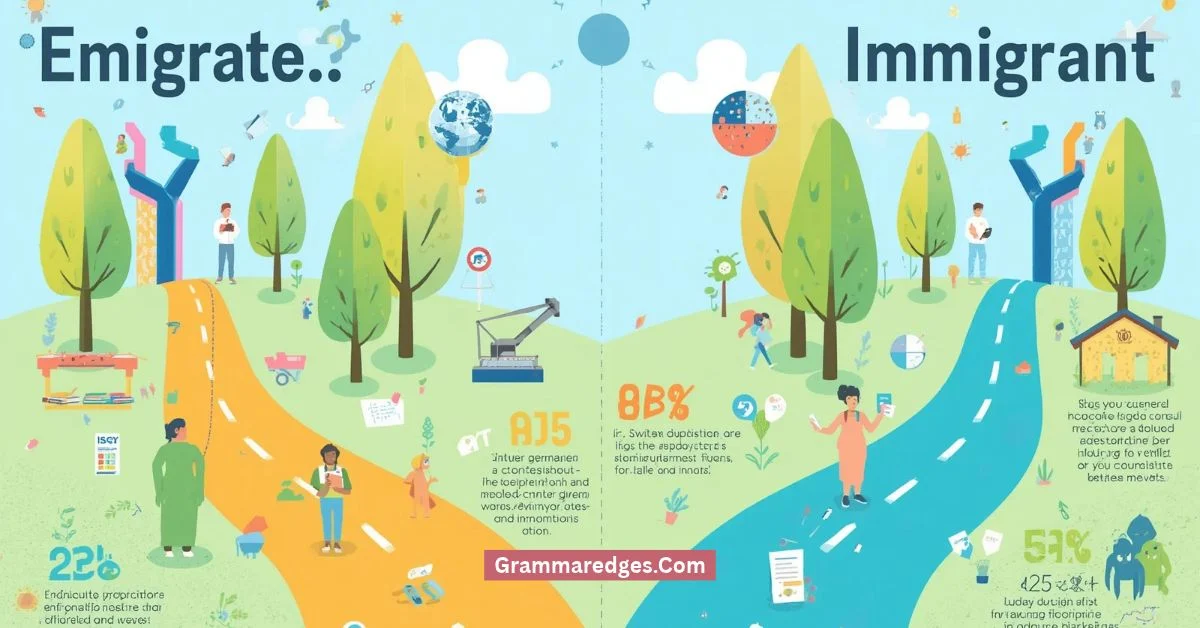
The good news is that the difference is simple once you understand the point of view. Emigrate means leaving your home country, while immigrate means entering a new country to live there. The same person can both emigrate and immigrate during the same move.
Whether you are writing a school assignment, preparing immigration documents, creating business content, or simply improving your English, knowing the correct word helps you communicate clearly.
This guide explains emigrate vs immigrate in plain English with examples, comparison tables, common mistakes, and practical writing tips. By the end, you’ll know exactly when to use each word with confidence.
Emigrate vs Immigrate – Quick Answer
The difference between emigrate and immigrate depends on your point of view.
- Emigrate = Leave your own country to live somewhere else.
- Immigrate = Enter another country to live there permanently or long-term.
Easy Examples
- She emigrated from India in 2020.
- She immigrated to Canada in 2020.
Notice how both sentences describe the same move.
- From a country → Emigrate
- To a country → Immigrate
Simple Memory Trick
- Emigrate = Exit a country.
- Immigrate = Inside a new country.
The Origin of Emigrate vs Immigrate
Both words come from the Latin word migrare, which means to move.
The prefixes change the meaning.
| Word | Prefix Meaning | Full Meaning |
|---|---|---|
| Emigrate | e- = out | Move out of a country |
| Immigrate | im- = into | Move into a country |
These words entered English hundreds of years ago and became common as international travel and migration increased.
Unlike many English words, emigrate and immigrate are not spelling variations. They are two different words with different meanings.
British English vs American English Spelling
One reason people search for emigrate vs immigrate is because they wonder if one spelling belongs to British English and the other to American English.
The answer is no.
Both British English and American English use the same spellings.
Examples
British English
- Thousands emigrated from Ireland.
- Many immigrated to Australia.
American English
- His grandparents emigrated from Italy.
- They immigrated to the United States.
The difference is based on meaning, not regional spelling.
Comparison Table
| Feature | British English | American English |
|---|---|---|
| Emigrate | ✅ Same spelling | ✅ Same spelling |
| Immigrate | ✅ Same spelling | ✅ Same spelling |
| Meaning | Leave a country | Leave a country |
| Usage | Standard | Standard |
Which Spelling Should You Use?
Since there are no spelling differences, your choice depends on what you want to describe.
Use Emigrate when talking about leaving.
Example:
My grandparents emigrated from Germany.
Use Immigrate when talking about arriving.
Example:
My grandparents immigrated to Canada.
Audience Advice
| Audience | Recommended Usage |
|---|---|
| US readers | Use both correctly based on meaning |
| UK readers | Use both correctly based on meaning |
| Australia | Same usage |
| Canada | Same usage |
| International audience | Follow the same rule: leave = emigrate, arrive = immigrate |
Common Mistakes with Emigrate vs Immigrate
These two words are often mixed up.
Mistake 1
❌ She immigrated from Mexico.
✅ She emigrated from Mexico.
Mistake 2
❌ He emigrated to Australia.
✅ He immigrated to Australia.
Mistake 3
❌ They emigrated into Canada.
✅ They immigrated to Canada.
Mistake 4
Using only one word for every situation.
Remember:
- From → Emigrate
- To → Immigrate
Mistake 5
Thinking they mean exactly the same thing.
They describe the same journey from different viewpoints.
Emigrate vs Immigrate in Everyday Examples
Our family plans to emigrate from South Africa next year.
News
Thousands immigrated to the country in search of better jobs.
Social Media
We finally immigrated to New Zealand today!
Government Document
Applicants who immigrated legally may apply after meeting residency requirements.
School Essay
Many families emigrated from Europe during the nineteenth century.
Conversation
Person A:
“Where did your parents come from?”
Person B:
“They emigrated from Brazil and immigrated to Canada.”
Emigrate vs Immigrate – Google Trends & Usage Data
Search interest for emigrate vs immigrate stays steady because people learning English often confuse these words.
Popular Countries
- United States
- United Kingdom
- Canada
- Australia
- India
- Ireland
These countries see high search volume because immigration is a common topic in education, government, and news.
Where These Words Appear Most
- Immigration websites
- Visa applications
- News articles
- English learning resources
- School textbooks
- Government publications
- Academic writing
Although immigrate often appears more frequently in modern news because countries discuss incoming migrants, emigrate remains equally important when talking about people leaving their home countries.
Emigrate vs Immigrate Comparison Table
| Feature | Emigrate | Immigrate |
|---|---|---|
| Meaning | Leave a country | Enter a country |
| Direction | From | To |
| Memory Trick | Exit | Into |
| Example | Emigrate from France | Immigrate to France |
| Focus | Country left behind | New country |
| Part of Speech | Verb | Verb |
| Common Use | Leaving home country | Settling in another country |
FAQs
Is emigrate the same as immigrate?
No. They describe the same move from different viewpoints. Emigrate focuses on leaving a country, while immigrate focuses on entering another country.
Which comes first, emigrate or immigrate?
Usually, a person emigrates from one country before immigrating to another.
Can one person both emigrate and immigrate?
Yes. Someone leaving India to live in Canada emigrates from India and immigrates to Canada.
Is immigrate only for permanent moves?
It usually refers to moving to another country for long-term or permanent residence, although legal definitions can vary.
Is there a spelling difference between British and American English?
No. Both varieties use emigrate and immigrate with the same spelling and meaning.
How can I remember the difference?
Think of the prefixes:
- E = Exit a country.
- I = Into a country.
Which word is more common?
Both are common. Immigrate appears more often in discussions about immigration policies, while emigrate is common when talking about people leaving their homeland.
Conclusion
Understanding emigrate vs immigrate is easier than it first appears. The key is to remember the direction of the movement. If someone is leaving their home country, they emigrate. If they are arriving in a new country to live, they immigrate. Both words can describe the same journey, but they focus on different parts of it.
There is no British or American spelling difference, so you only need to choose the word that matches the meaning you want to express. This simple rule will help you avoid common mistakes in school assignments, professional writing, visa documents, news articles, and everyday conversations.
If you’re unsure, remember the easy trick: E for Exit, I for Into. With that in mind, you’ll use emigrate and immigrate correctly every time.