
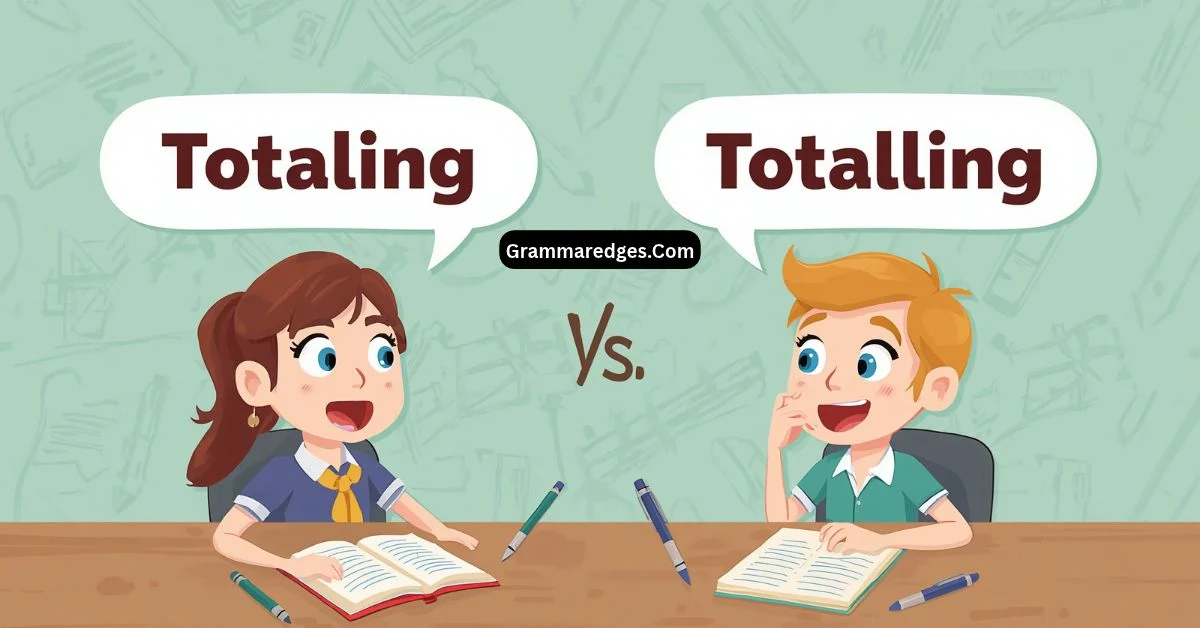
Have you ever typed “totaling” and wondered if it should be “totalling” instead? You are not alone. This spelling difference often confuses writers, students, and professionals because both forms are correct.
The main difference is where you use English. American English usually uses “totaling,” with one l. British English and many other forms of English use “totalling,” with two l’s.
Both words come from the verb “total,” meaning to add numbers together or reach a complete amount. The spelling changes because British and American English follow different rules when adding endings to words ending in l.
In this guide, you will learn which spelling is correct, where each form is used, and how to choose the right one for your audience. You will also see simple examples, common mistakes, and practical writing tips.
Quick tip: “Totaling” is standard in American English, while “totalling” is standard in British English.
Totaling or Totalling – Quick Answer
Both “totaling” and “totalling” are correct.
The choice depends mainly on the variety of English you are using:
- Totaling → American English
- Totalling → British English
- Totalling → Common in many Commonwealth varieties, including Australian and Canadian English
Examples
American English:
The expenses are totaling $2,500.
British English:
The expenses are totalling £2,500.
The meaning is exactly the same. Only the spelling changes.
The Origin of Totaling or Totalling
The word total comes from the Old French word total, which came from the Latin totalis, meaning “whole” or “entire.”
English later adopted total as both a noun and a verb. As a verb, it can mean to add numbers together or reach a particular amount.
The spelling difference appears when -ing is added to the word.
American English generally prefers totaling, keeping one l. British English commonly doubles the final l, producing totalling.
This reflects a wider spelling difference between British and American English. You can see similar patterns in words such as:
- traveling / travelling
- canceled / cancelled
- labeling / labelling
- modeling / modelling
So, totaling vs totalling is not a difference in meaning. It is mainly a difference in spelling conventions.
British English vs American English Spelling
American English often uses one l before endings such as -ing and -ed in words like total.
British English commonly doubles the final l.
| English variety | Preferred spelling | Example |
|---|---|---|
| American English | totaling | The cost is totaling $5,000. |
| British English | totalling | The cost is totalling £5,000. |
| Australian English | totalling | The bills are totalling $1,000. |
| Commonwealth English | totalling | The expenses are totalling £800. |
There are some differences among individual English varieties, but totaling is strongly associated with American usage, while totalling is widely used in British-style spelling.
Why Does the L Change?
The difference comes from spelling conventions for words ending in l.
American English tends to avoid doubling the l in many words when adding an ending:
- total → totaling
- travel → traveling
- cancel → canceled
British English commonly doubles the l:
- total → totalling
- travel → travelling
- cancel → cancelled
Which Spelling Should You Use?
The best choice depends on your audience.
For American Readers
Use totaling.
The project is totaling $10,000 in costs.
This spelling is appropriate for US schools, businesses, websites, newspapers, and professional documents.
For British Readers
Use totalling.
The project is totalling £10,000 in costs.
This follows common British spelling conventions.
For Australian and Commonwealth Readers
Totalling is generally the safer choice when following British-style spelling.
For a Global Website
Choose one spelling system and use it consistently. If your website mainly targets US readers, use totaling. If it targets the UK or Commonwealth countries, use totalling.
Consistency is often more important than choosing one spelling as universally “correct.”
Common Mistakes with Totaling or Totalling
One common mistake is thinking that one spelling is always wrong.
❌ The costs are totalling $4,000.
✅ The costs are totaling $4,000. (American English)
❌ The costs are totaling £4,000.
✅ The costs are totalling £4,000. (British English)
Another mistake is changing spelling styles within the same document.
For example, using traveling in one paragraph and travelling in another can make your writing look inconsistent.
Choose your preferred English variety before writing and follow it throughout the document.
Totaling or Totalling in Everyday Examples
These words appear in many types of writing.
In Emails
American:
The invoices are totaling $3,750.
British:
The invoices are totalling £3,750.
In News Writing
The damage is totaling millions of dollars.
Or:
The damage is totalling millions of pounds.
In Social Media
Just checked the bill. It’s totaling way more than I expected!
In Formal Writing
The annual expenses are totaling approximately $50,000.
Or:
The annual expenses are totalling approximately £50,000.
In Financial Writing
The transactions are totaling $25,000 for the quarter.
The word works well in business, accounting, finance, reports, and everyday communication.
Totaling or Totalling – Google Trends & Usage Data
Search interest for “totaling” and “totalling” is closely linked to regional spelling preferences.
Totaling tends to be more common in searches and writing from the United States, where American English spelling is standard.
Totalling is more common in the United Kingdom and countries that commonly follow British spelling, such as Australia.
Search behavior can also change based on the context. People searching for grammar help, spelling differences, or proofreading advice may search for both forms.
The important point is that Google Trends popularity does not decide which spelling is correct. Regional English conventions are the better guide.
Totaling vs Totalling: Variations Side by Side
| Word | English variety | Meaning | Example |
|---|---|---|---|
| totaling | American English | Adding up to a total | Costs are totaling $2,000. |
| totalling | British English | Adding up to a total | Costs are totalling £2,000. |
| total | All major varieties | Complete amount | The total is $2,000. |
| totaled | American English | Reached a total | The costs totaled $2,000. |
| totalled | British English | Reached a total | The costs totalled £2,000. |
FAQs About Totaling or Totalling
Is “totaling” grammatically correct?
Yes. Totaling is grammatically correct and is the standard spelling in American English.
Is “totalling” grammatically correct?
Yes. Totalling is also correct. It is commonly used in British English and other varieties that follow British spelling.
Which is correct: totaling or totalling?
Both are correct. Use totaling for American English and totalling for British English.
Is “totalling” British or American?
Totalling is primarily associated with British English and British-style spelling conventions.
Is “totaling” American English?
Yes. Totaling is the usual American English spelling.
Do totaling and totalling have different meanings?
No. They have the same meaning. The only difference is the spelling convention used by different English varieties.
Should I use totaling or totalling on my website?
Use the spelling that matches your main audience. Choose totaling for a US audience and totalling for a UK or British-style audience. Most importantly, stay consistent.
Conclusion
So, totaling or totalling—which one should you use? The simple answer is that both spellings are correct. The difference comes from regional English spelling rules, not from meaning or grammar.
If you write mainly for an American audience, choose totaling with one l. If your readers are in the UK or commonly use British English, choose totalling with two l’s. The same regional pattern can also appear in words such as traveling/travelling and canceled/cancelled.
For professional writing, the best approach is to identify your audience and follow one spelling style throughout your document. Do not mix American and British spellings without a reason.
Once you understand this simple difference, choosing between totaling and totalling becomes easy.