
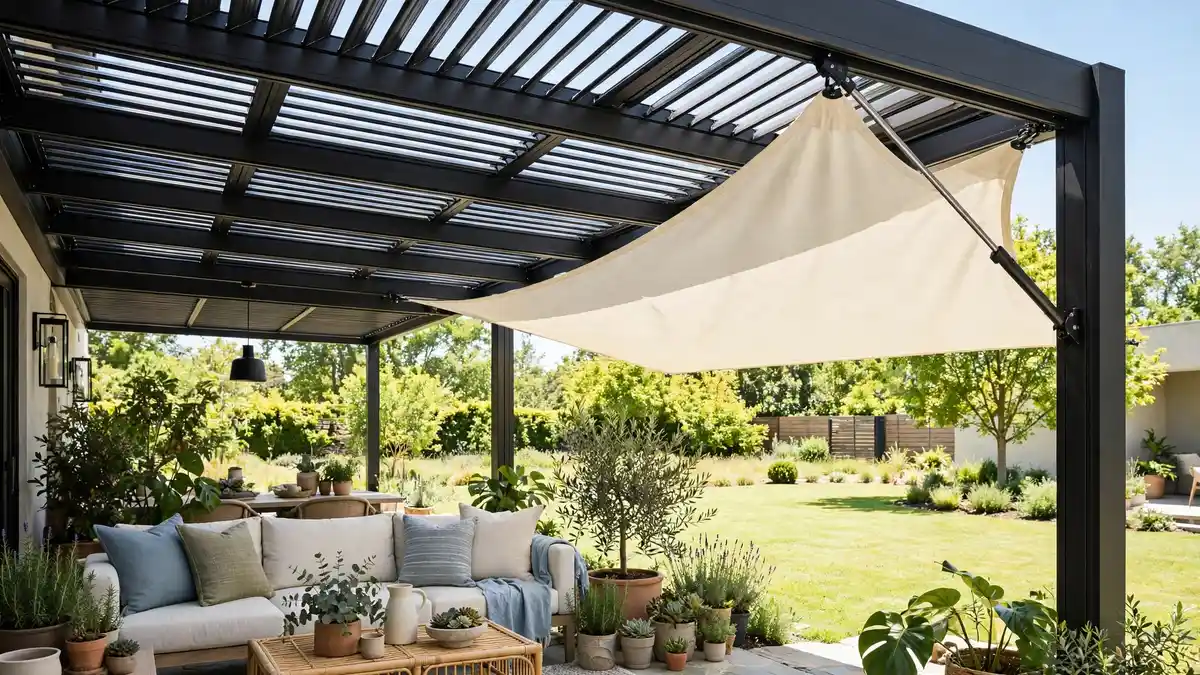
Two people sit on the same patio on the same summer afternoon. One sits in direct sunlight, the other just a few feet away under shade. The air temperature is identical. Yet one is sweating and squinting while the other feels perfectly comfortable. Same air, different experience.
That difference isn’t just imaginary. The thermometer only tells part of the story. How hot a space feels depends on much more than air temperature, including the sunlight hitting the skin and the heat radiating from surrounding surfaces. Physics explains it.
That’s why shade can feel almost magical on a hot day. Stepping out of direct sun can make a dramatic difference in comfort, even when the weather report hasn’t changed at all. Knowing why helps homeowners design outdoor spaces that stay enjoyable.
Why Shade Changes How Heat Feels
Heat reaches the body in several ways. Air temperature is one, but radiant heat is another powerful factor. Sunlight carries energy that warms skin, clothing, and surfaces directly, the same way a campfire warms a face from across the circle.
That’s why standing in direct sun feels so much hotter than standing in shade at the same air temperature. The body is absorbing extra energy from solar radiation. Block that radiation, and the body’s heat load can drop significantly.
Solar exposure also heats everything around a seating area. Patios, furniture, and walls soak up sunlight and become heat sources themselves. Blocking sun before it reaches those surfaces is one of the most effective ways to cool a space, and retractable awnings can reduce direct sunlight reaching patios and seating areas.
The Role of Materials and Surfaces
Different materials respond to sunlight in very different ways. Concrete and stone absorb a great deal of heat during the day and release it slowly, which is why a patio can still feel warm long after sunset. Stone stores heat.
Color plays a really big role too. Darker surfaces tend to absorb more sunlight and get hotter, while lighter surfaces reflect more of it. Decking materials vary as well, and some composite boards can become surprisingly hot to bare feet in full sun. Color counts.
Outdoor furniture follows the same rules. Metal chairs can become uncomfortably hot after an hour in direct sunlight, while fabric cushions and wood tend to stay more tolerable. Thinking about materials, colors, and shade together helps keep surfaces comfortable to sit on and walk across.
Understanding the Sun’s Movement
The sun doesn’t follow the same path all year. In summer, it climbs high overhead at midday and rises and sets farther toward the north. In spring and fall, it travels lower across the sky, sending light in at sharper angles. Seasons change everything.
Patio orientation shapes how that sunlight lands. South-facing spaces often receive strong sun through much of the day. East-facing patios catch morning light, while west-facing patios take the brunt of intense afternoon and early evening sun, often the hottest part of the day.
Afternoon exposure deserves very special attention here. Low western sun can shine underneath overhead structures and straight into seating areas. Effective shade placement considers not just what’s directly overhead, but the angle at which sunlight arrives at different times of day and year.
Smarter Ways to Keep Outdoor Areas Comfortable
Shade coverage is the foundation. Covering the main seating and dining areas during peak sun hours makes the biggest difference. Adjustable shade adds flexibility, allowing coverage to expand when the heat builds and pull back when sunlight feels welcome. Coverage comes first.
Ventilation matters just as much. Shade that traps hot air can feel stuffy, so allowing breezes to flow through keeps things fresh. Ceiling or standing outdoor fans can boost air movement on still, humid days, helping sweat evaporate more efficiently.
Landscaping offers wonderful natural cooling. Trees and tall plants provide shade while also cooling the air around them. Fabric selection matters too. Quality awning fabrics are designed to block sunlight and ultraviolet rays, and lighter colors may reflect more heat. Combining several strategies creates the most comfortable results.
Conclusion
Outdoor comfort depends on much more than just the number displayed on a thermometer. Radiant heat from the sun and from surrounding surfaces can make a space feel dramatically hotter than the air alone would suggest. The sun changes the math.
Materials, colors, and the sun’s changing path all influence how heat builds up on a patio. Understanding those factors helps explain why some spaces stay pleasant while others become unbearable by mid-afternoon, even on the very same street. Small factors add up quickly.
With a little basic knowledge, homeowners can make much smarter choices about shade placement, materials, airflow, and landscaping. Those choices help create outdoor spaces that stay enjoyable through warmer weather, turning blazing afternoons into time well spent outside instead of hiding indoors. Comfort is absolutely achievable.