
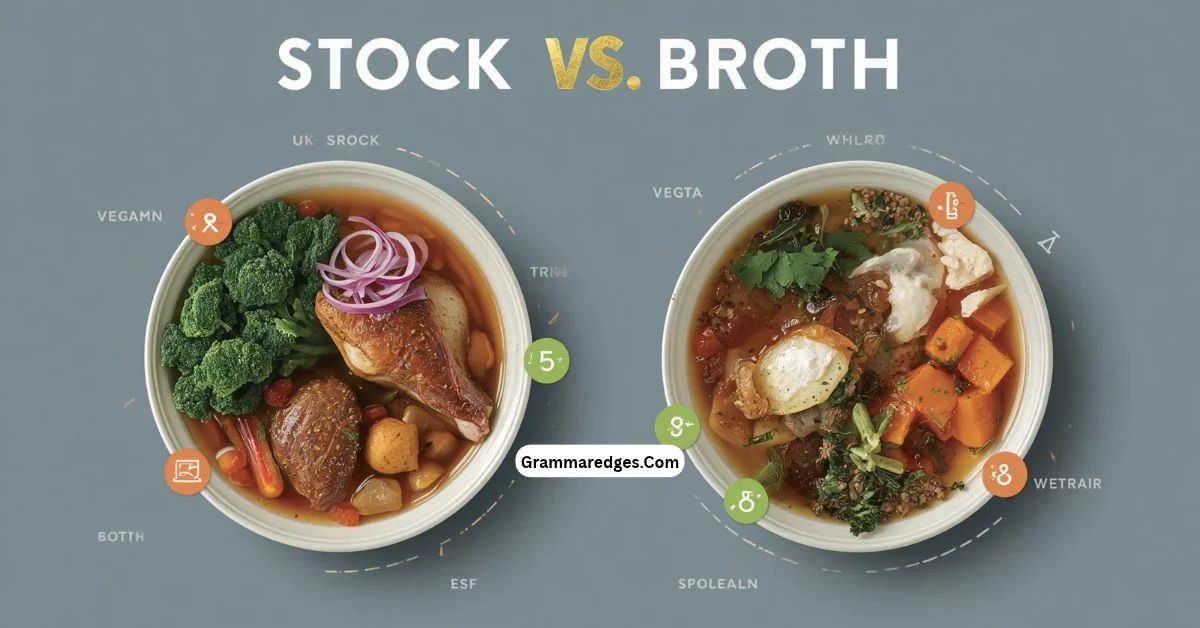
Stock and broth are similar cooking liquids, but they are traditionally made differently. Stock is usually made by simmering bones with vegetables and aromatics, producing a richer, gelatinous texture. Broth is generally made with meat, vegetables, and seasonings and is lighter and more ready to eat. In modern grocery stores, however, the terms are often used interchangeably.
Key Takeaways
- Stock is traditionally made mainly from bones and develops body from collagen and gelatin.
- Broth is usually lighter, more seasoned, and often made with meat.
- Stock works especially well in sauces, gravies, braises, and rich soups.
- Broth is useful for soups, rice, pasta, and sipping because it is generally ready to use.
- You can usually substitute one for the other, but texture and salt levels may change.
- Store-bought labels do not always follow the traditional distinction between stock and broth.
What Is Stock?
Stock is a flavorful liquid traditionally made by simmering bones, connective tissue, vegetables, and aromatics in water. Chicken, beef, pork, and fish can all be used to make different types of stock.
The bones are the important part. During simmering, collagen from connective tissue breaks down and contributes gelatin to the finished liquid. That is why a well-made stock can become slightly firm or jiggly when refrigerated.
Stock is generally designed to be a foundation for another dish, rather than something that must taste perfectly seasoned straight from the pot. Cooks can add salt, herbs, spices, or other ingredients later.
Traditional stock can take several hours to prepare. Longer cooking helps extract flavor and gelatin from the bones, although the exact time depends on the type of stock and ingredients.
Why Stock Becomes Gelatinous
The biggest practical difference between stock and broth is often body.
Bones and connective tissue contain collagen. With prolonged cooking, collagen contributes gelatin to the liquid. Once cooled, that gelatin can make homemade stock look almost jelly-like.
When heated again, the gelatin melts and gives the liquid a silky, fuller mouthfeel.
That quality makes stock particularly useful when you want a sauce or gravy with more body.
When to Use Stock
Use stock when you want:
- A richer mouthfeel
- Body in sauces and gravies
- A flavorful base for stews
- Extra depth in braised dishes
- A hearty base for soups
- A foundation for reductions and pan sauces
For example, if you are making a beef gravy, chicken pan sauce, or a rich stew, stock can provide the structure and depth you want.
What Is Broth?

Broth is a savory liquid usually made by simmering meat, vegetables, herbs, and seasonings in water. Bones may also be included, depending on the recipe.
Compared with traditional stock, broth is usually lighter, thinner, and more highly seasoned. It is also commonly prepared in less time.
Because broth is often seasoned to taste good on its own, you can serve it as a simple liquid or use it as an ingredient in another dish.
That makes broth especially convenient for everyday cooking. You can pour it into soup, use it to cook rice, or drink it warm.
Commercial broth can vary considerably in ingredients and sodium, so checking the nutrition label is useful when buying it at the grocery store. The FDA treats broth and stock as a category when tracking sodium in the U.S. food supply.
Why Broth Is Lighter
Broth is usually intended to provide flavor without as much body as traditional stock.
For example, chicken broth can give chicken noodle soup a savory liquid without making the soup noticeably thick or gelatinous.
It is also commonly seasoned, which means it may require less additional salt when added to a recipe.
When to Use Broth
Broth is a convenient choice for:
- Chicken noodle soup
- Clear soups
- Cooking rice or grains
- Stuffing
- Dumplings
- Quick sauces
- Pasta dishes
- Drinking or sipping
If the liquid is one of the main parts of the finished dish, a flavorful broth can be especially useful.
Stock vs Broth: Key Differences
| Feature | Stock | Broth |
|---|---|---|
| Traditional main ingredient | Bones | Meat |
| Cooking time | Usually longer | Usually shorter |
| Texture | Richer and more gelatinous | Lighter and thinner |
| Seasoning | Often little or none | Usually seasoned |
| Main purpose | Foundation for recipes | Flavorful liquid or cooking ingredient |
| Best for | Sauces, gravies, braises, rich soups | Soups, rice, pasta, sipping |
| When chilled | May gel | Usually remains liquid |
The traditional distinction is useful, but it is not an absolute rule. Recipes and commercial products can use the terms differently.
Can You Substitute Broth for Stock?
Yes, in most everyday recipes you can substitute broth for stock.
The biggest difference is usually texture and seasoning.
If you replace stock with broth in a sauce, the final result may be thinner and less gelatinous. If the broth is already salted, you may also need less additional salt.
For example, if a recipe calls for 2 cups of chicken stock for a pan sauce, 2 cups of chicken broth will generally work. You may simply need to reduce the sauce longer or adjust the seasoning.
This substitution is usually easy in soups, casseroles, rice dishes, and stews.
Can You Substitute Stock for Broth?
Yes, stock can also replace broth in many recipes.
Because traditional stock is often less seasoned, taste the dish before adding salt.
Stock can also bring more body to a recipe. That can be helpful in a hearty soup or stew, but it may be less desirable if you want an especially light, clear broth.
A simple rule is:
Broth adds ready-to-use flavor; stock adds flavor plus body.
Neither is automatically better. The better choice depends on what you are cooking.
Stock vs Broth for Common Recipes
Soup
Both work well for soup.
Choose broth when you want a light, seasoned soup in which the liquid itself is important. Chicken noodle soup is a good example.
Choose stock when you want a richer, fuller soup or stew.
Many recipes can successfully use either one, especially if you adjust seasoning and taste as you cook.
Sauces and Gravy
Stock is often the better traditional choice for sauces and gravy because its gelatin can provide body.
For example, chicken stock can help create a richer pan sauce after roasting chicken.
Broth can still work, especially if you reduce it, but the finished sauce may have less natural body.
Rice and Risotto
Both stock and broth can add much more flavor than plain water.
Broth is convenient when you want a seasoned cooking liquid. Stock can work well when you want a deeper flavor and richer texture.
For risotto, cooks commonly use broth or stock gradually during cooking, depending on the recipe and desired result.
Braises and Stews
Stock is particularly useful for braising and slow-cooked dishes because its richer body can complement meat and vegetables.
Broth can also be used successfully, especially when you prefer a lighter result.
Stock vs Broth vs Bone Broth
Bone broth adds another layer to the terminology.
Bone broth is generally made with bones and often some meat, then simmered for a long period. It is commonly seasoned and marketed as something that can be sipped on its own.
Traditional stock also relies on bones and collagen, so the two can overlap significantly.
The practical distinction is often more about how the product is prepared, seasoned, concentrated, and intended to be used than a single universal definition. Some culinary sources describe bone broth as a long-cooked hybrid between traditional stock and broth.
It is also worth avoiding exaggerated health claims. A gelatinous liquid does not automatically make a product a cure or treatment for a health condition.
What About Store-Bought Stock and Broth?
This is where the stock vs broth difference becomes confusing.
You can pick up two cartons at a U.S. grocery store, one labeled stock and one labeled broth, and find that their ingredients, texture, and uses are surprisingly similar.
Modern commercial labeling does not always match the traditional culinary definitions. Food writers and chefs have noted that manufacturers may use the terms somewhat interchangeably.
So when shopping, do not rely on the front label alone.
Check:
- Sodium content
- Ingredient list
- Whether it is seasoned
- Texture and concentration
- Whether it is regular, low-sodium, or unsalted
If you are making a recipe that will be reduced significantly, an unsalted or low-sodium option gives you more control over the final flavor.
How to Choose the Right One
A simple decision can make the choice easier:
Choose stock when:
- You need body.
- You are making gravy or sauce.
- You are braising meat.
- You want a richer stew.
- You want gelatin and a fuller mouthfeel.
Choose broth when:
- You want a lighter liquid.
- You are making a simple soup.
- You want something ready to sip.
- You are cooking rice or another grain.
- You want a more immediately seasoned liquid.
If you only have one in your pantry, do not panic. In many home recipes, the substitution will work.
Taste the dish as you go and adjust salt, liquid, and cooking time as needed.
Frequently Asked Questions
Is stock or broth better?
Neither is universally better. Stock is traditionally better suited to dishes that benefit from body, such as sauces and gravies. Broth is convenient when you want a lighter, seasoned liquid for soup or sipping. The best choice depends on the recipe and the texture you want.
Can you drink stock?
You can drink stock, but traditional stock is often lightly seasoned or unsalted and intended as a cooking base. If you want a liquid specifically designed for sipping, seasoned broth or bone broth may be more convenient.
Is chicken stock the same as chicken broth?
Not traditionally. Chicken stock is generally made with chicken bones and is valued for its gelatin and body, while chicken broth is usually made with chicken meat and is lighter and more seasoned. However, commercial products may blur this distinction.
Is vegetable stock the same as vegetable broth?
The distinction is much smaller because vegetables do not provide the collagen found in animal bones. In many recipes, vegetable stock and vegetable broth are effectively interchangeable.
Which has more sodium, stock or broth?
There is no universal rule because packaged products vary. Broth is often seasoned, while traditional stock is frequently unsalted or lightly seasoned. Always check the nutrition label rather than assuming one category automatically contains more sodium.
Conclusion
The simplest way to remember stock vs broth is this: traditional stock is about bones, collagen, body, and building a dish, while broth is about meat, seasoning, lighter texture, and ready-to-use flavor.
That distinction is helpful, but modern grocery products do not always follow it perfectly. When choosing between cartons, check the ingredients, sodium level, seasoning, and texture instead of relying only on the name.
For sauces, gravies, braises, and rich dishes, stock can provide useful body. For soups, rice, pasta, and sipping, broth is often an easy choice. And when a recipe calls for one but you have the other, substitution usually works with a few adjustments.