
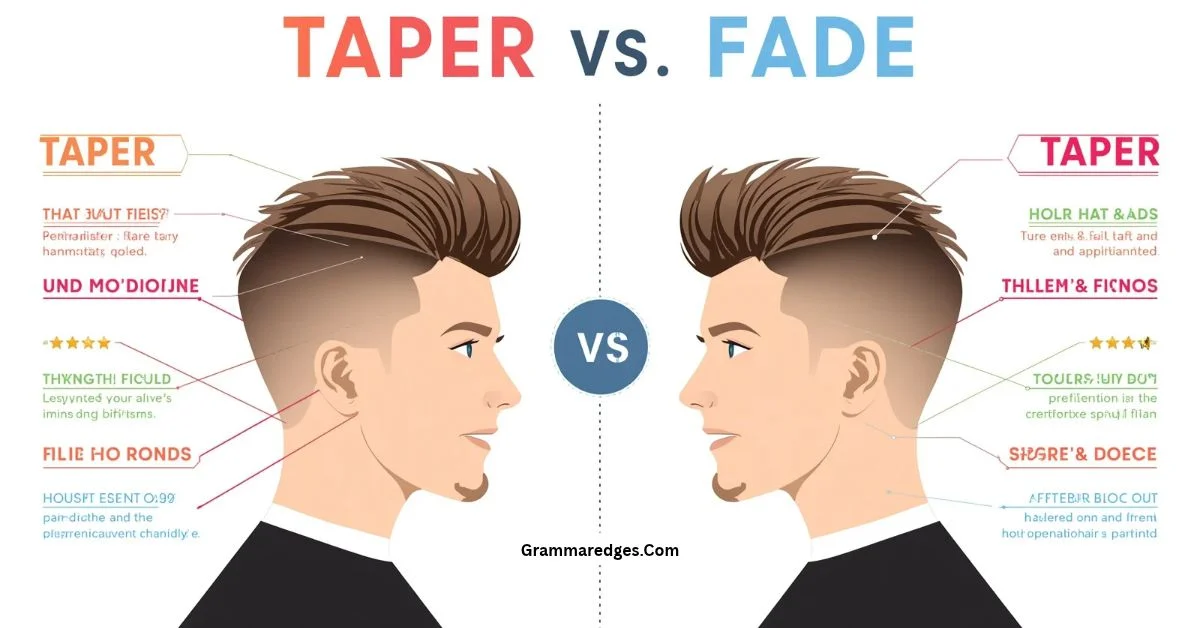
Taper vs fade mainly comes down to where and how much the hair is shortened. A taper usually concentrates the blend around the sideburns, temples, and neckline, leaving more length on the sides. A fade spreads the gradual transition across more of the sides and back and can become extremely short, including a skin fade. The exact terminology can vary between barbers, so describing the desired length and showing a reference photo is helpful.
Key Takeaways
- A taper usually keeps more hair on the sides and focuses on the edges.
- A fade creates a more noticeable transition across the sides and back.
- A skin fade specifically takes the shortest section down to the skin.
- A low taper and low fade are not necessarily the same haircut.
- Your best barber request should include the blend height, shortest length, and a reference photo.
What Is a Taper Haircut?
A taper haircut gradually reduces hair length around specific areas, usually the sideburns, temples, and neckline. Instead of removing a large amount of hair from the entire side of the head, a taper keeps more of the side panel intact.
The result is usually subtle. You still see plenty of hair on the sides, while the edges look cleaner and more controlled.
This is why the taper works well with styles such as a side part, comb-over, textured top, curly hair, and longer hairstyles. It can make the haircut look finished without dramatically changing the overall shape. Current barbering guides commonly describe the taper as a localized blend that preserves more side coverage.
Classic Taper
A classic taper gives the sides and back a gradual reduction toward the natural hairline. It is often associated with traditional and conservative men’s hairstyles.
The key idea is preserving length while cleaning up the edges.
Low Taper
A low taper keeps the transition close to the ears and neckline. Because the blend stays low, most of the side remains full.
It is useful if you want a noticeable cleanup without dramatically changing the silhouette of your haircut.
What Is a Fade Haircut?
A fade haircut also uses a gradual transition from longer hair to shorter hair, but the blended area generally covers more of the sides and/or back.
Fades can be customized by height and shortest length. Common categories include low, mid, high, and skin fades. GQ’s current barbering guide similarly describes fades as a family of variations rather than one single haircut.
One important clarification: not every fade has to mean completely bare skin. When you specifically want the scalp exposed at the shortest point, ask for a skin fade or bald fade. Barber terminology can differ from shop to shop, so specifying the shortest length is safer than relying on the word “fade” alone.
Low Fade
A low fade begins close to the lower sides of the head, usually around the area above the ears and toward the neckline.
It removes more side hair than a traditional taper but keeps the transition relatively low.
Mid Fade
A mid fade places the blend higher on the sides, creating more visible contrast between the top and sides.
It can work with many hairstyles, from textured crops to curls and short quiffs.
High Fade
A high fade moves the transition farther up the sides. This removes more side coverage and creates a stronger change between the top and sides.
Skin or Bald Fade
A skin fade, sometimes called a bald fade, takes the shortest portion down to bare skin. The hair then gradually becomes longer as the blend moves upward.
Because the contrast is stronger, the difference can be immediately noticeable.
Taper vs Fade: Key Differences
The easiest way to understand taper vs fade is to look at coverage and contrast.
A taper generally changes the hair around the perimeter while preserving more density on the sides. A fade changes a broader section of the sides and back.
There is also an important vocabulary issue. Some barbers and clients use “taper,” “fade,” and “taper fade” differently. Current barbering resources specifically note that these terms are often used interchangeably in everyday conversations.
So instead of relying on the label alone, describe the result you want.
Taper vs Fade Comparison Table
| Feature | Taper | Fade |
|---|---|---|
| Main area | Temples, sideburns, neckline | Larger section of sides and back |
| Side coverage | More hair remains | More hair is removed |
| Contrast | Usually subtle | Usually more noticeable |
| Skin exposure | Usually avoided in the blend | Can reach very short or skin level |
| Common variations | Classic taper, low taper | Low, mid, high, skin fade |
| Overall effect | Natural and understated | Defined and high-contrast |
| Grow-out | Often less noticeable | Short blends become visible as they grow |
| Best communication | Specify area and length | Specify height and shortest length |
The biggest practical difference is not simply “taper equals short and fade equals shorter.” The location and width of the blend matter too.
Low Taper vs Low Fade
This is one of the most common sources of confusion.
A low taper generally focuses the shortening around the temples, sideburns, and neckline. Most of the sides remain relatively full.
A low fade also keeps the transition low, but the blend normally extends farther across the side of the head.
Think of it this way:
Low taper: clean up the edges while keeping the sides fuller.
Low fade: create a visible gradient across more of the lower side.
Both can look subtle compared with a high fade, but they are not automatically identical.
What Is a Taper Fade?
The phrase taper fade creates even more confusion because its meaning can vary.
In many modern barbershops, it describes a fade concentrated around the temples and neckline, rather than a broad fade extending high across the sides. Some sources also use it for a hybrid or low fade-style finish.
That means two barbers may interpret “taper fade” slightly differently.
If you want one, avoid saying only:
“Give me a taper fade.”
Instead, try:
“I want a low taper fade around the temples and neckline, and I want to keep most of the side length.”
A reference picture makes the request even clearer.
Which Haircut Is Easier to Maintain?
In general, a taper can be more forgiving as it grows out because more hair remains around the sides and the contrast is usually softer.
A very short fade, especially a skin fade, can lose its freshly cut appearance faster as the shortest area grows. Some current barber guides suggest refreshing a taper roughly every three to five weeks and a skin fade around every two to three weeks, but actual timing depends on hair growth, desired sharpness, and the individual haircut.
If you prefer fewer barber visits, tell your barber that maintenance matters. They can adjust the shortest length and blend to make the haircut easier to grow out.
How to Tell Your Barber What You Want
The safest approach is to describe three things:
- Where you want the blend: low, mid, or high.
- How short you want it: longer guard, very short, or skin.
- How much side length you want to keep.
What to Say for a Taper
You could say:
“I want a low taper around the temples and neckline. Keep most of the sides full and don’t take it down to skin.”
If you want an even more traditional look:
“Give me a classic taper and keep the sides fairly long.”
What to Say for a Fade
Be more specific about the height:
“I want a low fade with a short blend around the sides and back, but keep the top longer.”
For a skin fade:
“I want a low skin fade, with the shortest part taken down to the skin.”
A photo can remove even more uncertainty. Barbering guides consistently recommend showing a reference when terminology may be interpreted differently.
Taper vs Fade for Different Hair Types and Styles
Both haircuts can work with straight, wavy, curly, and tightly textured hair. The more important question is how much side volume you want to preserve.
A taper can be useful when you want to keep natural density on the sides while cleaning up the outline.
A fade can create stronger contrast between textured hair on top and the shorter sides. This is one reason fades are frequently paired with curls, crops, buzz cuts, and other styles where the side-to-top contrast is part of the design.
Your face shape can also influence the visual effect, but it should not be treated as a strict rule. Hair texture, head shape, styling habits, and personal preference all matter.
Frequently Asked Questions
Is a taper better than a fade?
Neither haircut is universally better. A taper generally preserves more side length and creates a softer change, while a fade creates a broader and often stronger gradient. Your choice depends on the amount of contrast you want, how much side hair you want to keep, and how often you want to maintain the haircut.
Does a taper go to the skin?
A traditional taper does not normally take the blended side area down to bare skin. It gradually reduces the hair while retaining visible hair near the shortest part. If you specifically want the sides to reach bare skin, ask for a skin fade or bald fade.
Is a low taper the same as a low fade?
No. A low taper generally concentrates the shortening around the temples, sideburns, and neckline. A low fade usually creates a broader gradient across the lower sides and back. However, barbers may use these terms differently, so explain how much side hair you want to keep.
How often should you get a taper or fade?
There is no universal schedule. A taper may stay presentable for several weeks because its softer transition grows out gradually. A very short fade can need more frequent touch-ups if you want the blend to remain crisp. Your hair-growth rate and preferred appearance matter.
Can I bring a photo to my barber?
Yes. A reference photo is often one of the clearest ways to communicate a haircut. Ideally, show a picture from the side and back, then tell your barber the shortest length and how high you want the blend. This is especially useful because “taper fade” and similar terms can have different interpretations.
Conclusion
The main difference in taper vs fade is the amount and location of the blending. A taper usually cleans up the temples, sideburns, and neckline while keeping more hair on the sides. A fade spreads the transition across a larger area and can become extremely short, including a skin fade.
If you want a subtle, fuller-sided haircut, a taper may match that description. If you want a more visible gradient and stronger contrast, a fade may be closer to your goal.
Most importantly, don’t rely on the haircut name alone. Tell your barber how high you want the blend, how short you want the bottom, and how much side length you want to keep. When in doubt, bring a reference photo.