Virtual reality, or VR, has moved from science fiction into everyday life. A few years ago, VR headsets were expensive gadgets for gamers only. Today they are used for entertainment, education, fitness, work meetings, and even travel. The technology keeps getting cheaper, lighter, and more powerful, and more people are trying it for the first time every year. This article explains how VR technology works, what you can do with it, and where it is heading next.
What Is VR Technology?
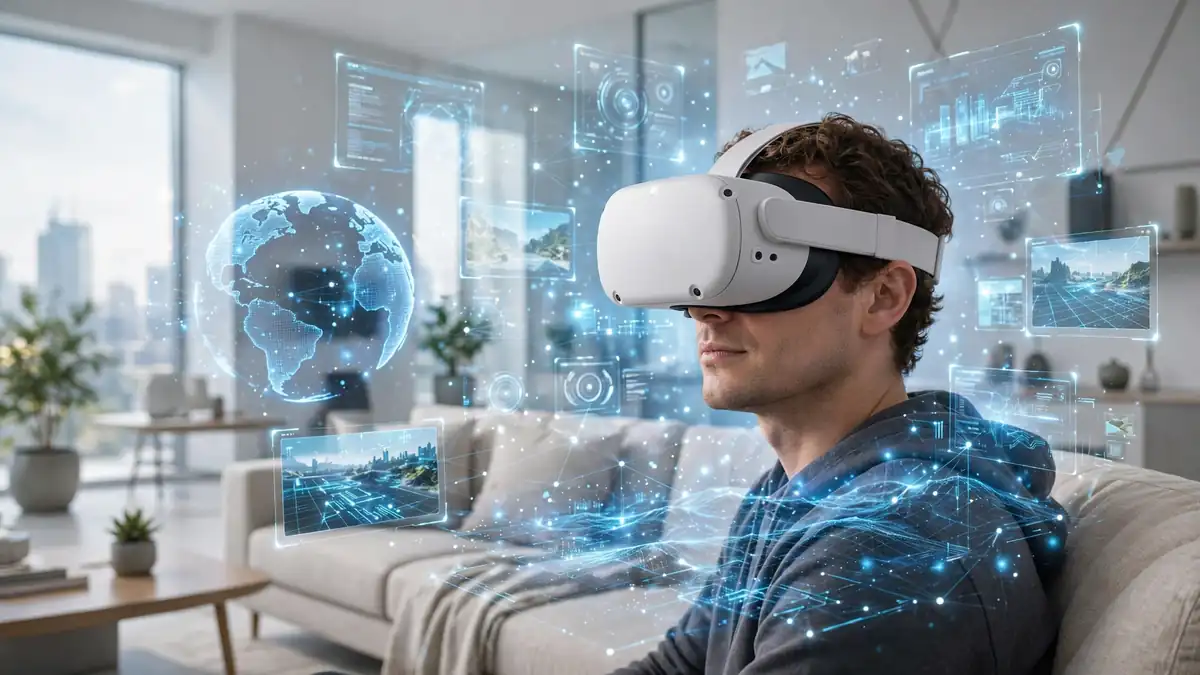
VR technology creates a computer-generated world that you can step into. When you put on a VR headset, the screens in front of your eyes show a three-dimensional scene, and the headset tracks the movement of your head. Turn your head left, and the scene moves left. Look up, and you see the sky above you. This tracking is what makes VR feel real. Your brain accepts the virtual world because it responds to your movements in the same way the real world does.
A modern VR system has three main parts. The headset contains the displays, lenses, and motion sensors. The controllers let your hands interact with the virtual world, so you can pick up objects, press buttons, and point at things. The software, whether it is a game, a video app, or a training program, creates the world itself. Together, these parts create a sense of presence, the feeling that you are actually inside the virtual place.
How VR Headsets Work
Inside a VR headset, there are two small high-resolution screens, one for each eye. Each screen shows a slightly different image, and your brain combines the two images into a single three-dimensional view. This is the same trick your eyes use in real life to judge depth and distance.
Motion tracking is the second key part. Sensors such as gyroscopes and accelerometers detect when you turn or tilt your head, and cameras or base stations track your position in the room. Good tracking is important because any delay between your movement and the image can cause discomfort. Modern headsets update the image many times per second, which keeps the experience smooth and natural.
Some headsets need to be connected to a powerful computer or a gaming console. Others are standalone devices with their own processor and battery, so you can use them anywhere without wires. Standalone headsets have become popular because they are simple to set up and easy to carry.
VR Videos and Immersive Entertainment
One of the most popular uses of VR is watching videos. A normal video shows you a flat rectangle, but a VR video surrounds you completely. You can watch a concert as if you are standing in the front row, explore a foreign city as if you are walking its streets, or sit courtside at a sports match. The viewer controls the camera simply by looking around, which makes every viewing experience personal.
Platforms that focus on immersive video are growing fast, and viewers now expect more than a flat screen. For example, VRSpy offers VR videos that show how far immersive entertainment has come, from realistic scenes to interactive experiences that respond to the viewer. The best VR videos do not just look impressive. They tell a story, use sound to guide your attention, and give you a reason to keep looking around.
VR is also changing gaming. In a VR game, you do not just control a character on a screen. You are the character. You can walk through a virtual forest, reach out to open a door, or duck behind cover in a shooting game. This physical style of play makes games more exciting, and it also makes them good exercise. Fitness games in VR are now a real category, with players boxing, dancing, and climbing without leaving their living room.
VR Streaming and Mixed Reality
Streaming is another area where VR is growing. Live VR streaming lets people attend events from home, such as concerts, conferences, and sports matches, and feel as if they are really there. Some platforms let viewers choose their own viewpoint, while others add social features so friends can watch together and talk while the event is happening.
Mixed reality is the next step. It blends the virtual world with the real world around you. A mixed reality headset can show digital objects on your real desk, or place a virtual screen on your real wall. This is useful for work and learning. An engineer can examine a 3D model of a machine on a table, a medical student can practise a procedure on a virtual patient, and a designer can walk a client through a virtual house before it is built.
Privacy in VR
As VR collects more data about how we move and look, privacy becomes important. A headset knows where you look, how you move your hands, and how big your room is. This information helps the system work, but users should know what is collected and how it is used. Before buying a headset or signing up for a service, check its privacy settings. Turn off features you do not need, use a strong password, and be careful about sharing personal information in social VR apps. Good privacy habits matter just as much in virtual worlds as they do on the regular internet.
The Future of VR Technology
The future of VR looks lighter, sharper, and more natural. Headsets are getting smaller and more comfortable, displays are getting clearer, and eye tracking is making virtual worlds respond to where you look. Wireless streaming is improving too, so high-quality VR will soon work without a powerful computer nearby.
In the coming years, VR will likely become a normal part of daily life. Students will visit historical places without leaving school, workers will meet in virtual offices, and families will share experiences across long distances. The technology still has challenges, such as cost and motion comfort, but each new generation of headsets solves more of them.
Conclusion
VR technology has grown from a gaming novelty into a serious platform for entertainment, learning, and work. Headsets are now lighter and cheaper, videos are more immersive, and mixed reality is opening new uses every year. Whether you are watching a VR video, playing a game, or attending a virtual event, the experience is becoming more natural and more personal. The virtual world is no longer a distant idea. It is here, and it is only getting better.