
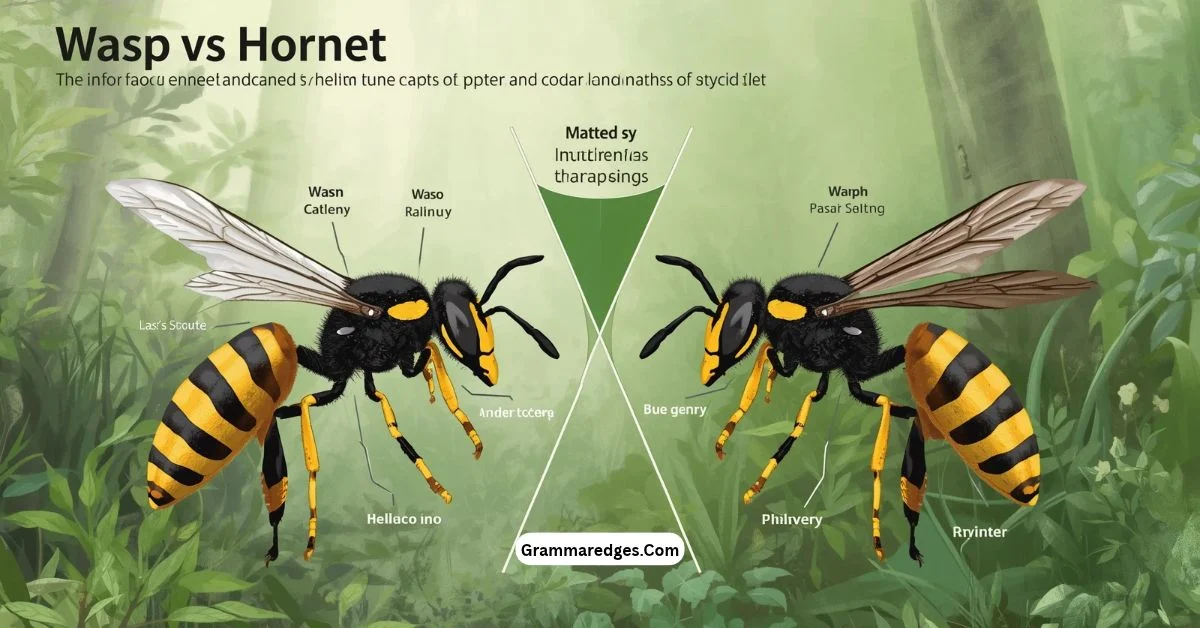
The main difference in wasp vs hornet is classification: a hornet is a type of wasp, but not every wasp is a hornet. True hornets belong to the genus Vespa and are generally larger and more robust than many common wasps. In the U.S., however, some insects called “hornets,” such as the bald-faced hornet, are actually aerial yellowjackets.
Key Takeaways
- All true hornets are wasps, but not all wasps are hornets.
- Hornets are generally larger and more robust than many common wasps.
- A bald-faced hornet is technically an aerial yellowjacket, not a true hornet.
- Nest shape, body color, size, and location can help with identification.
- Both wasps and hornets can sting, especially when their nests are disturbed.
Are Hornets and Wasps the Same Thing?
If you have ever seen a large stinging insect flying around your yard, you may have wondered whether it was a wasp or a hornet.
The confusing part is that the two terms are related.
All true hornets are wasps, but not all wasps are hornets.
Wasps are a broad group of insects. They include paper wasps, yellowjackets, mud daubers, cicada killers, and many other species. True hornets are a more specific group within the wasp family Vespidae.
In scientific classification, true hornets belong to the genus Vespa. That means the word “hornet” does not simply mean “a very large wasp.”
Common names make things more confusing in the United States. The bald-faced hornet, for example, is not a true hornet. Penn State Extension classifies it as an aerial yellowjacket in the genus Dolichovespula.
So, when comparing a wasp vs hornet, it helps to look beyond the common name.
Wasp vs Hornet: Key Differences
The easiest way to compare them is to look at classification, size, body shape, color, behavior, and nests.
| Feature | Wasp | Hornet |
|---|---|---|
| Classification | Broad group of insects | Specific type of wasp |
| Typical size | Varies greatly by species | Generally larger than many common wasps |
| Body | Often slender | Usually thicker and more robust |
| Color | Yellow, black, brown, red, or mixed | Varies by species |
| Nest | Ground, walls, eaves, branches, or other locations | Often enclosed paper nests or protected cavities |
| Behavior | Varies from relatively calm to defensive | Social species often strongly defend nests |
| Sting | Can sting repeatedly | Can also sting repeatedly |
| Example | Paper wasp or yellowjacket | European hornet |
These are general identification clues, not absolute rules. Wasps are an extremely diverse group, so there can be considerable variation between species.
Size and Body Shape
Size is one of the first things people notice.
Many common wasps, such as yellowjackets, are relatively small. The University of Minnesota Extension lists yellowjackets at roughly 3/8 to 5/8 inch long, although species and castes vary.
European hornets are substantially larger. Cornell describes them as about 1 to 1.5 inches long, making them noticeably larger than many familiar wasps.
Hornets also tend to have a thicker, heavier-looking body.
However, size alone is not enough to identify an insect. Some wasps, including cicada killers, can be quite large. That is why experts recommend considering color, markings, nesting behavior, and other characteristics together.
Color and Appearance
Common wasps can have many different appearances.
Yellowjackets are often bright yellow and black, with a smooth, shiny body. Paper wasps can be black, brown, reddish, or yellowish depending on the species.
True hornets can look different.
The European hornet has reddish-brown and yellow coloring. Its abdomen has darker areas toward the front and yellow portions toward the rear, with distinctive darker markings.
The bald-faced hornet is mostly black with white or cream markings. Despite its common name, it is technically an aerial yellowjacket.
Behavior and Stinging
Neither wasps nor hornets should automatically be considered aggressive simply because they can sting.
Many wasps generally want to avoid people. Utah State University Extension notes that wasps will often fly away if left alone, while quick movements or attempts to strike them can provoke defensive behavior.
The biggest concern is usually a nest.
Social wasps and hornets may defend their colony when they believe it is threatened. This is why getting close to or disturbing a nest can be much riskier than encountering a single insect.
Both wasps and hornets can sting repeatedly. Unlike honey bees, these insects generally do not leave their stinger behind after one sting.
For people with serious insect-sting allergies, a sting can cause a severe reaction and requires prompt medical attention.
Nest Differences
Nest appearance can provide another useful clue.
Paper wasps often create open nests where the individual cells are visible. Their nests can resemble small upside-down umbrellas.
Yellowjackets commonly build enclosed paper nests, often underground, although some species nest above ground.
Bald-faced hornets build large, enclosed, grayish paper nests that are often attached to trees, shrubs, eaves, or structures.
European hornets typically build their nests in protected locations such as hollow trees, wall voids, or other enclosed spaces rather than the exposed football-shaped nests associated with bald-faced hornets.
Wasp vs Hornet Identification Table
If you are trying to identify an insect in your yard, use several clues together:
| What You See | More Likely |
|---|---|
| Small, bright yellow-and-black insect | Yellowjacket |
| Slender body and long dangling legs | Paper wasp |
| Large black-and-white insect | Bald-faced hornet/aerial yellowjacket |
| Large reddish-brown and yellow insect | European hornet |
| Large insect nesting underground | Could be a large wasp species or yellowjacket |
| Large gray paper nest hanging from a tree | Often bald-faced hornet |
| Hairy, fuzzy body | More likely a bee than a wasp or hornet |
Remember that appearance can vary by species, sex, and life stage. If identification matters for safe removal, a clear photograph or professional identification is better than relying on size alone.
Common Wasps and Hornets in the U.S.
European Hornet
The European hornet (Vespa crabro) is the best-known true hornet established in the eastern United States.
It is large, usually around 1 to 1.5 inches long, with reddish-brown and yellow coloring. Cornell notes that colonies may contain hundreds of workers and that nests are often located in hollow trees, old barns, or similar protected places.
Despite its intimidating appearance, it is not necessarily aggressive toward people when away from its colony.
Bald-Faced Hornet
The bald-faced hornet is one of the most common insects people mean when they say “hornet” in the United States.
It is black with white or cream-colored markings and builds a large, enclosed paper nest.
But scientifically, it is an aerial yellowjacket rather than a true hornet.
This is one of the most important facts to remember when researching wasp vs hornet.
Yellowjackets
Yellowjackets belong to several species in the genera Vespula and Dolichovespula.
They are usually smaller than European hornets and often have strong yellow-and-black markings. Some species nest underground, while others build aerial nests.
Yellowjackets can become a nuisance around outdoor food, trash, and drinks because adults may forage for sugary or protein-rich food.
Paper Wasps
Paper wasps are usually slimmer than yellowjackets and often have noticeably long legs.
Their nests are different, too. Instead of a fully enclosed outer shell, many paper wasp nests have exposed cells.
They are generally less defensive than some yellowjackets when away from their nests, but they can still sting if threatened.
Which Is More Dangerous: A Wasp or a Hornet?
There is no simple rule that says hornets are always more dangerous than wasps.
The actual risk depends on the species, the situation, how close you are to the nest, and whether someone has an allergy to insect venom.
A large hornet may look more frightening, but a colony of defensive yellowjackets can also pose a significant sting risk.
The safest approach is simple: do not handle, swat, or disturb a stinging insect or its nest unnecessarily.
If you discover a nest close to a doorway, children’s play area, workplace, or another high-traffic location, consider getting professional pest-control assistance rather than attempting a risky removal yourself.
What to Do If You Find a Wasp or Hornet Nest
First, keep your distance.
Do not poke the nest, hit it with an object, spray it casually, or block the insects’ normal flight path.
If the nest is in an area that people rarely use, leaving it alone may be the safest option. Many social wasp colonies are seasonal.
If the nest is in a high-traffic location or someone in the household has a serious sting allergy, professional assessment is a sensible choice.
Also remember that a large insect is not automatically a dangerous invasive species.
The USDA currently tracks invasive hornets such as the yellow-legged hornet, which has been detected in parts of Georgia and South Carolina. It is a different insect from the common bald-faced hornet.
Wasp vs Hornet vs Yellowjacket
These three terms are easy to mix up.
Wasp is the broadest term. It covers many different species and groups.
Yellowjacket generally refers to social wasps in the genera Vespula and Dolichovespula.
Hornet technically refers to wasps in the genus Vespa, although common names in North America sometimes use “hornet” for other insects.
That is why the name bald-faced hornet can be confusing. It sounds like a true hornet, but it is actually an aerial yellowjacket.
A Simple Way to Remember It
Think of the relationship like this:
Wasp → broad group
Hornet → one type of wasp
Yellowjacket → another group of wasps
This makes the basic wasp vs hornet comparison much easier to understand.
Frequently Asked Questions
Are hornets bigger than wasps?
Generally, true hornets are larger and more robust than many common wasps, especially yellowjackets and paper wasps. However, wasps vary greatly in size, so a large wasp can be bigger than a small hornet-like insect.
Is a bald-faced hornet a true hornet?
No. Despite its common name, the bald-faced hornet is technically an aerial yellowjacket in the genus Dolichovespula. It is not a true hornet in the genus Vespa.
Can hornets sting more than once?
Yes. Hornets and other wasps can generally sting repeatedly because their stingers are not normally left behind in the victim like those of honey bee workers.
Which is more aggressive, a wasp or a hornet?
It depends on the species and situation. Social wasps and hornets can become highly defensive when their nests are threatened. A single insect away from its nest may simply fly away if left undisturbed.
What does a hornet nest look like?
It depends on the species. Bald-faced hornets commonly build large, enclosed gray paper nests that hang from trees or structures. European hornets usually nest in protected cavities rather than exposed, football-shaped nests.
Conclusion
The biggest point in the wasp vs hornet debate is simple: a hornet is a type of wasp, but not every wasp is a hornet.
True hornets are generally larger and heavier-bodied than many familiar wasps, but size alone is not enough for identification. Color, body shape, nest design, location, and behavior provide better clues.
For U.S. readers, the terminology can be especially confusing because the bald-faced hornet is actually an aerial yellowjacket, while the European hornet is a true Vespa hornet.
When you see one near your home, avoid disturbing it or its nest. If identification or removal is important, use multiple visual clues or seek professional help rather than relying on the insect’s common name.