
If you’ve ever been elbowed awake by a frustrated partner, or woken yourself up mid-snore, you already know snoring is more than just an embarrassing sleep habit. For millions of people, it’s a nightly disruption that strains relationships, fragments sleep, and — in some cases — signals a deeper health issue worth paying attention to.
The truth is, snoring isn’t one-size-fits-all. It can stem from something as simple as sleeping on your back or as significant as an underlying airway condition like obstructive sleep apnea. That’s why generic advice like “just lose weight” or “try nasal strips” doesn’t work for everyone.
This guide breaks down exactly why snoring happens, walks through solutions ranging from free lifestyle tweaks to medical interventions, and helps you figure out when it’s time to stop troubleshooting on your own and see a specialist. Let’s get into it.
The Science of Snoring
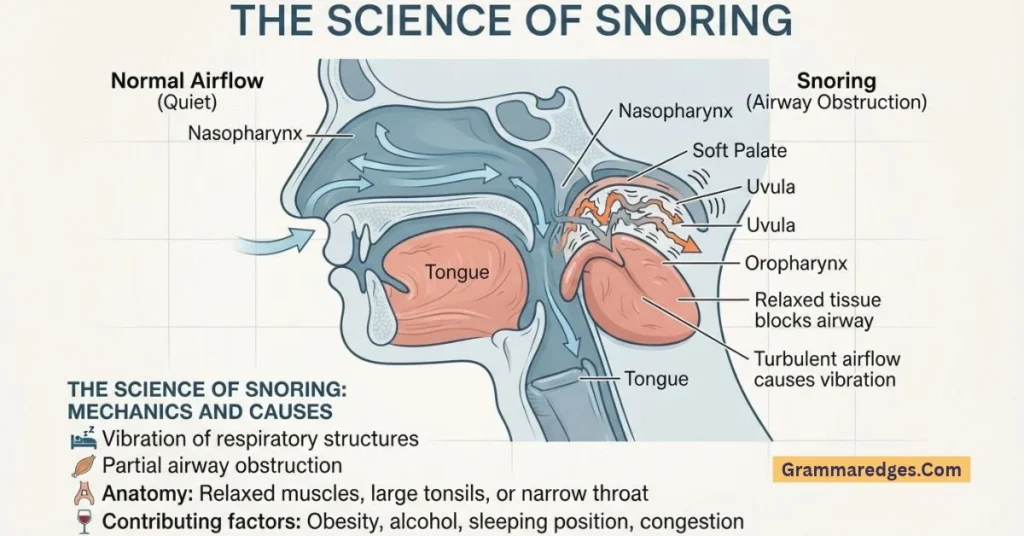
To understand how to stop snoring, it helps to understand what’s actually happening in your airway while you sleep.
The anatomy involved
Snoring originates in the upper airway — the space that includes your nasal passages, the soft palate (the fleshy back portion of the roof of your mouth), the uvula (the small tissue flap that hangs at the back of your throat), your tongue, and the walls of your throat itself. During waking hours, muscles keep this passage open and firm. But once you fall asleep, those muscles relax.
The mechanics of the sound
As you breathe in and out during sleep, air has to pass through this now-narrower, floppier passage. When the space is tight enough, airflow becomes turbulent instead of smooth — similar to water rushing through a narrowed pipe. That turbulence causes the soft tissues of the throat and palate to vibrate against each other, and it’s this vibration that produces the sound we recognize as snoring. The louder and rougher the snore, the more restricted the airflow typically is.
Why it often worsens with age
As we get older, throat muscles gradually lose tone, much like muscles elsewhere in the body. This makes the airway more prone to collapsing or narrowing during sleep, which is part of why snoring tends to become more frequent or pronounced in middle age and beyond — even in people who didn’t snore much when younger.
Understanding this mechanism matters because nearly every snoring solution — from side-sleeping to CPAP machines — works by targeting one part of this process: keeping the airway open, reducing tissue vibration, or improving muscle tone.
Here’s Section III, following the outline:
Root Causes

Snoring rarely has a single cause. Identifying which factors apply to you is the first step toward choosing a solution that actually works.
A. Anatomical factors
Some people are simply built in a way that predisposes them to snoring. A deviated septum — where the wall between the nostrils is off-center — can restrict nasal airflow. Enlarged tonsils or adenoids, common in children but present in some adults too, physically narrow the throat. A longer or thicker soft palate and uvula can vibrate more easily than average, and nasal polyps (soft, noncancerous growths in the nasal lining) can block airflow much like chronic congestion does.
B. Positional factors
Sleeping on your back is one of the most common snoring triggers. In this position, gravity pulls the tongue and soft palate backward toward the throat, narrowing the airway right at the point where vibration is most likely.
C. Lifestyle factors
Alcohol, sedatives, and muscle relaxants all relax the throat muscles more than natural sleep does, making the airway more likely to collapse. Smoking irritates and inflames the airway lining, contributing to swelling and congestion. Weight gain — particularly around the neck — adds soft tissue that can press on the airway; even a modestly larger neck circumference is linked to increased snoring risk.
D. Congestion-related causes
Allergies, colds, and sinus infections all block nasal passages, forcing mouth breathing, which is far more likely to produce snoring than nasal breathing.
E. Other contributors
Dehydration can thicken nasal and throat secretions, increasing friction and vibration. General sleep deprivation makes muscles go slacker than usual. Hormonal shifts during pregnancy and menopause can also increase swelling in nasal tissues or change fat distribution around the neck, both of which raise snoring risk.
Types of Snoring (and Why It Matters to Distinguish Them)
Not all snoring is the same, and figuring out which category yours falls into can point you toward the right fix much faster than trial and error.
Nasal vs. mouth/throat snoring
Nasal snoring originates from blocked or narrowed nasal passages — think congestion, allergies, or a deviated septum. It often has a slightly higher-pitched, whistling quality. Mouth and throat snoring, by contrast, comes from the collapse of the soft palate, tongue, or throat tissue, and tends to produce a deeper, rattling sound. The distinction matters because a nasal strip won’t do much for throat-based snoring, and a mouthguard won’t fix a blocked nose.
Positional vs. non-positional snoring
Positional snoring happens mainly (or only) when sleeping on your back, and it often improves significantly or disappears entirely with side sleeping. Non-positional snoring occurs regardless of sleep position, which usually points to a more structural or chronic cause — like excess tissue, anatomy, or airway inflammation — that position changes alone won’t resolve.
Simple snoring vs. snoring linked to obstructive sleep apnea (OSA)
This is the most important distinction of all. Simple (or “primary”) snoring is a sound issue without significant breathing disruption — annoying, but not typically dangerous. Snoring linked to OSA involves actual pauses or near-pauses in breathing, where the airway partially or fully collapses, temporarily cutting off airflow. This type is often louder, more irregular, and followed by choking or gasping sounds. Recognizing this difference is critical because OSA carries real health risks and requires medical evaluation, not just home remedies.
Here’s Section V, following the outline:
Quick, Low-Effort Fixes
If your snoring is mild, positional, or tied to temporary congestion, these low-effort changes are worth trying first — most cost little to nothing and can show results within a few nights.
Sleep position changes
Since back sleeping is one of the most common snoring triggers, switching to side sleeping is often the single most effective free fix. If staying on your side is hard to maintain overnight, positional aids can help train the habit — from a simple body pillow wedged behind your back to specialized positional sleep devices designed to gently discourage rolling onto your back.
Head elevation
Raising the head of your bed by a few inches, or switching to a slightly thicker or wedge-shaped pillow, helps keep the airway more open by reducing the backward pull of gravity on the tongue and soft palate.
Nasal strips, dilators, and saline rinses
For congestion-related or nasal snoring, external nasal strips physically widen the nostrils, while internal nasal dilators hold nasal passages open from within. A saline rinse before bed can clear mucus and reduce inflammation, particularly helpful during allergy season or a cold.
Reducing evening alcohol and sedative use
Since alcohol and sedatives relax throat muscles beyond their normal sleep state, avoiding them in the 3–4 hours before bed can noticeably reduce snoring intensity, especially in people who don’t typically snore when sober.
Hydration and sleep hygiene basics
Staying well-hydrated throughout the day helps keep nasal and throat secretions thinner, reducing the stickiness that contributes to vibration. Pairing this with a consistent sleep schedule — avoiding the overtiredness that causes muscles to go extra slack — rounds out this first line of defense.
Medium-Term Lifestyle Interventions
When quick fixes aren’t enough, these strategies take more consistency and time to show results — usually weeks rather than nights — but they address more persistent contributors to snoring.
Weight loss and its airway impact
Excess fatty tissue around the neck and throat can press on the airway, narrowing it even when you’re not congested or sleeping on your back. Losing even a modest amount of weight — research suggests as little as 10% of body weight — can meaningfully reduce neck circumference and snoring severity in people who are heavier person. This isn’t a fix for everyone (plenty of thin people snore), but for those where weight is a contributing factor, it’s one of the more impactful long-term changes available.
Allergy management and air quality
Since congestion is a major snoring trigger, controlling allergens in the bedroom can help significantly. This includes using a humidifier to add moisture to dry air (which can otherwise irritate nasal passages), an air purifier to reduce airborne allergens like dust and pet dander, and allergen-proofing steps like washing bedding frequently and keeping pets off the bed. Treating underlying seasonal or year-round allergies with appropriate medication can also reduce nighttime nasal swelling.
Quitting smoking
Smoking irritates and inflames the airway lining, contributing to swelling that narrows the passage and increases vibration. Quitting doesn’t produce instant results, but airway inflammation tends to improve over time, often easing snoring as a secondary benefit.
Myofunctional therapy and oral-throat exercises
This approach involves targeted exercises for the tongue, soft palate, and throat muscles, aimed at improving their tone and reducing the likelihood of collapse during sleep. Examples include pressing the tongue against the roof of the mouth and sliding it backward, or repeating specific vowel sounds forcefully to engage throat muscles. Research suggests consistent practice — often daily for several weeks — can meaningfully reduce snoring frequency and intensity for some people.
Here’s Section VII, following the outline:
Medical and Device-Based Solutions
When lifestyle changes aren’t enough — or when snoring is linked to a more significant airway issue — medical and device-based options offer more targeted intervention.
Oral appliances and mandibular advancement devices
Fitted by a dentist trained in sleep medicine, these mouthguard-like devices work by gently repositioning the lower jaw (and sometimes the tongue) forward during sleep. This forward shift helps keep the airway open by preventing the tongue and soft tissue from collapsing backward. They’re a common first-line medical option for both simple snoring and mild-to-moderate obstructive sleep apnea.
CPAP and other airway pressure therapies
Continuous positive airway pressure (CPAP) machines deliver a steady stream of pressurized air through a mask, keeping the airway physically open throughout the night. CPAP is considered the gold-standard treatment for moderate-to-severe obstructive sleep apnea, though some people find the mask uncomfortable at first. Related options, like BiPAP, adjust pressure differently for inhalation and exhalation and may suit people who struggle with standard CPAP settings.
Nasal surgery
For snoring rooted in nasal obstruction, procedures like septoplasty (straightening a deviated septum) or turbinate reduction (shrinking swollen nasal tissue) can significantly improve airflow. These are typically considered when structural nasal issues don’t respond to medication or other conservative treatment.
Soft palate procedures
Several procedures target the soft palate and uvula directly, including uvulopalatopharyngoplasty (UPPP), which removes excess throat tissue; laser-assisted uvulopalatoplasty, a less invasive laser-based alternative; and radiofrequency ablation, which uses heat to shrink and stiffen soft palate tissue, reducing its tendency to vibrate.
Newer options: hypoglossal nerve stimulation
For select cases of moderate-to-severe sleep apnea where CPAP isn’t tolerated, an implanted device can stimulate the hypoglossal nerve (which controls tongue movement) during sleep, gently moving the tongue forward to keep the airway open. This is a newer, more involved option typically reserved for specific candidates after a sleep specialist evaluation.
When Snoring Signals Something Serious
While most snoring is a harmless (if annoying) nighttime sound, certain patterns point to something that shouldn’t be ignored: obstructive sleep apnea (OSA).
Warning signs of obstructive sleep apnea
Pay attention if snoring is accompanied by loud, chronic snoring most nights of the week, noticeable pauses in breathing followed by gasping or choking sounds, waking up frequently during the night without knowing why, morning headaches or a persistently dry mouth, and excessive daytime sleepiness even after what seems like a full night’s sleep. A partner witnessing breathing pauses is often one of the clearest signals, since it’s difficult to notice this in yourself.
Health risks of untreated OSA
Left untreated, OSA does more than disrupt sleep. The repeated drops in oxygen and fragmented sleep place ongoing strain on the cardiovascular system, and OSA is linked to a higher risk of high blood pressure, heart disease, and stroke over time. It also significantly increases the risk of drowsy driving and workplace accidents due to impaired daytime alertness, and can contribute to mood changes, memory issues, and difficulty concentrating.
What a sleep study involves
Diagnosing OSA typically requires a sleep study, either done overnight at a sleep lab (polysomnography) or, increasingly, through an at-home sleep apnea test using a portable monitoring device. These studies track breathing patterns, oxygen levels, heart rate, and brain activity to determine whether — and how severely — breathing is being disrupted during sleep.
When to see a doctor vs. an ENT vs. a sleep specialist
If snoring is loud and frequent but there’s no sign of breathing pauses, a general physician or an ear, nose, and throat (ENT) specialist is a reasonable starting point, especially if nasal or structural issues are suspected. If OSA symptoms are present — breathing pauses, choking, excessive daytime fatigue — a sleep medicine specialist is better equipped to order a sleep study and guide treatment, which may range from CPAP to surgical referral depending on severity.
Special Populations
Snoring doesn’t affect everyone the same way. Certain groups face distinct causes, risks, and considerations worth addressing separately.
Snoring in children
Occasional snoring in kids, especially during a cold, is usually not a concern. But frequent or loud snoring in children is often linked to enlarged tonsils or adenoids, which can physically obstruct the airway. Red flags include snoring most nights, pauses in breathing, restless sleep, mouth breathing during the day, or behavioral issues like difficulty concentrating — since poor sleep in children can sometimes look like hyperactivity rather than tiredness. A pediatrician or pediatric ENT should evaluate persistent childhood snoring, as some cases are resolved with tonsil or adenoid removal.
Snoring during pregnancy
Many women who never snored before begin snoring during pregnancy, particularly in the second and third trimesters. This is often driven by hormonal changes that cause swelling in the nasal passages, combined with weight gain that can affect the airway. While usually not dangerous, new or worsening snoring during pregnancy should be mentioned to a doctor, since it has been associated with conditions like gestational hypertension in some cases and is worth monitoring.
Snoring differences by sex and age
Snoring is generally more common in men than in premenopausal women, largely due to differences in airway anatomy and fat distribution. However, this gap narrows significantly after menopause, when hormonal shifts increase snoring rates in women. Across both sexes, snoring tends to become more common with age as throat muscle tone naturally declines, making it a growing concern for both older individuals rather than a primarily male issue.
Debunking Common Myths
Misconceptions about snoring often lead people to either dismiss it when they shouldn’t, or waste time on remedies unlikely to help. Here are a few worth clearing up.
“Snoring is always harmless”
While most snoring is simple and not dangerous, it isn’t always harmless. Loud, chronic snoring — especially when paired with breathing pauses or daytime fatigue — can signal obstructive sleep apnea, a condition linked to real cardiovascular and safety risks if left untreated. Assuming all snoring is “just a noise” can delay a diagnosis that actually matters.
“Only heavier person people snore”
Weight is a contributing factor for many people, but it’s far from the only one. Thin, fit individuals can snore due to anatomical factors like a deviated septum, naturally narrow airway, enlarged tonsils, or simply sleeping on their back. Blaming snoring solely on weight can cause people to overlook other relevant causes — and can unfairly stigmatize snorers who aren’t heavier person at all.
“Home remedies always work”
Nasal strips, side-sleeping, and hydration can meaningfully help simple, mild snoring, but they aren’t a universal fix. If snoring stems from a structural issue like a deviated septum or is linked to sleep apnea, over-the-counter remedies typically won’t resolve it, and relying on them alone can delay appropriate medical treatment.
“Snoring means you’re sleeping deeply”
This is one of the most persistent myths. In reality, snoring — particularly when linked to airway obstruction — often correlates with fragmented, lower-quality sleep, not deeper rest. People with significant snoring or OSA frequently wake up feeling unrefreshed, precisely because their sleep is being repeatedly interrupted, even if they don’t consciously remember waking up.
Building a Personalized Anti-Snoring Plan

With so many possible causes and solutions, the most effective approach isn’t trying everything at once — it’s narrowing down what’s actually driving your snoring and matching it to the right fix.
Self-assessment questions
Start by gathering some basic information about your own snoring pattern. Does it happen only when you sleep on your back, or every night regardless of position? Is it worse during allergy season, after drinking, or when you’re overtired? Do you wake up with a dry mouth or headache? And critically, has a partner ever mentioned hearing pauses in your breathing or gasping sounds? These answers point toward whether your snoring is positional, congestion-related, lifestyle-driven, or potentially linked to something like sleep apnea.
Decision framework: lifestyle fix vs. device vs. medical evaluation
If your snoring is mild, positional, or clearly tied to a temporary trigger like a cold or alcohol, start with the low-effort fixes in Section V and If it persists despite these changes, or seems tied to weight, allergies, or general muscle tone, the medium-term interventions in Section VI are the next step.
If snoring is loud, constant, unaffected by position or lifestyle changes, or accompanied by any OSA warning signs from Section VIII, it’s time to move past self-treatment and consult a doctor, ENT, or sleep specialist for a proper evaluation.
Tracking progress
Whatever approach you take, tracking results makes it easier to know what’s actually working. Sleep tracking apps and some wearables can estimate snoring frequency and intensity, giving you objective data rather than guesswork. Partner feedback remains one of the most reliable indicators, since they can observe patterns you can’t hear yourself. Keeping a simple symptom diary — noting sleep position, alcohol intake, allergy flare-ups, and how rested you feel each morning — can help you and your doctor spot patterns over a few weeks, making it much easier to identify what’s actually driving the problem.
Conclusion
Snoring is rarely one problem with one universal fix — it’s a symptom with many possible causes, from simple sleep position to underlying airway anatomy to obstructive sleep apnea.
The good news is that this range of causes also means there’s a wide range of solutions: side sleeping and nasal strips solve it for some people, weight loss or allergy management works for others, and oral appliances, CPAP, or surgery address the more complex cases.
The key is matching the fix to the actual cause rather than guessing. Start with the low-effort, low-risk changes, give lifestyle interventions time to work if needed, and don’t hesitate to escalate to a medical evaluation if snoring is loud, persistent, or paired with breathing pauses and daytime fatigue.
Quieter nights are achievable for the vast majority of snorers — and the payoff extends beyond a peaceful bedroom. Better sleep quality supports cardiovascular health, mental clarity, and overall well-being, for you and anyone sleeping beside you.
If red flags for sleep apnea apply to you, don’t wait it out — a conversation with a doctor is a small step that can meaningfully protect your long-term health