
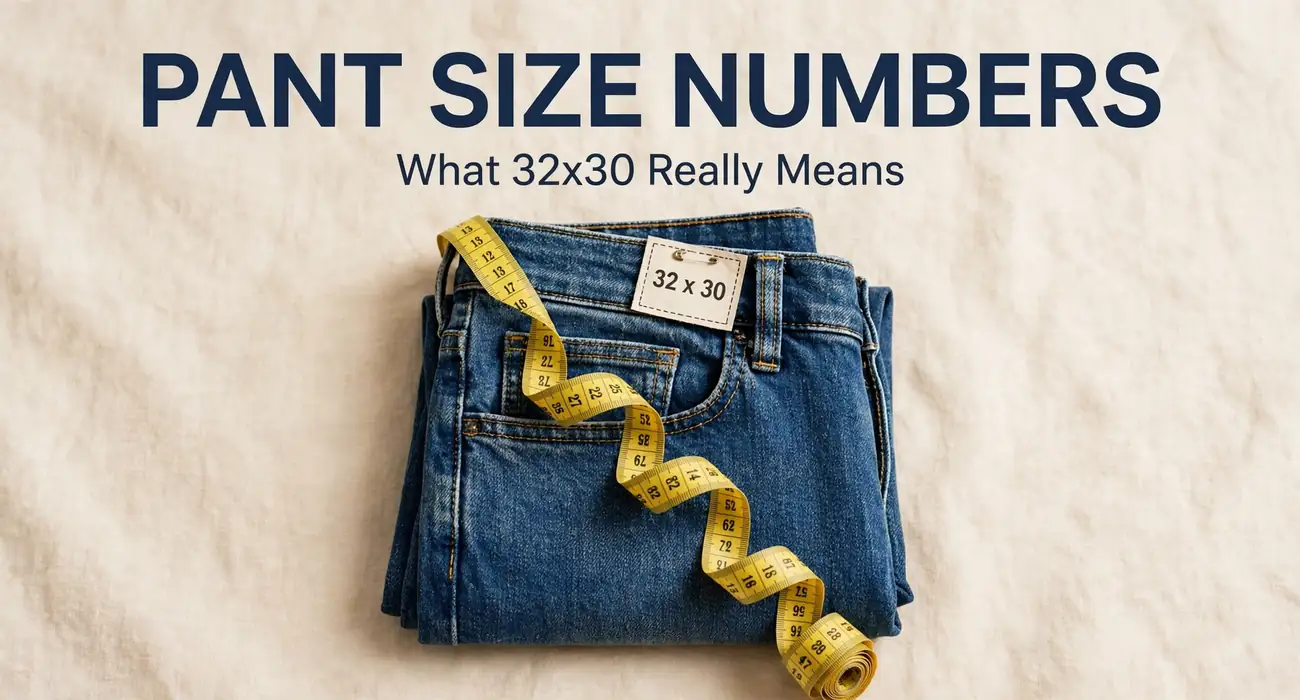
Online shopping has made buying pants easy, and returning them just as easy. A big reason for those returns is the small pair of numbers printed on every tag. They look simple, yet most shoppers never learn what they actually stand for, so they keep ordering by guesswork and hoping for the best.
This guide fixes that. In a few minutes you will know how to read any pants size, what each number measures, and how to pick the right pair the first time.
Reading the Tag: Two Numbers, Two Measurements
A typical pants size looks like 32×30. The little x in the middle is not decoration. It separates two measurements. The number before it is the waist, and the number after it is the inseam. Both are given in inches. Together they describe the two dimensions that matter most for fit: how wide the pants are at the top, and how long they are down the leg.
Waist First: What the First Number Tells You
Take the 32 in 32×30. It tells you the waistband is about 32 inches around. To check your own number, stand relaxed and wrap a soft tape around your waist at the point where your pants normally sit. Keep it flat against your skin and breathe normally. The tape should feel snug without squeezing.
When your measurement falls between two whole numbers, go with the larger one when the fabric has little or no stretch. A belt can take in a waistband that is a touch loose, but nothing fixes a waistband that is too tight.
Inseam Second: What the Second Number Tells You
The 30 in 32×30 is the inseam. It runs along the inner seam of the leg, from the crotch down to the hem, and it sets where the pants will end on you. A longer inseam means more length, a shorter one means the hem sits higher.
If you want the whole story behind this measurement, our in-depth guide to inseam meaning explains the term step by step, shows how to measure it at home, and lists typical lengths for different heights and styles.
A Quick Size Chart
Brands do not all cut their pants the same way, but these pairings are the ones you will run into most often.
| Size | Waist | Inseam | Typical fit |
| 30×30 | 30 in | 30 in | Slimmer frames, average height |
| 32×30 | 32 in | 30 in | Regular frames, average height |
| 32×32 | 32 in | 32 in | Regular frames, above average height |
| 34×32 | 34 in | 32 in | Broader waist, longer leg |
| 34×34 | 34 in | 34 in | Tall frames |
| 36×34 | 36 in | 34 in | Broader waist, tall leg |
Treat this chart as a starting point. The cut of the pants and the rise can shift how a size feels, even when the numbers match.
Three Reasons the Same Size Feels Different
Ever bought the same size twice and had it fit differently? That happens for three usual reasons.
Every Brand Cuts Differently
There is no single sizing standard in clothing. A 32 from one label can measure like a 30 or a 34 from another. Before you order, open that brand’s size chart and compare your own measurements to it.
The Rise Changes Everything
Rise is the distance from the waistband to the crotch. Pants with a high rise sit higher and make the leg feel shorter, while a low rise sits lower and makes the leg feel longer. The tag numbers stay the same, but the fit on your body changes.
Fabric Plays a Role Too
A pair with stretch will hug your shape, while rigid denim holds its own form. Two pairs with identical numbers can feel completely different once you put them on, so always glance at the fabric mix.
Finding Your Numbers at Home
You only need a soft tape measure and a pair of pants that already fits you well.
- Wrap the tape around your waist where your pants sit, keeping it level all the way around.
- Lay your best fitting pants flat and measure the inner seam from the crotch to the hem. That is your inseam.
- Write both numbers down and keep them in your phone, so you have them every time you shop.
- Match them against the size chart of the brand you are buying from, not the size you bought last time from a different brand.
Mistakes That Lead to Returns
- Ordering by height alone. Height hints at leg length, but two people of the same height often need different inseams.
- Skipping the brand’s size chart. Labels differ, and the chart is the only way to know by how much.
- Measuring in the wrong shoes. The shoes you wear change where the hem lands, so measure in the pair you will wear most.
- Expecting one size to work for every style. A slim jean, a suit trouser, and a pair of shorts all drape differently at the same numbers.
Conclusion
Those two little numbers are doing a lot of work. One gives you the waist, the other gives you the inseam, and once you know both of yours, pants shopping stops being a gamble. Measure yourself once, keep the numbers handy, and check the chart before every order. Your next pair will fit the way you hoped, and it will probably stay out of the returns pile.