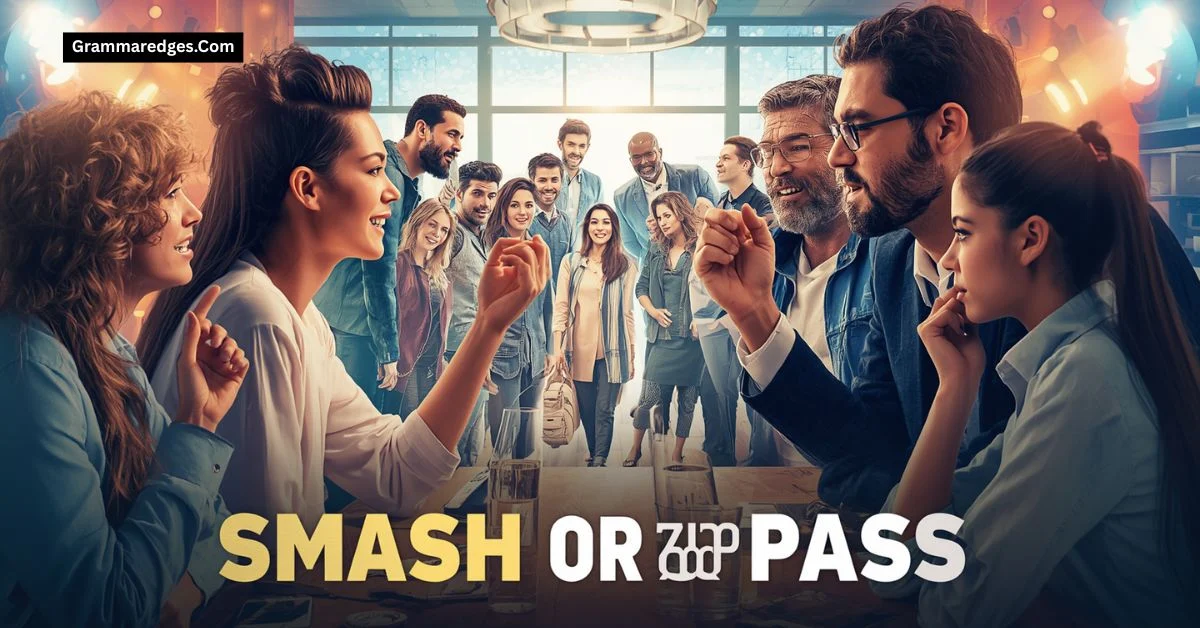
If you spend time on social media, YouTube, TikTok, or online gaming communities, you have probably heard the phrase “smash or pass.” It is one of the most popular internet expressions used in videos, memes, and casual conversations. Yet many people are unsure about its exact meaning, where it came from, and whether it is appropriate to use in different situations.
People often search for smash or pass because they see it trending online and want to understand the context behind it. Others want to know if it is slang, a game, or simply a social media challenge. The phrase can seem confusing because its meaning changes slightly depending on the platform and audience.
This guide explains everything you need to know about smash or pass, including its meaning, history, common usage, spelling variations, examples, trends, and mistakes to avoid. By the end, you will understand when and how the phrase is used in modern online culture.
Smash or Pass – Quick Answer
Smash or pass is an internet slang phrase used to express whether someone finds another person attractive.
- Smash means “yes” or “interested.”
- Pass means “no” or “not interested.”
Examples
- “Celebrity edition: Smash or pass?”
- “My friends played smash or pass during a livestream.”
- “People often use smash or pass as a social media challenge.”
The phrase is usually used as a game where participants quickly choose between “smash” and “pass” when shown pictures of celebrities, fictional characters, or public figures.
The Origin of Smash or Pass
The phrase smash or pass comes from internet slang.
The word “smash” became slang for finding someone attractive or wanting a romantic or physical relationship with them. Over time, internet users paired it with “pass,” which means declining or not being interested.
History
- Early internet forums used the term informally.
- Social media platforms helped spread the phrase.
- YouTube creators popularized “Smash or Pass Challenges.”
- TikTok later introduced the phrase to a wider audience.
Why Different Versions Exist
People sometimes write the phrase in different ways:
- Smash or Pass
- Smash-or-Pass
- Smash & Pass
- Smash/Pass
These variations exist because online slang often develops without strict grammar rules. However, “Smash or Pass” remains the most common version.
British English vs American English Spelling
Unlike words such as “color” and “colour,” smash or pass generally does not have major spelling differences between British English and American English.
The phrase is internet slang, so most English-speaking countries use the same spelling.
Comparison Table
| Region | Common Spelling | Notes |
|---|---|---|
| United States | Smash or Pass | Most common form |
| United Kingdom | Smash or Pass | Same spelling |
| Canada | Smash or Pass | Same spelling |
| Australia | Smash or Pass | Same spelling |
| New Zealand | Smash or Pass | Same spelling |
Examples
| Country | Example Usage |
|---|---|
| USA | “Let’s do a smash or pass challenge.” |
| UK | “The video featured a smash or pass segment.” |
| Canada | “Social media users enjoy smash or pass trends.” |
| Australia | “The creator uploaded a smash or pass video.” |
Since it is slang rather than a dictionary-based spelling issue, the phrase remains largely unchanged worldwide.
Which Spelling Should You Use?
The best choice is usually “Smash or Pass.”
For American Audiences
Use:
- Smash or Pass
Example:
- “The influencer posted a Smash or Pass challenge.”
For British and Commonwealth Audiences
Use:
- Smash or Pass
Example:
- “The video became popular after its Smash or Pass segment.”
For Global Audiences
Use:
- Smash or Pass
This version is recognized internationally and works best for blogs, social media content, and online discussions.
Common Mistakes with Smash or Pass
Many people use the phrase incorrectly or misunderstand its purpose.
Mistake 1: Thinking It Is a Formal Expression
❌ Incorrect:
- “The company held a smash or pass meeting.”
✅ Correct:
- “The company held a review meeting.”
The phrase is informal slang.
Mistake 2: Using It in Professional Writing
❌ Incorrect:
- “Our report includes a smash or pass analysis.”
✅ Correct:
- “Our report includes an evaluation.”
Professional writing should avoid internet slang.
Mistake 3: Incorrect Capitalization
❌ Incorrect:
- smash Or pass
- Smash Or Pass
✅ Correct:
- Smash or Pass
Mistake 4: Using It Without Context
Not everyone knows internet slang.
Instead of writing:
- “Let’s play smash or pass.”
You may explain:
- “Let’s play a quick Smash or Pass game.”
Smash or Pass in Everyday Examples
The phrase appears in many types of communication.
Social Media
- “New celebrity list: Smash or Pass?”
- “TikTok users love Smash or Pass videos.”
YouTube
- “Today’s challenge is Smash or Pass: Movie Characters Edition.”
Online Gaming
- “Players started a Smash or Pass discussion during the stream.”
News and Entertainment
- “The viral Smash or Pass trend gained millions of views.”
Casual Messages
- “My friends played Smash or Pass after school.”
Blog Writing
- “Smash or Pass remains one of the internet’s most recognizable social media games.”
Formal Writing
Formal documents should generally avoid using the phrase unless discussing internet culture.
Example:
- “The study examined online trends, including the Smash or Pass phenomenon.”
Smash or Pass – Google Trends & Usage Data
The popularity of smash or pass has increased significantly due to social media growth.
Where It Is Popular
The phrase is commonly searched in:
- United States
- United Kingdom
- Canada
- Australia
- New Zealand
Why People Search for It
Users typically search for:
- Meaning of smash or pass
- Smash or pass challenge
- Social media trends
- Internet slang explanations
- Celebrity smash or pass games
Popular Contexts
| Context | Usage Level |
|---|---|
| TikTok | Very High |
| YouTube | Very High |
| High | |
| Gaming Communities | High |
| News Articles | Medium |
| Academic Writing | Low |
Trend Growth Factors
- Viral challenges
- Influencer videos
- Meme culture
- Entertainment content
- Online discussions
The phrase continues to remain popular because it is easy to understand and works well in short-form content.
Smash or Pass Variations Comparison Table
| Variation | Meaning | Popularity |
|---|---|---|
| Smash or Pass | Standard version | Very High |
| Smash-or-Pass | Hyphenated version | Medium |
| Smash/Pass | Short version | Medium |
| Smash & Pass | Alternative style | Low |
| Smash Pass | Informal shorthand | Low |
The standard form “Smash or Pass” is recommended for SEO and readability.
Frequently Asked Questions (FAQs)
1. What does smash or pass mean?
Smash or pass is an internet slang phrase used to indicate whether someone finds another person attractive or appealing.
2. Is smash or pass a game?
Yes. It is often played as a social game where participants decide whether they would “smash” or “pass” when shown a person or character.
3. Where did smash or pass come from?
The phrase originated from internet slang and became popular through social media platforms, YouTube videos, and online communities.
4. Is smash or pass appropriate for formal writing?
No. It is considered informal internet slang and should generally be avoided in professional communication.
5. Why is smash or pass popular on TikTok?
TikTok creators use the format because it is quick, engaging, and encourages audience participation.
6. Are there spelling variations of smash or pass?
Yes. Common variations include Smash-or-Pass, Smash/Pass, and Smash & Pass, although Smash or Pass is the most widely used.
7. Is smash or pass used worldwide?
Yes. The phrase is understood across many English-speaking countries and internet communities.
Conclusion
The phrase smash or pass has become a major part of modern internet culture. What started as online slang evolved into a popular social media trend used in videos, livestreams, memes, and casual conversations. At its core, the phrase is a simple way to express interest or lack of interest in someone, usually in a playful or entertainment-focused setting.
One reason for its popularity is its simplicity. People instantly understand the choice between “smash” and “pass,” making it perfect for short-form content and audience interaction. Although the phrase has several written variations, “Smash or Pass” remains the most recognized and widely accepted version across English-speaking countries.
When using the phrase, remember that it is informal slang. It works well in social media posts, entertainment content, and discussions about internet culture, but it is usually not suitable for professional communication.
If your audience is global, using the standard spelling helps ensure clarity and recognition. Understanding the meaning, origin, and context of smash or pass allows you to use the phrase correctly and confidently in today’s digital world.