
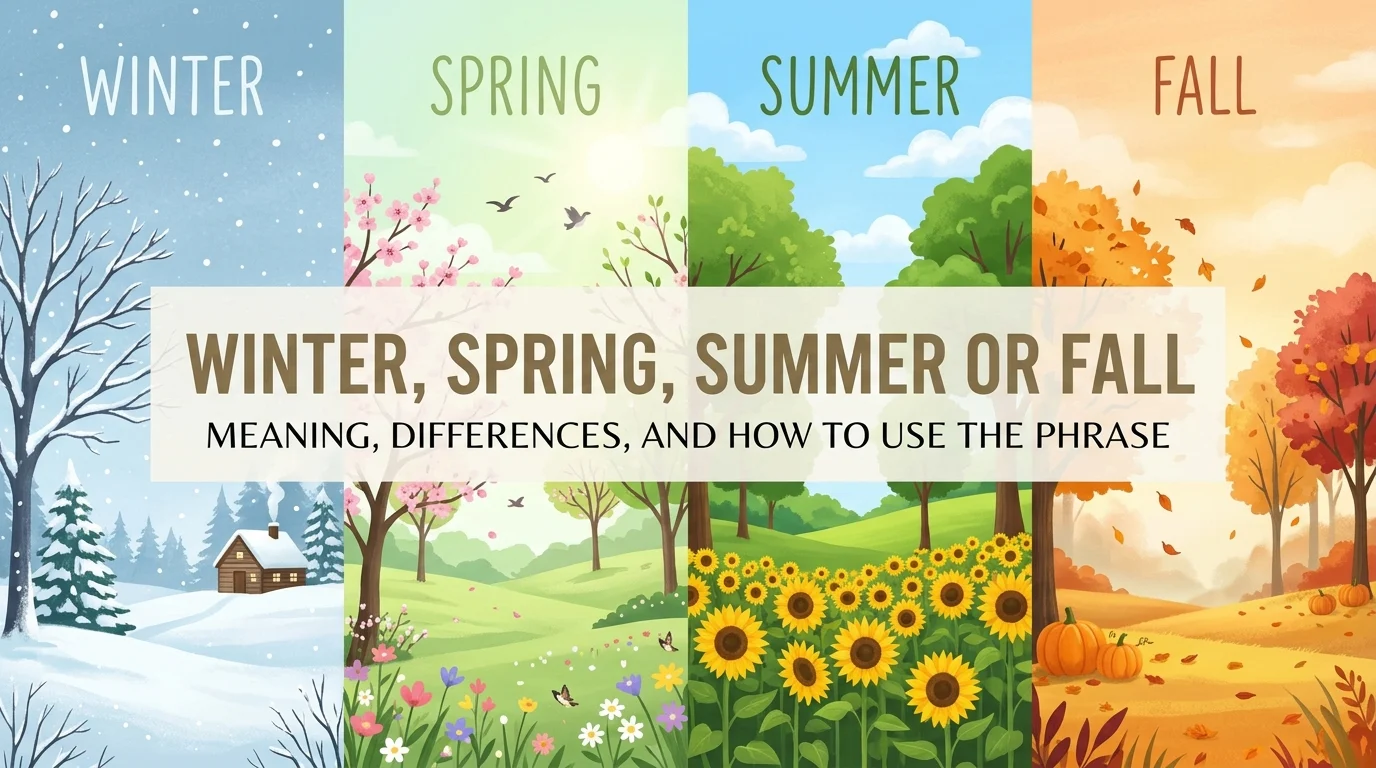
“Winter, spring, summer, or fall” is a phrase that refers to the four seasons of the year. However, its meaning can go beyond weather and changes in temperature. People often use these words to describe personal preferences, moods, relationships, memories, and different stages of life. The phrase also appears in songs, movies, social media captions, online conversations, and romantic messages.
When someone asks, “Winter, spring, summer, or fall?” they may simply want to know which season you enjoy most. In other situations, the question can be a fun way to start a conversation, understand someone’s personality, or discover their favorite time of year.
Understanding this expression helps you recognize its meaning in different situations. Whether you encounter it in a text message, on Instagram, TikTok, or in everyday conversation, knowing the context makes it easier to interpret and respond naturally.
1. Meaning and Definition of Winter, Spring, Summer, or Fall
The expression “winter, spring, summer, or fall” refers to the four main seasons experienced throughout the year in many parts of the world. Each season has different weather conditions, natural changes, activities, and cultural associations.
Here is what each season generally represents:
Winter
Winter is generally the coldest season of the year. It is associated with snow, chilly temperatures, shorter days, warm clothing, and cozy indoor activities.
Common winter activities include:
- Drinking hot chocolate or coffee.
- Enjoying snowfall and winter holidays.
- Wearing sweaters, coats, and scarves.
- Spending time indoors with family.
- Going skiing or ice skating.
Winter can also symbolize rest, quietness, reflection, and fresh beginnings.
Spring
Spring is the season when nature begins to grow again after winter. Flowers bloom, trees develop fresh leaves, and temperatures usually become warmer.
Spring is commonly associated with:
- New beginnings and fresh starts.
- Flowers and colorful gardens.
- Pleasant weather.
- Outdoor walks and picnics.
- Growth, hope, and renewal.
Summer
Summer is usually the warmest season of the year. It is popular for vacations, outdoor activities, sunshine, and longer daylight hours.
People often connect summer with:
- Beach trips and swimming.
- Family vacations.
- Outdoor festivals.
- Barbecues and picnics.
- Freedom, happiness, and adventure.
Fall (Autumn)
Fall, also called autumn, is the season between summer and winter. Temperatures generally become cooler, and many trees change color before losing their leaves.
Fall is associated with:
- Colorful orange, red, and yellow leaves.
- Pumpkin-flavored foods and drinks.
- Cooler weather.
- Thanksgiving celebrations in the United States.
- Change, comfort, and reflection.
In simple words: When someone says “winter, spring, summer, or fall,” they are usually asking you to choose your favorite season or expressing the different stages and experiences associated with the year.
2. Background and Origin of the Four-Season Expression
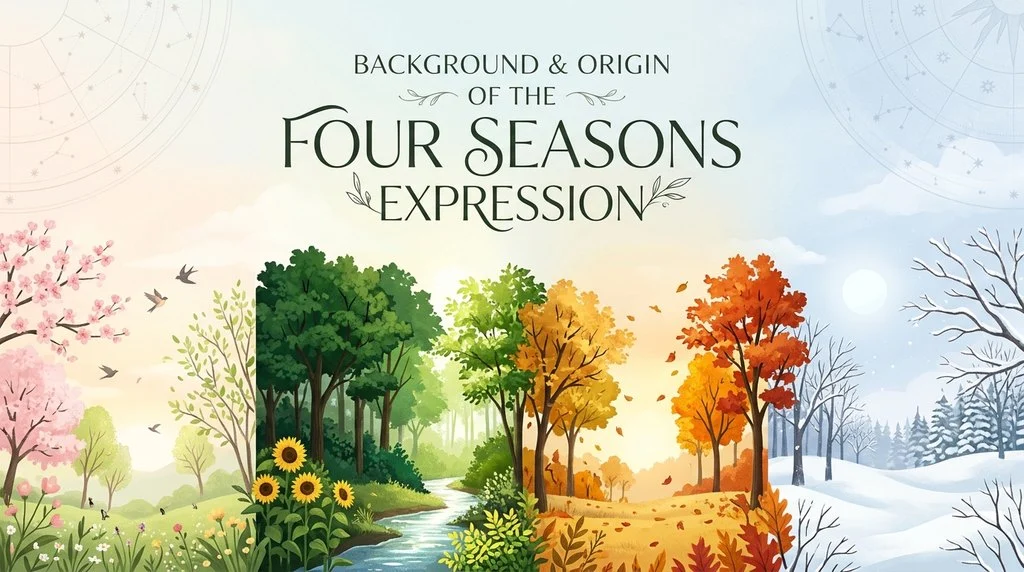
The four seasons have been part of human life for thousands of years. Early communities observed changes in temperature, rainfall, daylight, and plant growth to understand the natural cycle of the year.
These seasonal changes influenced farming, food production, travel, clothing, festivals, and everyday activities.
The four-season system developed through observations of the Earth’s annual movement around the Sun and the changing amount of sunlight received in different regions.
Each season gradually gained cultural and symbolic meanings.
- Winter: Traditionally connected with cold weather, survival, rest, and celebrations.
- Spring: Associated with planting, fertility, flowers, and new life.
- Summer: Connected with warmth, harvesting, recreation, and longer days.
- Fall: Associated with harvesting crops, changing leaves, preparation, and transition.
The phrase also became popular in entertainment and everyday language.
One particularly recognizable example is the song “Winter, Spring, Summer or Fall” by The Four Seasons. The wording is also closely associated with the famous song “You’ve Got a Friend,” written by Carole King and recorded by James Taylor.
In popular culture, the four seasons often represent the idea that relationships, emotions, and life experiences continue through changing circumstances.
Today, people use the expression in conversations, captions, creative writing, and questions about personal preferences.
3. Usage in Different Contexts: Chat, Social Media, and Professional Fields
The meaning of the four-season expression can change depending on where and how someone uses it.
In Everyday Conversations
People commonly use this phrase to ask about someone’s favorite season.
For example:
- “Winter, spring, summer, or fall—which one do you prefer?”
- “I love fall because the weather is perfect.”
- “Summer is my favorite because I enjoy going to the beach.”
In this context, the phrase is simply a friendly conversation starter.
In Social Media Posts
On social media, people use seasonal words to express their moods, interests, and lifestyles.
Examples include:
- Winter aesthetic: Snowy pictures, warm drinks, and cozy outfits.
- Spring aesthetic: Flowers, sunshine, and colorful photography.
- Summer aesthetic: Beaches, vacations, and bright colors.
- Fall aesthetic: Pumpkins, autumn leaves, and comfortable sweaters.
People may also create seasonal photo collections and ask followers to choose their favorite.
In Professional Fields
The four seasons have practical meanings in several industries.
| Professional field | How the seasons are used |
|---|---|
| Agriculture | Planning planting and harvesting activities |
| Fashion | Organizing seasonal clothing collections |
| Tourism | Promoting vacations and seasonal destinations |
| Education | Planning academic calendars and breaks |
| Business | Managing seasonal products and demand |
| Photography | Creating seasonal campaigns and visual themes |
For example, a clothing company might introduce a winter collection featuring coats and jackets. A travel agency may promote summer vacations or fall destinations.
In Creative Writing
Writers often use seasons as metaphors.
Spring can represent hope, summer can symbolize happiness, fall can suggest change, and winter can communicate loneliness or reflection.
The intended meaning depends on the writer’s message rather than the season alone.
4. Meaning in Chat, WhatsApp, Instagram, and TikTok
When someone sends “winter, spring, summer, or fall” in a message, they are usually asking which season you like most.
However, the phrase can also carry emotional, romantic, or playful meanings depending on the conversation.
Winter, Spring, Summer, or Fall in Chat
In ordinary texting, it is often a simple preference question.
Example:
Person A: Winter, spring, summer, or fall?
Person B: Definitely fall. I love the cool weather and colorful leaves.
The person is asking about your favorite season.
Meaning on WhatsApp
On WhatsApp, someone might send this question to start a conversation or learn more about your interests.
For example:
- “Which season makes you happiest?”
- “Are you a summer person or a winter person?”
- “Winter or summer for a vacation?”
It can also be used in group chats as a fun question.
Meaning on Instagram
On Instagram, the phrase may appear in captions, stories, polls, or seasonal photo collections.
Examples of Instagram captions:
- “Winter, spring, summer, or fall? Every season has its magic.”
- “Forever a summer person.”
- “Fall is my favorite kind of beautiful.”
- “Spring reminds me that everything can bloom again.”
Meaning on TikTok
On TikTok, creators may use the phrase in seasonal trends, outfit videos, lifestyle content, and aesthetic comparisons.
Some examples include:
- Showing four outfits representing the four seasons.
- Sharing favorite seasonal memories.
- Comparing summer and winter personalities.
- Creating videos about seasonal moods.
- Asking viewers to comment on their favorite season.
Important: The phrase does not have one universal secret meaning on WhatsApp, Instagram, or TikTok. Its interpretation depends on the surrounding message, video, or conversation.
5. Meaning in Physics, Medical, and Aircraft Terminology
The phrase has no single specialized technical definition in physics, medicine, or aviation. However, individual seasons are relevant to these fields.
Meaning in Physics
In physics and astronomy, the four seasons are connected to Earth’s axial tilt and its revolution around the Sun.
Earth’s axis is tilted approximately 23.5 degrees relative to its orbital plane. As Earth travels around the Sun, different regions receive different amounts of direct sunlight during the year.
This creates seasonal changes.
Important scientific points include:
- Summer generally has longer daylight hours in the relevant hemisphere.
- Winter generally has shorter daylight hours.
- Spring and fall are transition periods.
- The Northern and Southern Hemispheres experience opposite seasons.
For example, when it is summer in the United States, it is generally winter in Australia.
Meaning in Medical Terminology
In medicine, seasons can influence certain health conditions and environmental exposures.
Examples include:
- Seasonal allergies during spring and fall.
- Increased exposure to certain respiratory infections during colder months.
- Heat-related illnesses during summer.
- Seasonal changes in mood and sleep patterns.
However, winter, spring, summer, and fall are not medical diagnoses. They describe environmental periods that may affect health.
Meaning in Aircraft Terminology
In aviation, seasons matter because they can influence flying conditions, airport operations, and aircraft performance.
Examples include:
- Winter operations may require snow and ice removal.
- Summer temperatures can affect aircraft performance.
- Spring can bring thunderstorms and changing weather conditions.
- Fall may involve fog, wind, and changing temperatures.
Pilots and aviation professionals consider weather conditions rather than relying only on the season’s name.
6. Common Misconceptions About Winter, Spring, Summer, or Fall
Several misunderstandings can occur when people interpret this expression.
Misconception 1: It Is Always a Romantic Question
Not necessarily. Most of the time, someone is simply asking about your favorite season. Romantic meaning depends on the surrounding conversation.
Misconception 2: Fall and Autumn Are Different Seasons
Fall and autumn refer to the same season. Fall is more commonly used in American English, while autumn is widely used in British English and other varieties of English.
Misconception 3: Everyone Experiences the Same Season at the Same Time
This is incorrect. The Northern and Southern Hemispheres experience opposite seasons.
Misconception 4: The Phrase Has a Secret Social Media Meaning
There is no universally accepted hidden meaning. It can be used in trends, captions, romantic conversations, or ordinary questions.
Misconception 5: Every Country Has Four Clearly Defined Seasons
Not all regions experience four distinct seasons. Tropical and equatorial locations may have wet and dry seasons instead.
Misconception 6: Winter Always Means Snow
Winter does not always bring snowfall. Some places experience cold temperatures and rain without snow.
Understanding these differences helps prevent confusion when discussing seasons with people from different geographical and cultural backgrounds.
7. Similar Terms and Alternatives
There are several expressions that communicate similar ideas.
| Expression | Meaning |
|---|---|
| Favorite season | The season someone likes most |
| Four seasons | Winter, spring, summer, and fall |
| Seasonal preferences | Personal likes and dislikes about seasons |
| Summer or winter person | Someone who prefers one of those seasons |
| Autumn or spring | A comparison between two seasons |
| Time of year | A particular period within the annual cycle |
| Seasonal change | A transition from one season to another |
| Weather preference | The type of weather someone enjoys |
You can also use alternative questions to make conversations more interesting.
- What’s your favorite time of year?
- Do you prefer hot or cold weather?
- Are you more of a summer or winter person?
- Which season makes you happiest?
- Would you choose spring or autumn?
- What’s your ideal weather?
These alternatives are useful in everyday conversations, social media posts, and dating profiles.
8. How to Respond to Winter, Spring, Summer, or Fall
If someone asks you this question, the easiest response is to choose your favorite season and explain why you enjoy it.
Here are some natural replies.
If You Love Winter
- “Winter, definitely! I love cold weather.”
- “I’m a winter person. Cozy nights are the best.”
- “Winter, because I enjoy wearing warm clothes and drinking hot coffee.”
If You Prefer Spring
- “Spring is my favorite. I love seeing flowers bloom.”
- “Definitely spring! The weather feels fresh and beautiful.”
- “I’d choose spring because everything feels new.”
If Summer Is Your Favorite
- “Summer, because I love beaches and sunshine.”
- “I’m definitely a summer person.”
- “Summer! I enjoy vacations and outdoor activities.”
If You Like Fall
- “Fall is my favorite because of the beautiful colors.”
- “Autumn, without a doubt. I love the cool weather.”
- “Definitely fall. Pumpkin season is the best!”
If You Cannot Choose One
You do not have to select only one season.
You can respond:
- “I love all four seasons for different reasons.”
- “Spring and fall are my favorites.”
- “It depends on my mood.”
- “I enjoy summer, but I love winter holidays.”
Conversation tip: Adding a short explanation makes your answer more interesting and gives the other person something to discuss.
9. Differences Between Winter, Spring, Summer, and Fall
Although all four seasons are part of the same annual cycle, they differ in weather, daylight, activities, and natural changes.
| Feature | Winter | Spring | Summer | Fall |
|---|---|---|---|---|
| Weather | Cold | Mild or warming | Warm or hot | Cool or cooling |
| Nature | Dormant growth in many regions | New growth | Full growth | Leaves change and fall |
| Daylight | Shorter days | Increasing daylight | Longer days | Decreasing daylight |
| Clothing | Coats and sweaters | Light jackets | T-shirts and shorts | Sweaters and jackets |
| Activities | Skiing and indoor activities | Gardening and walking | Swimming and traveling | Hiking and festivals |
| Symbolism | Rest | Renewal | Energy | Change |
Winter vs. Spring
Winter represents cold conditions and shorter days, while spring brings warmer temperatures and new plant growth.
Spring vs. Summer
Spring is generally mild and associated with renewal. Summer is usually hotter and associated with outdoor activities and vacations.
Summer vs. Fall
Summer often brings sunshine and longer days, while fall introduces cooler temperatures and changing leaves.
Fall vs. Winter
Fall is a transition toward colder weather. Winter follows with the coldest conditions in many temperate regions.
10. Relevance in Online Conversations and Dating Apps
The question “winter, spring, summer, or fall?” can be a useful conversation starter on dating apps and social platforms.
People often use simple preference questions to discover shared interests and create a comfortable conversation.
Why People Ask This Question on Dating Apps
There are several possible reasons:
- Getting to know someone: Favorite seasons reveal something about personal interests.
- Finding shared activities: Two people who enjoy summer may both love beach vacations.
- Starting a conversation: It is an easy question that does not require a complicated answer.
- Understanding lifestyle preferences: Someone who enjoys winter might prefer cozy indoor activities, while a summer lover may enjoy outdoor adventures.
- Creating romantic connections: Seasonal preferences can lead to discussions about holidays, travel, and memorable experiences.
Examples of Dating App Conversations
Example 1:
Person A: “Winter, spring, summer, or fall?”
Person B: “Fall! I love peaceful walks and beautiful autumn scenery.”
Person A: “That sounds amazing. Do you enjoy hiking?”
Example 2:
Person A: “Are you a summer or winter person?”
Person B: “Summer, definitely. I love traveling and spending time near the ocean.”
Person A: “Same here! Beach vacations are the best.”
Example 3:
Person A: “What’s your favorite season?”
Person B: “Spring. The flowers and fresh weather always make me happy.”
These examples show how a simple question can develop into a meaningful conversation.
However, you should not assume someone’s personality, romantic intentions, or emotional characteristics based only on their favorite season.
Conclusion
“Winter, spring, summer, or fall” is a simple expression referring to the four seasons of the year, but it can have different meanings depending on the situation. Most commonly, people use it to ask about someone’s favorite season, start a conversation, or share their personal preferences.
On WhatsApp, Instagram, TikTok, and dating apps, it can also become a fun way to connect with others and discuss weather, travel, activities, and memories.
Each season has its own characteristics, from winter’s cozy atmosphere to spring’s fresh beginnings, summer’s sunshine, and fall’s colorful scenery. Understanding the context is the best way to interpret the expression correctly.
If someone asks you this question casually or romantically, a simple answer explaining your favorite season can make the conversation more enjoyable and meaningful.