
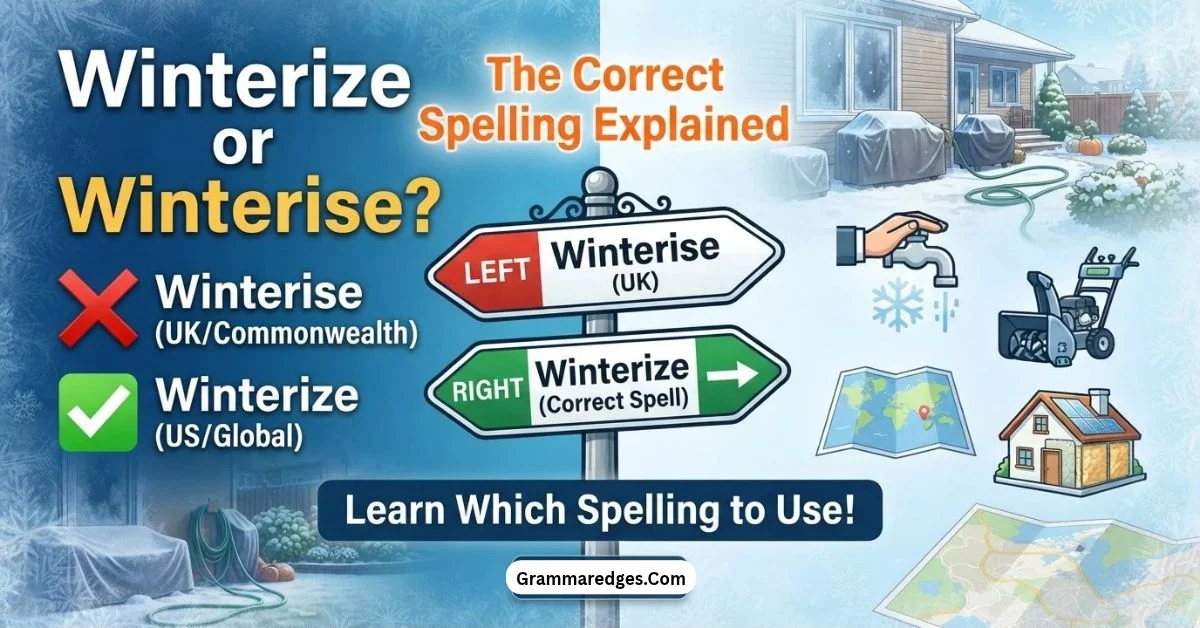
Have you ever wondered whether to write winterize or winterise? Both spellings are correct, but the preferred choice depends on your audience. Winterize is the standard spelling in American English, while winterise is commonly used in British English.
Both words mean preparing a home, vehicle, plumbing system, or other equipment for cold winter conditions. Choosing the right spelling helps keep your writing clear and consistent.
In this guide, Grammaredges explains the meaning, differences, and examples of winterize vs. winterise, helping you understand which version to use in American and British English.
Key Takeaways
- Winterize is the American and Canadian spelling; winterise is the British spelling.
- Both words are pronounced the same way: WIN-ter-ize.
- The word — and the chore it describes — comes from North America, so the z form is the one most people actually use.
- Pick one spelling and use it consistently in every document and page.
What Does “Winterize” Mean?
To winterize something means to prepare it to survive cold winter weather without damage. Collins Dictionary labels the word “US and Canadian” and defines it as preparing a house, car, and so on, to withstand winter conditions. That regional label tells you a lot about this word, and we will come back to it below.
Winterizing is practical, physical work. Freezing water expands, and that one fact explains most of the job: water left inside pipes can burst them, and a boat, RV, or pool left full of water over winter can crack from the inside.
What winterizing usually involves
The exact checklist depends on what you are protecting, but common tasks include:
- Draining water pipes, hoses, and sprinkler systems so nothing can freeze and burst
- Adding antifreeze to vehicle engines, RV plumbing, and boat systems
- Insulating exposed pipes and sealing gaps around windows and doors
- Shutting off outdoor water lines and covering outdoor faucets
- Storing or covering pools, patio furniture, and garden equipment
The word first appeared in the 1920s, formed simply from “winter” plus the verb ending -ize. It is a young word by English standards, and it was born in North America — a detail that shapes the spelling question more than any rule does.
Winterize vs. Winterise: The Quick Comparison
Here is the whole difference in one table:
| Winterize | Winterise | |
|---|---|---|
| Used in | United States and Canada | United Kingdom |
| Ending | -ize | -ise |
| Meaning | Prepare for winter weather | Prepare for winter weather |
| Pronunciation | WIN-ter-ize | WIN-ter-ize |
| Example | We winterize the cabin in October. | We winterise the cabin in October. |
Cambridge Dictionary puts it neatly: winterize is “mainly US,” and the UK equivalent is “usually winterise.” Neither spelling is wrong, and neither is a typo. They are regional spellings of one word with one meaning.
Why This Word Is Mostly North American
Most -ize/-ise pairs are balanced: British writers genuinely use organise and recognise every day. Winterize is different. The activity itself — draining the pipes of a summer cabin, preparing an RV for months of freezing weather, closing down a pool before the snow — is a routine part of life in the northern United States and Canada, where winters are long and hard.
Britain has cold winters, of course, but its milder climate has not produced the same seasonal ritual, or the same everyday need for the word. That is why dictionaries label winterize “US and Canadian,” and why you will see winterize far more often than winterise in the wild — in hardware store guides, RV manuals, and marina checklists every fall.
There is also a small second meaning: in food processing, to winterize an oil means to chill it and filter out fats that would make it turn cloudy in cold storage. It follows the same spelling rule.
Which Spelling Should You Use?
Match your spelling to your readers. That one rule settles it.
Writing for a US or Canadian audience
Use winterize — the only natural choice in the United States and Canada. In Canada especially, -ize is already the standard ending for this family of words, so winterize looks completely normal, and an s spelling would stand out as wrong even to readers who know the British pattern.
Writing for a British audience
Use winterise when your readers are British. Dictionaries record it as the non-Oxford British spelling, and it is the form most British readers will expect. That said, because the concept itself is so North American, many British readers will simply never use either form in daily life.
A note on Oxford spelling
Oxford spelling — the house style of Oxford University Press — keeps the -ize ending even in British English, so a UK academic publisher may still use winterize and winterization. Both routes are “correct British English”; the difference is Oxford style versus everyday spelling.
Whatever you choose, choose it once. A winter-maintenance guide that says “winterise your pipes” on page one and “winterize your engine” on page three looks sloppy. Set your spellchecker to US or UK English and let it keep you honest.
Every Word Form: Winterize and Winterise Side by Side
The s/z swap runs through the whole word family. Only the pronunciation stays exactly the same.
| Form | American and Canadian | British |
|---|---|---|
| Base verb | winterize | winterise |
| Third person | winterizes | winterises |
| Past tense | winterized | winterised |
| -ing form | winterizing | winterising |
| Noun (process) | winterization | winterisation |
| Person or device | winterizer | winteriser |
One caution: unlike oxidation, the noun changes too — winterization in North America, winterisation in Britain. Do not assume it stays the same.
Examples in Sentences
American and Canadian spelling (winterize):
- We winterize the boat every October before the lake freezes.
- They had the cabin winterized by a local contractor.
- Winterizing your pipes now is cheaper than repairing them in January.
British spelling (winterise):
- The holiday cottage is winterised and closed until spring.
- Remember to winterise the caravan before the cold sets in.
- Winterising the garden taps takes about twenty minutes.
Mixing the two in one document is the only genuine mistake here. “The cabin was winterised last year, so we will winterize it again this fall” reads as careless — pick one form and stick with it.
Common Mistakes to Avoid
- Calling winterise wrong, or using it in US content. It is standard British spelling — but US and Canadian readers will read it as a typo.
- Assuming the word is equally common in Britain. It is North American in origin and everyday use; the British spelling exists, but the seasonal ritual it names mostly does not.
- Believing winterised is the “more technical” spelling. One low-quality web guide promotes this idea, but no major dictionary supports it. The choice is purely regional.
- Mixing forms in the same guide, manual, or website. Seasonal businesses republish this content every fall; consistency matters more than the choice itself.
- Misspelling it entirely. Neither “winteryze” nor “winterse” exists — the only two forms are winterize and winterise.
The 10-Second Rule
Writing for Americans or Canadians? Use winterize. Writing for the British? Use winterise. Then keep it constant everywhere — headlines, checklists, FAQs, and product pages alike.
Frequently Asked Questions
Is it winterize or winterise?
Both are correct spellings of the same word. Winterize with a z is standard in American and Canadian English. Winterise with an s is standard in British English. Let your audience decide.
What does winterize mean?
It means to prepare something — a house, car, boat, RV, pool, or plumbing system — to withstand cold winter weather without damage, for example by draining pipes and adding antifreeze.
How do you spell winterize in British English?
The usual British spelling is winterise. However, Oxford spelling used by Oxford University Press and some academic publishers keeps winterize with a z, even for British readers.
Is winterised or winterized correct?
Both are correct, and they follow the base spelling. American and Canadian writers use “winterized”; British writers normally use “winterised.”
What does winterizing a house involve?
Typical steps include draining exposed pipes, shutting off outdoor water, insulating pipes and windows, and servicing the heating system — all to stop freezing water and cold air from causing damage.
Is winterise a real word?
Yes. It is the regular British spelling of winterize, listed in major dictionaries. The word itself, though, is recorded as mainly North American in use, because the winter-preparation routine it describes is a North American habit.
Conclusion
Choosing between winterize vs. winterise becomes easy when you understand American and British spelling conventions. Winterize is preferred in American English, while winterise is commonly used in British English.
Both words have the same meaning: preparing something to withstand cold winter conditions. Whether you are writing about protecting pipes, preparing a vehicle, or maintaining a home, the correct choice depends on your target audience and preferred style guide.
For consistent writing, avoid mixing both spellings in the same article. Remember this simple difference, and you can confidently use winterize or winterise in your everyday and professional writing.