
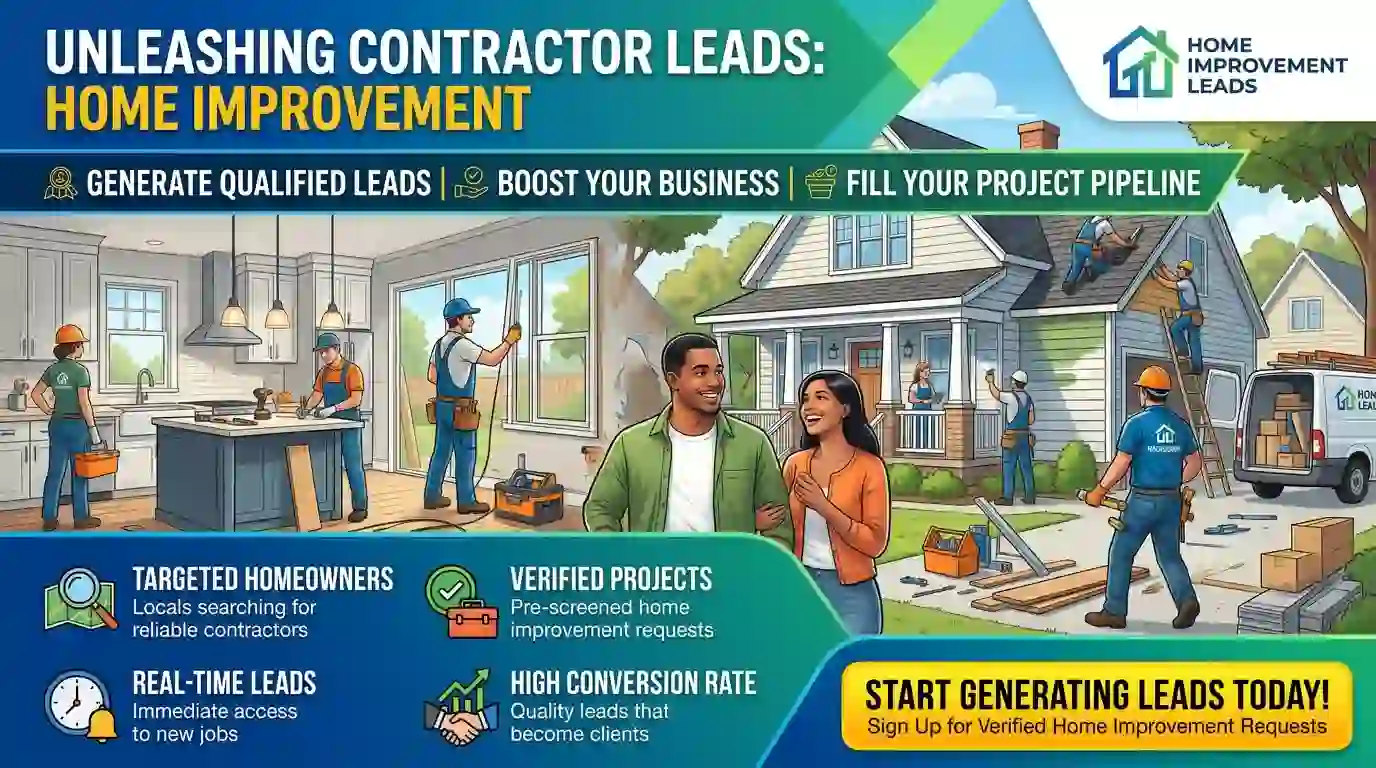
Contractor leads for home improvement are potential customers looking for services such as remodeling, roofing, painting, flooring, and home repairs. Contractors can find these leads through local SEO, Google Business Profile, referrals, paid advertising, and lead generation platforms. The best approach combines qualified inquiries, fast follow-up, and careful tracking of which channels produce profitable jobs.
Key Takeaways
- Build a Google Business Profile and local SEO strategy to attract homeowners searching for nearby contractors.
- Use referrals and customer reviews to build trust and generate new inquiries.
- Test paid lead platforms carefully because some sell the same lead to multiple contractors.
- Respond quickly to inquiries and follow up on estimates to improve conversion opportunities.
- Measure cost per booked job, not just the number of leads received.
Contractor Leads Home Improvement: 10 Ways to Get More Jobs
Introduction
Finding reliable customers is one of the biggest challenges for home improvement contractors in the United States. Whether you specialize in kitchen remodeling, bathroom renovations, roofing, flooring, painting, or general repairs, a steady flow of potential customers helps keep your schedule full.
The phrase contractor leads home improvement refers to opportunities to connect with homeowners who need renovation, repair, or upgrade services. These opportunities can come from online searches, referrals, paid advertising, local directories, and direct relationships with homeowners.
However, getting more leads does not always mean getting more profitable work. Some inquiries come from customers outside your service area, while others have unrealistic budgets or are contacting several contractors at once.
This guide explains 10 practical ways to attract home improvement customers, compare lead sources, avoid common mistakes, and turn more inquiries into booked projects. It also covers how to measure results so you can spend your marketing budget wisely.
What Does “Contractor Leads Home Improvement” Mean?
Contractor leads for home improvement are people who show interest in hiring a professional for a residential project. A lead might be a homeowner requesting a roofing estimate, asking about a kitchen remodel, or submitting a form for new flooring.
Leads can be generated through your own marketing or purchased from third-party providers. Their quality depends on factors such as customer intent, location, budget, project timing, and whether the person is ready to hire.
There are two common types:
- Exclusive leads: An inquiry is reserved for one contractor under the provider’s stated terms.
- Shared leads: Multiple contractors may receive the same homeowner’s information.
Exclusive leads can reduce direct competition, but they may cost more. Shared leads can offer more opportunities, although contractors must compete to win the project. Always confirm the provider’s actual terms.
Why Use Different Methods to Find Home Improvement Leads?
Relying on one source can leave your business vulnerable when inquiries slow down or advertising costs rise. A mix of marketing channels helps you reach homeowners at different stages of the buying process.
Using several lead sources can help you:
- Reach homeowners who are actively searching for services.
- Build trust through reviews and completed projects.
- Reduce dependence on paid lead marketplaces.
- Generate repeat business and customer referrals.
- Compare marketing costs and identify profitable channels.
The goal is not to use every available platform. It is to choose the channels that match your trade, budget, service area, and project size.
10 Best Ways to Get Contractor Leads for Home Improvement
1. Optimize Your Google Business Profile
Meaning: A Google Business Profile helps eligible local businesses appear in Google Search and Maps. Contractors can use it to display services, business hours, photos, contact information, and customer reviews.
Best for: Local contractors seeking homeowners who are actively searching for nearby services.
Example 1: A roofing contractor in Dallas can improve the profile with accurate service details, recent project photos, and genuine customer reviews.
Example 2: A flooring company can make it easier for homeowners to call for an estimate by keeping its contact information current.
Quick tip: Complete every relevant profile section, select accurate service categories, and respond professionally to reviews. Never create fake reviews or misleading business locations.
2. Invest in Local SEO
Meaning: Local search engine optimization helps your website appear when homeowners search for services in specific cities or neighborhoods.
Best for: Contractors who want a long-term source of organic inquiries.
Example 1: A remodeling company can create a detailed page about kitchen renovations in Austin.
Example 2: A painting business can publish useful information about interior painting costs, preparation, and project timelines.
Quick tip: Create helpful service and location pages only where you genuinely operate. Include clear pricing guidance when possible, real project examples, and an easy way to request an estimate.
3. Generate Customer Referrals
Meaning: Referral marketing encourages satisfied customers to recommend your business to friends, relatives, and neighbors.
Best for: Contractors who deliver consistent work and want leads built on existing trust.
Example 1: After completing a bathroom renovation, ask the homeowner whether they know anyone planning a similar project.
Example 2: A deck builder can stay in touch with past customers who may need repairs or know someone planning an outdoor upgrade.
Quick tip: Make referrals part of your project-completion process. Thank customers for recommendations, and disclose any referral incentives clearly.
4. Test Google Local Services Ads
Meaning: Google Local Services Ads connect eligible businesses with potential customers through prominent local advertising placements. Availability and requirements depend on the service category and market.
Best for: Eligible contractors seeking inquiries without waiting for organic rankings to improve.
Example 1: An eligible home service business can test ads for repair or installation work in its target area.
Example 2: A contractor can compare the results from one service category with another before expanding the campaign.
Quick tip: Set a budget, check eligibility and verification requirements, and monitor lead quality. Evaluate the cost of booked jobs rather than assuming every paid inquiry will become a customer.
5. Use Contractor Lead Generation Websites
Meaning: Lead marketplaces connect homeowners who request services with contractors who pay for access to those opportunities.
Best for: Businesses that need additional inquiries while developing their own marketing channels.
Example 1: A handyman may test Thumbtack for smaller repair jobs.
Example 2: A remodeling company may explore Angi or Houzz, depending on its services and the type of homeowners it wants to reach.
Quick tip: Before paying, check whether leads are shared, how fees work, what qualifies for a refund, and whether you can control the service area. Compare providers using your own results rather than advertised lead volume.
Platforms such as Angi, Thumbtack, and Houzz offer different approaches to customer discovery, so their suitability depends on your business model.
housecallpro.com+1
6. Run Targeted Google Search Ads
Meaning: Paid search advertising lets you promote services to people searching for specific home improvement solutions.
Best for: Contractors who want to test demand for particular services or locations.
Example 1: A roofing business can target searches related to roof replacement estimates in its service area.
Example 2: A kitchen remodeling company can advertise to homeowners researching renovation contractors.
Quick tip: Use focused keywords, location targeting, and dedicated landing pages. Review search terms regularly and exclude irrelevant searches to avoid wasting budget.
7. Share Project Photos on Social Media
Meaning: Social media marketing uses photos, videos, and customer stories to demonstrate your work and help local homeowners discover your business.
Best for: Remodelers, painters, flooring installers, deck builders, and other visually driven trades.
Example 1: A contractor can publish before-and-after photos of a completed kitchen renovation, with the homeowner’s permission.
Example 2: A painter can share a short video showing surface preparation and the finished room.
Quick tip: Include your service area, explain the project briefly, and add a clear next step, such as requesting an estimate. Avoid posting customer addresses or private project details without permission.
8. Build Referral Partnerships With Related Businesses
Meaning: Strategic partnerships connect you with professionals who regularly interact with homeowners planning repairs or renovations.
Best for: Contractors who want steady opportunities without relying entirely on advertising.
Example 1: A real estate agent may refer clients who need repairs before listing or after purchasing a home.
Example 2: A kitchen designer may recommend a qualified remodeling contractor when a client is ready to begin construction.
Quick tip: Build relationships with real estate professionals, designers, property managers, and complementary trades. Agree on communication expectations and follow all applicable licensing, disclosure, and referral rules.
9. Create a Website That Converts Visitors
Meaning: A conversion-focused website turns visitors into inquiries by making your services, experience, and next steps clear.
Best for: Contractors who want to capture leads from search engines, advertising, referrals, and social media.
Example 1: A roofing website can show service areas, project photos, warranty information, and an estimate request form.
Example 2: A general contractor can display completed renovations, customer testimonials, and a straightforward project consultation process.
Quick tip: Make your phone number easy to find on mobile devices. Keep forms short and explain what happens after a visitor submits a request.
10. Follow Up With Every Qualified Lead
Meaning: Lead follow-up means contacting potential customers after they call, submit a form, or request an estimate.
Best for: Every home improvement contractor, especially businesses receiving inquiries from multiple channels.
Example 1: After a homeowner requests a roofing quote, confirm the property’s location, the problem, and a suitable inspection time.
Example 2: If a kitchen remodeling prospect has not responded to an estimate, send a polite follow-up asking whether they have questions.
Quick tip: Use a simple customer relationship management (CRM) tool or spreadsheet to record the inquiry date, project type, next action, and outcome. Respond promptly, respect communication preferences, and avoid sending unwanted repeated messages.
Comparison Table: Home Improvement Lead Sources
| Lead source | Best used for | Main advantage |
|---|---|---|
| Google Business Profile | Local repair and renovation jobs | Free local visibility |
| Local SEO | Long-term customer acquisition | Builds organic traffic |
| Customer referrals | Trust-based projects | Personal recommendations |
| Google Local Services Ads | Eligible local service categories | Paid local exposure |
| Lead generation websites | Additional inquiries | Access to existing demand |
| Google Search Ads | Specific services and locations | Targeted visibility |
| Social media | Visual projects and brand awareness | Shows work to potential clients |
| Business partnerships | Renovation and property-related work | Professional referrals |
| Contractor website | All service categories | Owned marketing channel |
| Lead follow-up | Every qualified inquiry | Helps prevent missed opportunities |
The right combination depends on your trade, location, average project value, and available marketing budget. For example, a contractor seeking large kitchen renovations may benefit more from a strong portfolio and designer partnerships than from a platform focused on small repair jobs.
Common Mistakes When Buying or Generating Contractor Leads
1. Choosing Lead Volume Over Lead Quality
Receiving 100 inquiries does not guarantee 100 useful opportunities. Track how many leads match your service area, budget requirements, and project type.
2. Ignoring the Cost of Winning a Job
A cheap lead can become expensive if very few prospects hire you. Calculate your cost per booked job and compare it with the gross profit each project generates.
3. Relying on One Lead Provider
If a marketplace changes its pricing or sends fewer inquiries, your schedule may suffer. Develop additional sources, including referrals, organic search, and repeat customers.
4. Responding Too Slowly
Homeowners often contact several businesses while comparing estimates. A prompt, professional response helps you start the conversation, although it cannot guarantee that you will win the project.
5. Failing to Track Results
Without records, you may continue paying for channels that produce poor results. Track each inquiry’s source, qualification status, estimate, booking, and final revenue.
Frequently Asked Questions
1. What are contractor leads for home improvement?
Contractor leads are potential customers who express interest in residential services such as remodeling, roofing, painting, flooring, and repairs. They may contact a contractor directly or submit a request through an advertising platform. A qualified lead generally matches the contractor’s service area, project type, budget, and availability.
2. How can home improvement contractors get free leads?
Start with a complete Google Business Profile, a useful website, customer referrals, genuine online reviews, and local networking. Share completed projects with permission and ask satisfied customers to recommend your services. These methods require time and consistent effort, but they can reduce dependence on paid lead providers.
3. Which websites provide home improvement contractor leads?
Contractors can explore Angi, Thumbtack, and Houzz. Their services, pricing, and lead-sharing policies differ. Review each provider’s current terms and test a small budget before committing. A platform that works well for a handyman may not suit a high-value remodeling business.
4. Are exclusive contractor leads better than shared leads?
Exclusive leads may give you a clearer opportunity to speak with a homeowner without competing against other contractors receiving the same inquiry. Shared leads may cost less or offer more volume, depending on the provider. Neither guarantees a sale, so compare the cost per booked job and the quality of actual inquiries.
5. How much do home improvement contractor leads cost?
Costs vary by trade, city, project type, advertising channel, and competition. Some sources, such as referrals and an organic business profile, may generate inquiries without a direct fee per lead. Paid platforms and advertising require a budget. Check current pricing and calculate your own cost per booked job before deciding what is affordable.
6. How do I know whether a contractor lead is qualified?
Confirm the homeowner’s location, requested service, project scope, approximate budget, and expected timeline. Ask whether the person owns the property or has authority to approve the work. For larger projects, arrange an inspection or consultation before preparing a detailed estimate. Do not assume that every form submission represents a ready-to-hire customer.
7. How can contractors turn more leads into paying customers?
Respond promptly, ask clear questions, explain your process, and provide estimates that describe the work and relevant terms. Follow up politely when prospects need time to decide. Keep track of unanswered calls and outstanding quotes. Strong communication and transparent pricing help homeowners compare contractors with greater confidence.
8. What is the best lead generation strategy for a new contractor?
A new contractor can begin with a complete Google Business Profile, a simple professional website, referrals, and genuine photos of completed work. Once these basics are in place, test one paid channel that fits the trade and budget. Measure results consistently before expanding spending or signing a long-term lead-generation contract.
Conclusion
Generating contractor leads for home improvement requires more than buying contact lists or running advertisements. Contractors need a reliable way to attract homeowners, qualify inquiries, build trust, and turn opportunities into profitable projects.
Start with the basics: improve your Google Business Profile, build a useful website, request honest customer reviews, and develop a referral process. Then test paid advertising or lead generation platforms if you need additional opportunities. Choose channels that match your services and the types of projects you want to win.
Most importantly, track every lead from its first contact to the final outcome. Compare lead quality, booked jobs, marketing expenses, and project profit before increasing your budget.