
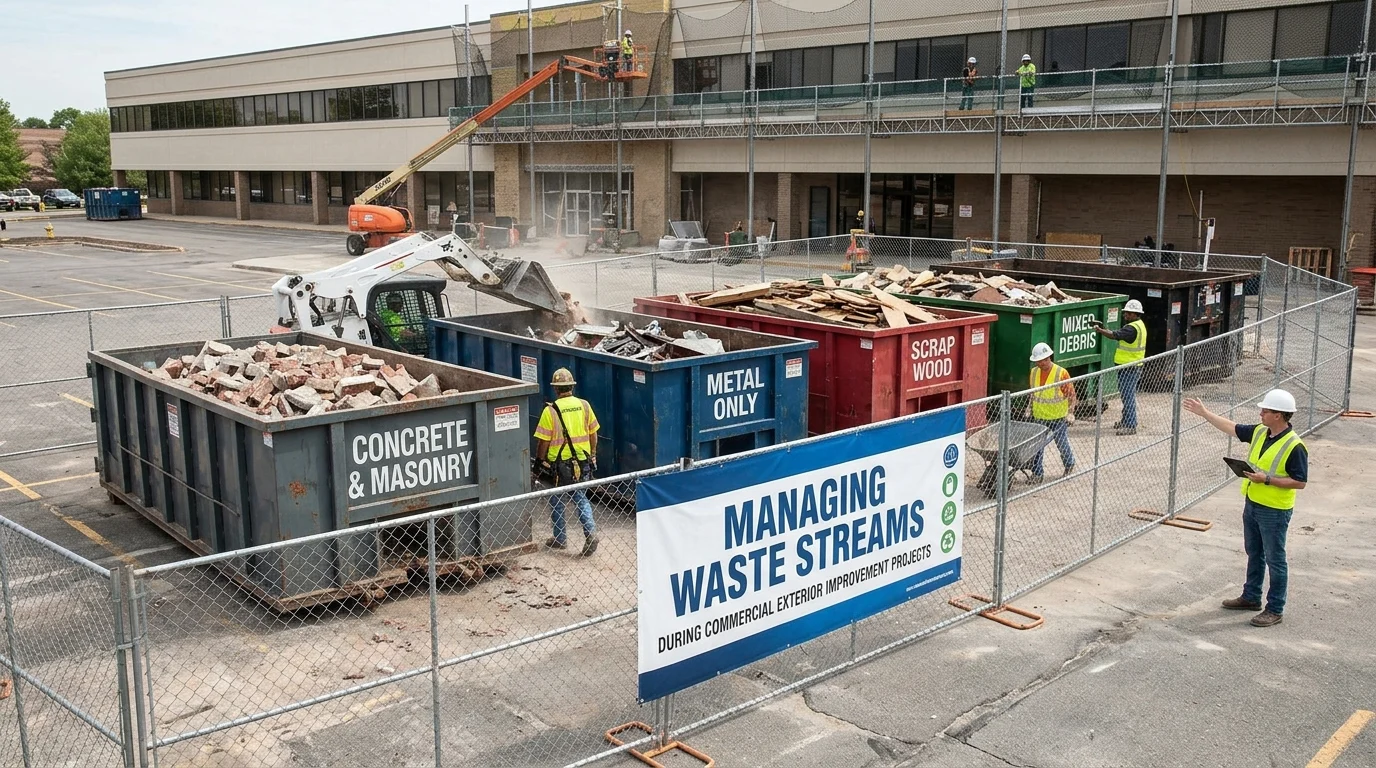
Commercial exterior improvement projects can generate several different waste streams at the same time. Contractors may be removing roofing materials, siding, trim, windows, doors, insulation, flashing, masonry, signage, fencing, pavement, landscaping materials, and old exterior fixtures while new products are being delivered and installed.
Without a coordinated waste plan, those materials can quickly compete with equipment, staging areas, customer access, and delivery routes. Commercial contractors can avoid many of those problems by identifying debris types early, assigning clear disposal areas, and matching cleanup to the construction schedule. A well-organized approach keeps old materials moving off-site without allowing waste to interfere with the improvements replacing them.
Start With the Entire Exterior Scope
Before work begins, contractors should review every exterior area included in the project. A commercial improvement may involve one facade or several building elevations, roofing, entry upgrades, parking areas, loading zones, landscaping, or multiple structures on the same property.
Each part of the project may create a different waste stream. Removing siding produces different debris than replacing sidewalks or tearing off roofing. Window replacement may create glass, frames, packaging, and trim, while landscaping work may add brush, roots, soil, and old edging.
Understanding the complete scope helps contractors plan disposal before crews begin creating debris.
Identify Waste Streams Before Demolition
Commercial exterior projects are easier to manage when debris is separated into logical categories from the start. Common waste streams may include wood, metal, masonry, roofing materials, glass, insulation, packaging, vegetation, and general construction debris.
Contractors should determine what can be combined and what needs separate handling. Recyclable metal, reusable architectural materials, landscaping debris, and heavy concrete or masonry may require different plans.
Sorting does not have to become complicated. Even a few clearly defined categories can prevent everything from becoming one mixed pile.
Choose Dumpster Placement Around the Entire Site
Dumpster placement should support multiple exterior work areas without blocking the project. The closest location to one crew may interfere with another crew, a loading dock, customer parking, or access to the next elevation.
Working with Waste Removal USA can help commercial contractors coordinate dumpster placement and service around larger exterior improvement schedules. The container should remain reachable for both crews and service vehicles while staying clear of fire lanes, accessible routes, loading areas, and major equipment paths.
Placement should be selected with the entire project timeline in mind.
Create Separate Debris Routes
A large commercial property may need more than one route for waste movement. Roofing debris may move down one side of the building while siding or window debris exits through another area. Landscape crews may work at the perimeter while concrete crews operate near entrances.
Contractors should establish routes for each major work zone. These routes should avoid customer paths, delivery traffic, and areas where new materials are staged.
Defined routes reduce cross-traffic and help prevent debris from spreading into unrelated parts of the property.
Coordinate Roofing Waste Carefully
Roofing can create one of the largest and heaviest waste streams during an exterior improvement project. Shingles, membrane, insulation, flashing, fasteners, decking, and packaging can accumulate quickly.
Contractors coordinating commercial roofing should plan how tear-off materials will move from the roof to the disposal area without interfering with pedestrians or other trades. Drop zones, lifts, chutes, or controlled loading areas may need to be coordinated with ground crews.
Roofing waste should not be allowed to overwhelm the same spaces needed for facade, entry, or parking lot work.
Separate Metal When Practical
Commercial exterior renovations can generate substantial amounts of metal. Gutters, downspouts, flashing, railings, siding components, frames, fasteners, rooftop components, and exterior fixtures may all be removed.
If these materials are being recycled or otherwise handled separately, crews should know where they belong before demolition starts. A designated metal area can keep reusable or recyclable material out of general construction debris.
Clear separation also prevents long or sharp metal pieces from becoming tangled with lighter waste.
Plan for Heavy Masonry and Concrete
Exterior projects may include concrete sidewalks, curbs, entry pads, loading areas, brick, block, stone veneer, or masonry features. These materials create a much denser waste stream than siding, packaging, or insulation.
Contractors should monitor heavy debris by weight rather than simply looking at how much container space remains. A dumpster may appear only partially full while already carrying a substantial load.
Heavy materials may need to be handled separately or removed in planned cycles so they do not interrupt the rest of the project.
Manage Lightweight Materials Before Wind Does
Insulation, house wrap, plastic, packaging, foam, lightweight siding pieces, and similar materials can spread quickly across a commercial property when the wind picks up.
Crews should load or secure these materials as they are generated. Allowing them to sit loose beside the building can lead to debris moving into parking lots, neighboring properties, drainage areas, or public spaces.
Regular collection is usually easier than chasing lightweight waste across a large site later.
Protect Customers, Tenants, and Employees
Many commercial exterior improvements happen while the property remains open. Customers, employees, tenants, vendors, and delivery drivers may continue using entrances, parking lots, sidewalks, and loading areas.
Waste streams should stay separated from these occupied spaces. Debris should not be staged in pedestrian paths or near entrances simply because those areas are convenient.
Contractors may need temporary barriers, signage, or alternate routes to keep construction activity separated from normal property use.
Coordinate Waste with Equipment
Exterior work often requires lifts, scaffolding, skid steers, loaders, cranes, trailers, and other equipment. These machines need clear working and turning areas.
Dumpster placement and debris piles should not interfere with equipment movement. Contractors should also avoid placing waste where it will later have to be moved to make room for scaffolding or lifts.
Planning equipment and waste logistics together reduces unnecessary rehandling and keeps work zones more efficient.
Protect Material Staging Areas
New siding, roofing, windows, doors, trim, masonry products, landscaping supplies, and other materials may arrive while demolition is still underway.
Contractors should create separate zones for incoming products and outgoing waste. New materials should not be stacked beside broken masonry, sharp metal, wet debris, or tear-off materials.
A clean staging area protects new products and prevents crews from moving them repeatedly as demolition debris expands.
Coordinate Dumpster Service With High-Waste Phases
Exterior improvement projects rarely produce waste at a consistent rate. Roofing tear-off may fill a container quickly, while window or trim replacement may generate smaller amounts over a longer period.
Contractors should identify high-volume phases and plan service accordingly. A pickup or swap may make sense after a major roofing or facade demolition phase before another crew begins.
Scheduling service before capacity is gone helps prevent overflow piles and keeps each work area usable.
Keep Service Access Protected
Commercial properties often have competing traffic demands. Delivery trucks, customer vehicles, contractor vans, equipment, pallets, and dumpsters may all use the same service areas.
The route needed for dumpster pickup should remain clear throughout the project. Crews should know not to park or stage materials where the service truck needs to operate.
Before scheduled service, someone should confirm that gates, drive lanes, and loading areas are accessible.
Build Cleanup Checkpoints Into the Schedule
Large exterior projects benefit from regular site resets. Contractors can schedule cleanup after demolition on each elevation, before major deliveries, after roofing tear-off, before landscaping, and before final exterior finishes.
At each checkpoint, crews should remove loose debris, clear routes, reorganize staging areas, and review remaining dumpster capacity.
These checkpoints prevent waste from one phase from following crews into the next and make it easier to see whether the site is ready to move forward.
Protect Drainage Areas
Exterior debris can easily migrate toward storm drains, curb lines, gutters, catch basins, and drainage channels. Small pieces of roofing, insulation, masonry, packaging, and landscaping material should be kept out of these areas.
Crews should collect loose debris regularly and avoid using drainage paths as temporary staging zones. If work occurs near stormwater infrastructure, those areas may need additional protection during demolition.
Keeping drainage systems clear helps prevent cleanup problems from spreading beyond the immediate work zone.
Finish With a Property-Wide Cleanup
Final cleanup should cover more than the area immediately around the dumpster. Contractors should inspect parking lots, sidewalks, landscaping beds, loading areas, roof edges, fence lines, and neighboring work zones for leftover scraps.
Nails, metal pieces, packaging, masonry fragments, and lightweight debris can remain after the largest materials are gone. A detailed final pass helps the exterior improvement look complete.
The dumpster should be removed only after the last significant waste-producing work has finished.
Avoid Common Waste Stream Mistakes
One common mistake is treating every exterior material as one waste stream. Another is allowing debris from multiple crews to collect without a shared system.
Contractors should also avoid placing dumpsters where they interfere with equipment, deliveries, customers, or later project phases. Waiting until containers are completely full before scheduling service can create additional problems.
A better approach is to identify waste categories, assign disposal locations, monitor capacity, and coordinate cleanup with the overall construction sequence.
Managing waste streams during commercial exterior improvement projects requires coordination across several crews, materials, and work areas. Roofing, siding, windows, masonry, metal, landscaping debris, packaging, and general construction waste can all move through the property at different rates.
By identifying waste streams early, choosing practical dumpster placement, protecting staging and access areas, coordinating service with high-volume phases, and using regular cleanup checkpoints, commercial contractors can keep exterior projects more organized. A strong waste plan helps old materials leave efficiently while giving crews the space they need to complete the property’s exterior improvements.

