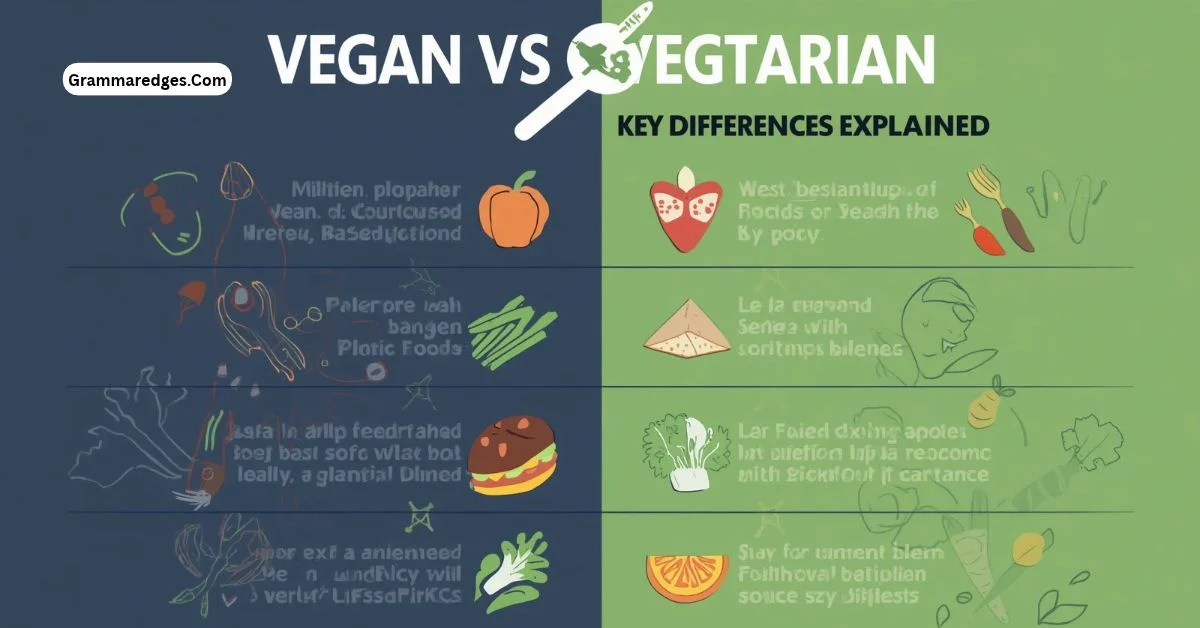
The main difference between vegan vs vegetarian diets is what animal products they exclude. Vegetarians generally avoid meat, poultry, and fish but may eat eggs and dairy. Vegans avoid all animal-derived foods, including meat, dairy, eggs, and usually honey. Veganism may also extend beyond food to clothing, cosmetics, and other products.
Key Takeaways
- Vegetarians generally avoid meat, poultry, and fish but may consume eggs and dairy.
- Vegans avoid all animal-derived foods, including dairy, eggs, and honey.
- There are several vegetarian patterns, including lacto-vegetarian, ovo-vegetarian, and lacto-ovo vegetarian.
- Both diets can meet nutritional needs when they are properly planned.
- Vitamin B12, iron, calcium, vitamin D, protein, and omega-3 fats deserve attention when planning either diet.
What Is a Vegetarian Diet?
A vegetarian diet is centered on plant foods but excludes animal flesh. This usually means no beef, pork, chicken, turkey, fish, or seafood.
However, vegetarian does not always mean completely free of animal products. Many vegetarians eat eggs, milk, cheese, yogurt, and other dairy foods.
That is why the word “vegetarian” can describe several different eating patterns.
Common Types of Vegetarian Diets
Lacto-ovo vegetarian: Avoids meat, poultry, and seafood but includes both dairy and eggs.
Lacto-vegetarian: Avoids meat, poultry, seafood, and eggs but includes dairy.
Ovo-vegetarian: Avoids meat, poultry, seafood, and dairy but includes eggs.
Vegan: Avoids all animal products and is commonly considered the most restrictive form of vegetarian eating.
MedlinePlus and the Academy of Nutrition and Dietetics both recognize multiple vegetarian patterns rather than treating vegetarianism as one single diet.
One useful distinction is pescatarian. Pescatarians generally avoid meat and poultry but eat fish and seafood, so the term is usually treated separately from vegetarianism.
What Is a Vegan Diet?
A vegan diet excludes foods that come from animals.
That means vegans generally avoid:
- Beef, pork, chicken, and other meat
- Fish and seafood
- Eggs
- Milk
- Cheese
- Yogurt
- Butter
- Honey
- Gelatin and other animal-derived ingredients
Instead, meals may be built around vegetables, fruits, grains, beans, lentils, nuts, seeds, tofu, tempeh, and other plant-based foods.
The NHS notes that a balanced vegan diet can provide needed nutrients when it includes a wide variety of foods, fortified foods, and appropriate supplements where necessary.
Veganism Beyond Food
There is another important difference when comparing vegan vs vegetarian.
Vegetarianism is commonly discussed as an eating pattern. Veganism can also be a broader lifestyle philosophy.
Some vegans avoid animal-derived materials such as leather, wool, fur, and silk. Some also consider whether cosmetics or household products involve animal testing.
This does not mean every person who follows a vegan diet makes identical choices outside food. People use these labels differently, so it is useful to ask what someone means when the distinction matters.
Vegan vs Vegetarian: Key Differences
The simplest way to understand the difference is to look at the foods each diet excludes.
| Food or Product | Vegetarian | Vegan |
|---|---|---|
| Beef and pork | ❌ | ❌ |
| Chicken and poultry | ❌ | ❌ |
| Fish and seafood | ❌ | ❌ |
| Eggs | Usually yes | ❌ |
| Milk | Usually yes | ❌ |
| Cheese | Usually yes | ❌ |
| Yogurt | Usually yes | ❌ |
| Butter | Usually yes | ❌ |
| Honey | Often yes | ❌ |
| Beans and lentils | ✅ | ✅ |
| Fruits and vegetables | ✅ | ✅ |
| Nuts and seeds | ✅ | ✅ |
| Tofu and tempeh | ✅ | ✅ |
The word “usually” matters because vegetarian diets vary. A lacto-vegetarian, for example, consumes dairy but not eggs, while an ovo-vegetarian does the opposite.
Vegan vs Vegetarian: Nutrition
Both diets can be nutritious. The quality of the diet matters more than the label alone.
A vegetarian eating pattern can include plenty of vegetables, fruits, whole grains, legumes, nuts, and seeds. It may also provide protein and calcium through eggs and dairy.
A vegan diet can provide these nutrients through foods such as beans, lentils, tofu, fortified plant milks, nuts, seeds, and whole grains.
The main difference is that removing more food groups can require more deliberate planning.
Protein
Protein can come from beans, lentils, peas, tofu, tempeh, nuts, seeds, whole grains, eggs, and dairy, depending on the diet.
Vegetarians who eat eggs and dairy have additional protein choices. Vegans can still get adequate protein from varied plant foods.
Rather than relying on one “superfood,” variety is the practical approach.
Vitamin B12
Vitamin B12 deserves special attention, particularly for people following vegan diets.
B12 occurs naturally mainly in animal foods, while fortified foods and supplements can provide it without animal products. Harvard’s Nutrition Source specifically notes that people avoiding animal products should use reliable B12-fortified foods or supplements.
Vegetarians who eat eggs and dairy may obtain some B12 from those foods, although individual intake can vary.
Calcium and Vitamin D
Dairy products can provide calcium for vegetarians who consume them.
Vegans can use calcium-fortified plant milks, calcium-set tofu, fortified foods, leafy greens, beans, and other plant sources. Vitamin D may also require attention depending on food choices, sun exposure, and individual needs.
The important point is not that vegans cannot get calcium. They can. The issue is choosing reliable sources regularly.
Iron and Other Nutrients
Vegetarian and vegan diets can provide iron through foods such as beans, lentils, tofu, spinach, nuts, seeds, and fortified grains.
Plant-based diets can also require attention to zinc, iodine, omega-3 fats, calcium, vitamin D, and B12.
The exact nutritional needs of an individual depend on factors such as age, sex, pregnancy status, activity level, and health conditions.
Are Vegan and Vegetarian Diets Healthy?
Neither label automatically makes a diet healthy or unhealthy.
A vegetarian diet based heavily on vegetables, legumes, whole grains, nuts, and minimally processed foods can be nutritious. A vegan diet built around similar foods can also be nutritious.
At the same time, someone can eat a vegetarian or vegan diet dominated by highly processed foods, refined carbohydrates, added sugar, and salty snacks.
Mayo Clinic notes that a well-planned vegetarian diet can meet nutritional needs, while also emphasizing the importance of food variety and nutrient planning.
So instead of asking only, “Is vegan healthier than vegetarian?”, a better question is:
“What foods make up the diet?”
That question gives a more useful picture of nutritional quality.
Vegan vs Vegetarian: Environmental and Ethical Considerations
People choose vegetarian or vegan diets for many different reasons.
Common motivations include:
- Personal health
- Animal welfare
- Environmental concerns
- Religious or cultural practices
- Personal preferences
- Food availability
- Family or community influence
Vegetarian diets reduce the amount of animal food consumed by excluding meat and seafood. Vegan diets go further by excluding dairy, eggs, and other animal-derived foods.
Environmental effects also vary based on the specific foods someone eats. A diet containing large amounts of dairy, for example, differs environmentally from one based mostly on legumes, grains, fruits, and vegetables.
Because food production involves many variables, it is better to discuss environmental impact in terms of particular foods and overall dietary patterns rather than assuming every vegan or vegetarian diet has the same footprint.
Common Foods: What Can Each Diet Eat?
Here are some everyday examples:
Cheese pizza: Usually vegetarian, but not vegan unless made with vegan cheese.
Omelet: Vegetarian if eggs fit the person’s chosen vegetarian pattern; not vegan.
Greek yogurt: Vegetarian for people who consume dairy; not vegan.
Bean burrito: Can be either vegetarian or vegan. Check for cheese, sour cream, or animal-derived ingredients.
Veggie burger: May be vegetarian or vegan. Check the ingredient list and preparation.
Oatmeal with fruit: Can be vegan if prepared without dairy milk, butter, or other animal ingredients.
Peanut butter toast: Usually suitable for both diets, assuming the ingredients contain no animal-derived products.
These examples show why the label on a packaged food does not always tell the whole story. Ingredients and preparation methods matter.
Which Diet Is More Restrictive?
A vegan diet is more restrictive in terms of animal-derived foods because it excludes dairy, eggs, and other animal products in addition to meat and seafood.
A vegetarian diet can offer more flexibility because some versions allow eggs and dairy.
That difference can affect restaurant choices, grocery shopping, cooking, social events, and meal planning.
For someone transitioning away from meat, a vegetarian pattern may involve fewer ingredient changes. Someone who wants to avoid all animal-derived foods will need to check a wider range of ingredients.
Neither description tells you why a person follows the diet. Two people can follow the same eating pattern for completely different reasons.
Frequently Asked Questions
Can vegetarians eat eggs?
Yes, many vegetarians eat eggs. Lacto-ovo vegetarians, one of the most common vegetarian patterns, consume both eggs and dairy while avoiding meat, poultry, and seafood. However, some vegetarians choose not to eat eggs, so it is important to know which type of vegetarian diet a person follows.
Can vegetarians drink milk?
Yes. Many vegetarians drink milk and consume other dairy products such as cheese and yogurt. Lacto-vegetarians specifically include dairy while avoiding meat, poultry, seafood, and eggs. Vegans, by contrast, avoid cow’s milk and other animal-derived dairy products.
Can vegans eat honey?
Generally, no. Honey is produced by bees, so it is normally excluded from a vegan diet. Vegetarians may consume honey depending on their personal definition and dietary pattern. This is another example of how veganism generally excludes animal-derived foods more broadly than vegetarianism.
Is a vegan diet healthier than a vegetarian diet?
There is no universal answer based on the label alone. Both diets can be nutritionally adequate when well planned. Food quality, nutrient intake, portion sizes, and individual needs all matter. Vegan diets require particular attention to nutrients such as B12, while vegetarian diets also need adequate protein, iron, calcium, B12, and other nutrients.
Conclusion
The main difference in vegan vs vegetarian is simple: vegetarians generally avoid meat, poultry, and seafood, while vegans avoid all animal-derived foods.
Vegetarians may eat eggs, milk, cheese, and yogurt depending on their chosen pattern. Vegans avoid these foods and may also extend their choices beyond food to animal-derived clothing, cosmetics, and other products.
Both diets can include nutritious meals built around vegetables, fruits, whole grains, beans, lentils, nuts, and seeds. The key is planning a varied diet and paying attention to nutrients such as vitamin B12, calcium, iron, vitamin D, protein, and omega-3 fats.
If you are comparing the two, understanding the food rules and nutritional requirements gives you a clearer picture than relying on the labels alone.