
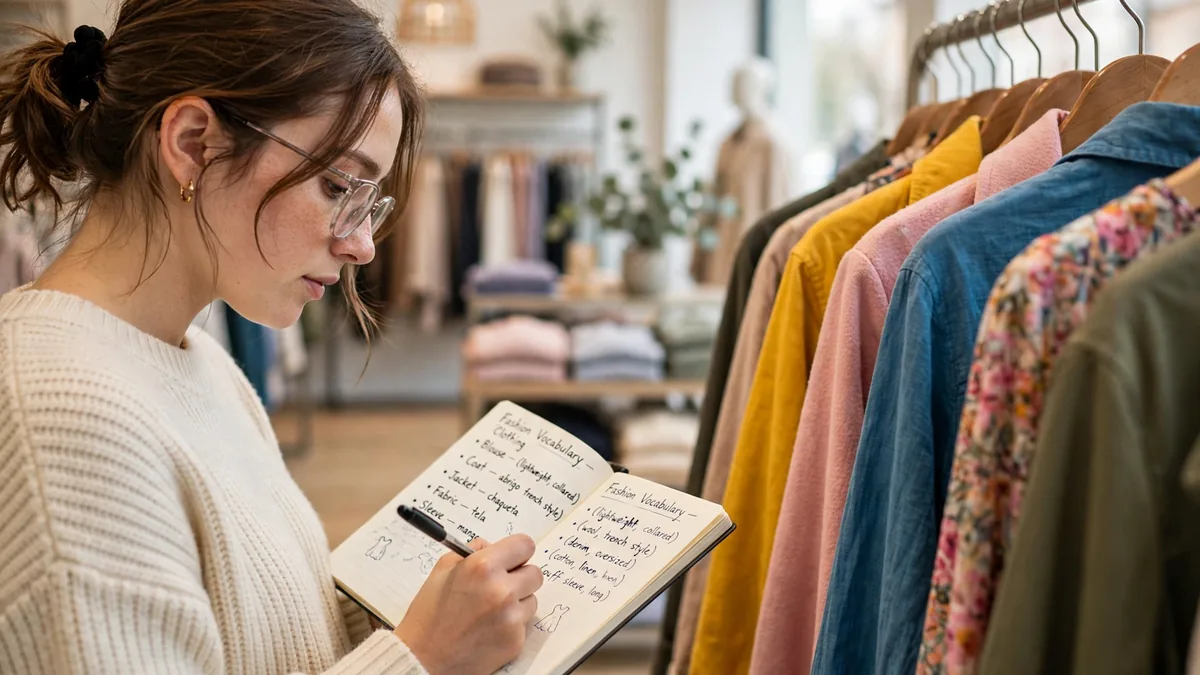
Fashion writing can feel like a foreign language. A product page calls a dress ‘tailored’ and ‘elegant’, a blog praises someone’s ‘vintage layered outfit’, and a shop assistant asks if you want something ‘smart casual’. If English is not your first language or even if it is these everyday fashion words can be confusing, because nobody ever explains them.
This guide fixes that. Below you will find the most common clothing and style words grouped by theme, each with a plain-English meaning and an example sentence you can copy. Once you know these terms, you can read simple fashion guides for everyday style, describe your own clothes accurately, and shop in English without guessing.
Everyday Clothing Words
Start with the words that describe the clothes themselves. These are the terms you will meet in every shop, wardrobe clear-out and fashion article, so they are the best place to begin.
Outfit
An outfit is a complete set of clothes worn together top, bottom, shoes and accessories chosen to work as one look. Example: ‘She wore a simple outfit of jeans, a white shirt and ankle boots.’ People plan outfits for work, parties and travel, usually the night before.
Wardrobe
Your wardrobe is all the clothes you own, not just the cupboard that holds them. When someone says ‘I am updating my wardrobe’, they mean their whole collection of clothing. Example: ‘A small wardrobe of pieces that match is easier to use than a large one that does not.’
Accessory
An accessory is a smaller item worn with your main clothes to complete or change a look a bag, belt, scarf, hat, watch or piece of jewellery. Example: ‘A red scarf is the accessory that makes her plain black outfit interesting.’ Accessories are the cheapest way to refresh old clothes.
Layering
Layering means wearing several thinner pieces one over another, like a T-shirt under a shirt under a jacket. It keeps you comfortable as the weather changes and adds interest to simple clothes. Example: ‘Layering a cardigan over a dress lets her wear summer dresses in autumn too.’
Style and Fit Words
The next group describes how clothes look and fit. These adjectives appear in almost every fashion article and product description, so they are worth learning early especially if you like to explore style tips and fashion trends explained simply before you buy, because the same few words come up again and again.
Tailored
‘Tailored’ describes clothes made or adjusted to fit your body neatly and closely, with clean lines. It is often used for suits, blazers and trousers. Example: ‘A tailored blazer makes even simple jeans look smart.’ The opposite idea is loose or oversized clothing.
Casual
‘Casual’ means relaxed, informal clothing for everyday life jeans, T-shirts and trainers. ‘Smart casual’ is one step tidier: neat trousers or a skirt with a clean top or blazer. Example: ‘The invitation said smart casual, so he wore chinos and a shirt, not a suit.’
Elegant
‘Elegant’ describes a simple, graceful and slightly formal style nothing loud or complicated. Example: ‘She chose an elegant black dress with small gold earrings for the dinner.’ Elegant clothes usually use plain colours, good fabric and very few decorations.
Vintage
‘Vintage’ refers to clothing from an earlier period, usually at least 20 years old, or new clothes designed in that older style. Example: ‘She found a vintage leather jacket from the 1980s in a second-hand shop.’ Vintage is not the same as old or worn out it suggests character and quality.
Fabric and Material Words
Fabric words tell you what a piece is made of, which decides how it feels, how warm it is and how you should wash it. Three terms cover most shopping situations.
Fabric
‘Fabric’ is the general word for the cloth or material clothes are made from cotton, wool, silk and polyester are all fabrics. Example: ‘Choose a light fabric for summer dresses.’ On labels you may also see ‘material’ used with exactly the same meaning.
Breathable
A breathable fabric lets air move through it, so your skin stays cooler and drier. Cotton and linen are breathable; thick synthetic fabrics often are not. Example: ‘A breathable linen shirt is the best choice for a hot day.’ This word appears often in sportswear and summer clothing.
Knitwear
‘Knitwear’ is clothing made by knitting yarn, such as sweaters, cardigans and knitted scarves. Example: ‘Her knitwear drawer is full of soft jumpers for winter.’ Knitted pieces stretch more than woven ones, so they feel softer but can lose their shape if they are hung up wet.
Shopping and Trend Words
Finally, learn the words used in shops and magazines. They help you understand prices, seasons and what is fashionable right now.
Trendy
‘Trendy’ describes something that is fashionable at the moment. Example: ‘Wide-leg trousers are very trendy this year.’ A trendy piece is fun, but trends change quickly classic pieces, the ones that never look dated, are called ‘timeless’ instead.
Statement Piece
A statement piece is one bold item that attracts attention and becomes the focus of an outfit a bright coat, large earrings or unusual shoes. Example: ‘She keeps the rest of her outfit plain and lets the red bag do the talking.’ One statement piece per outfit is usually enough.
Capsule Wardrobe
A capsule wardrobe is a small collection of clothes that all match each other, so you can make many outfits from few pieces. Example: ‘With a capsule wardrobe of 30 pieces, she never struggles to get dressed.’ Here ‘capsule’ means small and complete, like a medicine capsule.
Fashion Terms at a Glance
Here is a quick reference table of the key terms from this guide. Keep it open while you shop or read fashion articles:
| Fashion Term | What It Means | Example Sentence |
| Outfit | A complete set of clothes worn together | Her outfit was jeans, a white shirt and boots. |
| Wardrobe | All the clothes a person owns | He is building a smaller, better wardrobe. |
| Accessory | A small extra item like a bag, belt or scarf | A gold belt is her favourite accessory. |
| Layering | Wearing several thin pieces one over another | Layering keeps her warm in changeable weather. |
| Tailored | Made or adjusted to fit the body neatly | A tailored jacket makes jeans look smart. |
| Casual | Relaxed, informal everyday clothing | They wore casual clothes to the picnic. |
| Elegant | Simple, graceful and slightly formal | She chose an elegant dress for the dinner. |
| Vintage | Clothing from an earlier period, or in that style | He bought a vintage jacket from the 1980s. |
| Trendy | Fashionable at the moment | Wide-leg trousers are trendy this year. |
| Fabric | The cloth or material clothes are made from | This light fabric is perfect for summer. |
| Statement piece | One bold item that is the focus of an outfit | Her red coat is the statement piece. |
How to Use Fashion Words Correctly
Knowing the words is only half the job; using them in the right situation is what makes your English sound natural. Two simple habits help more than memorising long lists.
Learn Words as Whole Outfits
Instead of learning single words, learn them inside a real outfit description: ‘a tailored blazer, a casual T-shirt, elegant shoes’. Your memory holds pictures better than lists, and you will automatically use each word with the clothes it belongs to.
Match the Word to the Occasion
Fashion words carry a level of formality. ‘Elegant’ belongs at a dinner, ‘casual’ at a picnic, and ‘trendy’ in a magazine. Before you use a new word, ask where you read it the situation in the example is usually the situation where the word fits.
Frequently Asked Questions
What Is the Difference Between Clothes, Clothing and an Outfit?
‘Clothes’ is the everyday plural word for the things you wear. ‘Clothing’ is a slightly more formal uncountable word, common in shops and writing. An ‘outfit’ is one complete set worn together. So clothes and clothing are the items; an outfit is a combination of them.
What Does ‘Smart Casual’ Really Mean?
Smart casual sits between casual and formal: neat, clean and tidy, but no suit or tie. Chinos or a skirt, a shirt or a smart top, and clean shoes make a safe smart-casual outfit for most offices, dinners and events.
Is ‘Vintage’ the Same as ‘Second-Hand’?
Not exactly. Second-hand means any used item, whatever its age. Vintage means an older item usually 20 years or more that represents the style of its time. All vintage clothes are second-hand, but most second-hand clothes are not vintage.
How Can I Learn Fashion Vocabulary Faster?
Read short fashion articles and product descriptions in English, save the words you meet more than twice, and write one example sentence about your own clothes for each new word. Ten minutes a day with real examples beats an hour of memorising a dictionary list.
Conclusion
Fashion English is smaller than it looks. A core set of words outfit, wardrobe, tailored, elegant, trendy and the others in this guide covers most of what shops, blogs and magazines actually say. Learn them with examples, use them about your own clothes, and fashion articles will soon read like plain English.