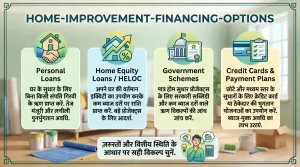

A credit card for home improvement can help homeowners pay for repairs, renovations, appliances, and building materials. The right card may offer 0% introductory APR, cash back, or purchase rewards. However, compare interest rates, fees, credit limits, and repayment terms before using a credit card to finance a renovation.
Key Takeaways
- Home improvement credit cards can help cover renovation materials, repairs, and appliance purchases.
- A 0% introductory APR offer can reduce interest costs if you repay the balance before the promotional period ends.
- Cash back and rewards cards can provide benefits on eligible home improvement purchases.
- High interest rates can make large renovation projects expensive when balances remain unpaid.
- Personal loans, home equity loans, and HELOCs may offer alternatives for larger projects.
Introduction
A credit card for home improvement can help homeowners manage the cost of repairs, upgrades, and remodeling projects. Whether you are replacing kitchen cabinets, installing new flooring, repairing a roof, or buying energy-efficient appliances, the right credit card may make these expenses easier to manage.
However, not every credit card works well for renovation expenses. Some cards offer cash back on eligible purchases, while others provide introductory 0% annual percentage rate (APR) periods that give you more time to repay what you spend. Retail store cards may also offer special financing, but their terms can include important conditions.
Choosing the right option depends on your project budget, credit history, spending habits, and repayment plan. This guide explains how home improvement credit cards work, what features to compare, how to avoid expensive interest charges, and when another financing option may make more sense.
What Does Credit Card for Home Improvement Mean?
A credit card for home improvement is a general-purpose or store-branded credit card used to pay for home repairs, renovations, materials, appliances, and related services.
These cards are not necessarily designed exclusively for homeowners. Instead, people choose cards that offer useful benefits for renovation spending, such as:
- Cash back on eligible hardware store purchases.
- Introductory 0% APR on qualifying purchases.
- Discounts at participating home improvement retailers.
- Rewards on everyday purchases that can offset renovation costs.
- Promotional financing for qualifying purchases.
For example, a homeowner might use a rewards card to purchase paint, lighting, flooring, and plumbing supplies. Another homeowner might choose a card with a promotional APR to spread the cost of a bathroom renovation over several months.
Why Use a Credit Card for Home Improvement?
Using a credit card can offer convenience and flexibility when paying for home projects. However, the benefits depend on the card’s terms and your ability to repay the balance.
Here are some reasons homeowners consider this option:
- Avoid large upfront payments: Spread eligible purchases across multiple billing cycles.
- Earn rewards: Get cash back or points on qualifying renovation expenses.
- Access promotional financing: Pay no interest on eligible purchases during a qualifying 0% introductory APR period.
- Track project expenses: Keep renovation purchases together on monthly statements.
- Handle unexpected repairs: Cover urgent expenses when savings are not immediately available.
A credit card is most useful when you have a clear spending limit and a realistic repayment schedule.
How to Choose a Credit Card for Home Improvement
Before applying for a new card, consider how much your project will cost and how quickly you can repay the money. These five factors can help you compare your options.
1. Look for a 0% Introductory APR
A 0% introductory APR can help you finance renovation purchases without interest during a promotional period. Depending on the offer, the promotional rate may last several months or longer.
Check whether the offer applies to new purchases, balance transfers, or both. Also, calculate the monthly payment needed to clear your balance before the promotional period ends.
2. Compare Cash Back Rewards
Some credit cards offer rewards on home improvement purchases. For example, the Bank of America Customized Cash Rewards card allows eligible cardholders to select home improvement and furnishings as a 3% cash-back category, subject to program limits and terms. NerdWallet
Before choosing a rewards card, check:
- The cash-back percentage.
- Spending limits on bonus categories.
- Eligible retailers and purchase types.
- Annual fees.
- Redemption requirements.
A flat-rate cash-back card may be more practical if you buy materials from several different stores.
3. Check the Credit Limit
Your available credit should cover the purchases you plan to make without putting too much pressure on your finances.
For example, if your renovation costs $8,000 but your available credit is only $5,000, you will need another way to pay the remaining amount. Also, using most of your available credit can increase your credit utilization ratio.
4. Review Interest Rates and Fees
A promotional APR can look attractive, but the regular APR matters if you cannot repay the balance on time.
Review the card’s:
- Regular purchase APR.
- Annual fee.
- Late payment fee.
- Balance transfer fee.
- Foreign transaction fee, if relevant.
- Promotional financing conditions.
The Consumer Financial Protection Bureau (CFPB) explains that APR represents the yearly cost of borrowing on a credit card. Consumer Financial Protection Bureau
5. Check Where You Can Use the Card
General-purpose credit cards usually work at many retailers and service providers that accept their payment network. Store-branded cards may offer special benefits but can restrict where you can use them.
If you plan to buy materials from several retailers or pay different contractors, flexibility matters.
10 Best Credit Card Features and Options for Home Improvement
There is no single credit card that works for every renovation. These 10 options describe the types of cards and features worth comparing before you apply.
1. 0% Intro APR Credit Card
Meaning: This card offers a temporary 0% interest rate on qualifying purchases. It can help you spread renovation expenses across several months without paying purchase interest during the promotional period.
Best For: Large projects with a manageable repayment schedule.
Example 1: You purchase $3,600 in kitchen materials and repay $300 monthly over 12 months.
Example 2: You replace your home’s flooring and use the introductory period to organize payments.
Quick Tip: Divide your balance by the number of promotional months to establish a payoff target.
2. Home Improvement Store Credit Card
Meaning: Retailer-branded cards offer benefits at specific home improvement stores. Some provide discounts, promotional financing, or exclusive cardholder offers.
Best For: Homeowners who regularly shop at one retailer.
Example 1: You purchase lumber, paint, and power tools from The Home Depot.
Example 2: You buy bathroom fixtures and lighting from a participating retailer.
Quick Tip: Check whether the promotional offer uses deferred interest rather than a true 0% introductory APR.
3. Cash Back Credit Card
Meaning: A cash-back card returns a percentage of eligible purchases as rewards. You can use those rewards as statement credits or redeem them through other available methods.
Best For: Homeowners who can pay their monthly balances and want purchase rewards.
Example 1: You earn cash back when purchasing kitchen appliances.
Example 2: You receive rewards on eligible plumbing supplies and home maintenance products.
Quick Tip: Compare the reward rate with any annual fee and spending restrictions.
4. Home Improvement Category Rewards Card
Meaning: This card provides higher rewards on eligible home improvement and furnishing purchases. Some cards let you choose this category instead of other spending categories.
Best For: Frequent renovation shoppers.
Example 1: You select home improvement as your bonus category before purchasing new cabinets.
Example 2: You earn additional rewards on eligible flooring and furniture purchases.
Quick Tip: Confirm which merchants qualify because not every home-related purchase receives bonus rewards.
5. Flat-Rate Rewards Credit Card
Meaning: A flat-rate rewards card provides the same basic reward percentage on eligible purchases across different spending categories.
Best For: Projects involving several stores and service providers.
Example 1: You purchase paint from one retailer and lighting from another while earning the same base reward rate.
Example 2: You use one card for tools, supplies, and eligible contractor payments.
Quick Tip: Compare the flat reward rate with category cards before choosing.
6. Low-Interest Credit Card
Meaning: A low-interest credit card has a relatively lower ongoing APR than other available cards. It may help reduce borrowing costs if you need more time to repay purchases.
Best For: Homeowners who expect to carry a balance.
Example 1: You finance a necessary plumbing repair and repay it over several billing cycles.
Example 2: You spread the cost of replacing damaged windows across several months.
Quick Tip: Compare the actual APR offered to you, not just the advertised starting rate.
7. General-Purpose Rewards Credit Card
Meaning: This type of card works across participating merchants and may provide cash back, points, or travel rewards on everyday purchases.
Best For: Homeowners who do not shop at one specific home improvement retailer.
Example 1: You use the same card at hardware stores, appliance retailers, and online suppliers.
Example 2: You earn rewards while purchasing materials for a backyard renovation.
Quick Tip: Check whether contractor payments count as eligible purchases.
8. Balance Transfer Credit Card
Meaning: A balance transfer card allows you to move qualifying existing credit card debt to another card, sometimes with an introductory promotional APR.
Best For: Homeowners managing existing credit card debt separately from new renovation expenses.
Example 1: You transfer an existing eligible card balance to a card with a lower promotional APR.
Example 2: You reduce interest costs on qualifying debt while keeping renovation spending on a separate account.
Quick Tip: Balance transfers often include fees, and they do not automatically provide 0% financing for new purchases.
9. Retailer Promotional Financing Card
Meaning: Some retailers offer special financing on qualifying purchases above a minimum amount. These offers may provide a set period to repay the purchase without interest if you meet the conditions.
Best For: Large purchases from a participating retailer.
Example 1: You finance a qualifying refrigerator purchase through a retailer’s promotional offer.
Example 2: You purchase a complete set of kitchen appliances during a special financing promotion.
Quick Tip: Read the deferred-interest terms carefully. Missing the payoff deadline could trigger interest dating back to the original purchase.
10. Credit Card With Purchase Protection
Meaning: Some cards provide purchase protection or extended warranty benefits on eligible items. These benefits may help when buying expensive appliances, tools, or household equipment.
Best For: Homeowners purchasing higher-value products.
Example 1: You buy a qualifying power tool and keep the receipt for potential warranty claims.
Example 2: You purchase an eligible appliance using a card that offers additional purchase protection.
Quick Tip: Review coverage limits, exclusions, claim deadlines, and eligible purchase requirements.
Comparison Table
| Card type or feature | Best Used In | Tone of Benefit |
|---|---|---|
| 0% Intro APR | Planned renovations | Cost-saving |
| Store credit card | Single retailer purchases | Retail-focused |
| Cash back card | Everyday purchases | Reward-focused |
| Category rewards card | Hardware stores | Targeted |
| Flat-rate rewards card | Multiple retailers | Flexible |
| Low-interest card | Longer repayment | Budget-conscious |
| General-purpose rewards card | Different merchants | Versatile |
| Balance transfer card | Existing credit card debt | Debt management |
| Promotional financing card | Qualifying large purchases | Short-term financing |
| Purchase protection card | Appliances and tools | Added protection |
Common Mistakes When Using a Credit Card for Home Improvement
Avoid these five mistakes when financing a renovation:
1. Paying only the minimum: Minimum payments may leave a large balance after the promotional period ends. Calculate a realistic monthly payment before making the purchase.
2. Ignoring deferred interest: Some store cards advertise no interest if paid in full. If you miss the deadline, you may owe accumulated interest from the original purchase date. Consumer Financial Protection Bureau+1
3. Exceeding your budget: A large credit limit does not mean you can afford a large renovation. Set a project budget before using your card.
4. Ignoring contractor fees: Some contractors charge additional processing fees for credit card payments. Compare those fees with the rewards you would earn.
5. Applying for several cards at once: Multiple applications can create hard inquiries and may affect your credit score. Compare offers before submitting applications.
Frequently Asked Questions
1. Can I use a credit card for home improvement?
Yes. You can use a credit card to purchase eligible renovation materials, appliances, tools, and repair supplies. Some contractors also accept credit card payments. However, ask about processing fees before paying because additional charges can reduce the value of your rewards.
2. What is the best credit card for home improvement?
The best option depends on your spending and repayment goals. A 0% introductory APR card may suit a project you can repay within the promotional period. A cash-back card may work better if you can pay your balance in full and want rewards on eligible purchases.
3. Can I get 0% APR on home improvement purchases?
Yes. Some general-purpose credit cards offer 0% introductory APR on qualifying purchases. Promotional periods and eligibility requirements vary by issuer. Remember that the regular APR applies after the offer expires if you still have an outstanding balance.
4. Are home improvement store credit cards worth it?
Store credit cards can be useful if you regularly shop at one retailer and can take advantage of its discounts or financing offers. However, compare their regular APRs, deferred-interest conditions, and usage restrictions with general-purpose credit cards before applying.
5. What credit score do I need for a home improvement credit card?
There is no universal credit score requirement. Many rewards cards and attractive introductory APR offers favor applicants with good or excellent credit, but approval depends on several factors, including income, existing debt, payment history, and the issuer’s application criteria.
6. Can I pay a home improvement contractor with a credit card?
Yes, if the contractor accepts credit card payments. However, some contractors charge processing fees that can increase your project cost. Ask about payment methods and fees before signing an agreement or making a large payment.
7. Is a credit card better than a personal loan for home improvement?
It depends on your repayment timeline and borrowing costs. A credit card with a 0% introductory APR can work for expenses you can repay within the promotional period. A personal loan may provide fixed monthly payments and a set repayment term for larger projects.
8. Is home improvement credit card interest tax-deductible?
Generally, interest on an ordinary unsecured credit card used for personal home improvements is not deductible as home mortgage interest. Certain qualifying home equity loan or HELOC interest may be deductible when funds improve the secured residence, subject to IRS requirements. Consult a tax professional about your circumstances. Internal Revenue Service+1
Conclusion
Choosing a credit card for home improvement requires more than comparing rewards and promotional offers. You should consider your renovation budget, available credit, interest rate, repayment timeline, and the places where you plan to shop.
A 0% introductory APR card may help finance a project when you can repay the balance before the promotional period ends. Cash-back and category rewards cards can benefit homeowners who pay their balances regularly and want rewards on eligible purchases. Store cards may also be useful for retailer-specific discounts, but always check their financing conditions.
For larger renovations that require several years of repayment, compare personal loans, home equity loans, and HELOCs before making a decision. Most importantly, borrow only what you can realistically repay. A well-planned financing decision can help you improve your home without creating unnecessary financial pressure.