The best home improvement tips focus on affordable upgrades that make your home more comfortable, attractive, and efficient. Start with fresh paint, better lighting, organized storage, minor repairs, and energy-saving improvements. Set a realistic budget, prioritize essential maintenance, and complete projects that match your home’s needs.
Key Takeaways
- Start with small, affordable projects before planning major renovations.
- Fresh paint, updated lighting, and better storage can transform a room.
- Fix leaks, damaged fixtures, and maintenance problems before they become expensive.
- Choose energy-efficient upgrades to reduce household utility costs.
- Plan every project around your budget, available time, and long-term needs.
home improvement tips
Improving your home does not always require expensive renovations or professional contractors. Small changes can make your rooms look better, improve daily comfort, reduce maintenance problems, and help protect your property’s value.
Whether you own a small apartment, a family house, or an older property, the right home improvement tips can help you make better decisions without wasting money. The key is knowing which projects deserve attention first.
In this guide, you’ll find practical ideas for improving your kitchen, bathroom, bedrooms, living areas, and outdoor spaces. You’ll also learn how to save money on DIY projects, improve energy efficiency, avoid common renovation mistakes, and decide when to hire a professional.
1. Start With a Realistic Home Improvement Budget
Before buying paint, furniture, tools, or building materials, decide how much you can comfortably spend. A clear budget helps you avoid unfinished projects and unnecessary purchases.
Separate your planned expenses into three categories:
- Essential repairs: Roof leaks, plumbing problems, damaged flooring, and electrical issues.
- Functional upgrades: Better storage, improved lighting, and updated fixtures.
- Decorative changes: New paint, curtains, wall art, and decorative accessories.
Keep an additional contingency fund for unexpected costs. Older homes, in particular, may have hidden problems that become visible once renovation work begins.
A good approach is to complete one project at a time rather than starting several renovations together.
2. Give Your Walls a Fresh Coat of Paint
Painting is one of the simplest home improvement ideas for changing the appearance of a room. Clean, freshly painted walls can make an older space feel brighter and better maintained.
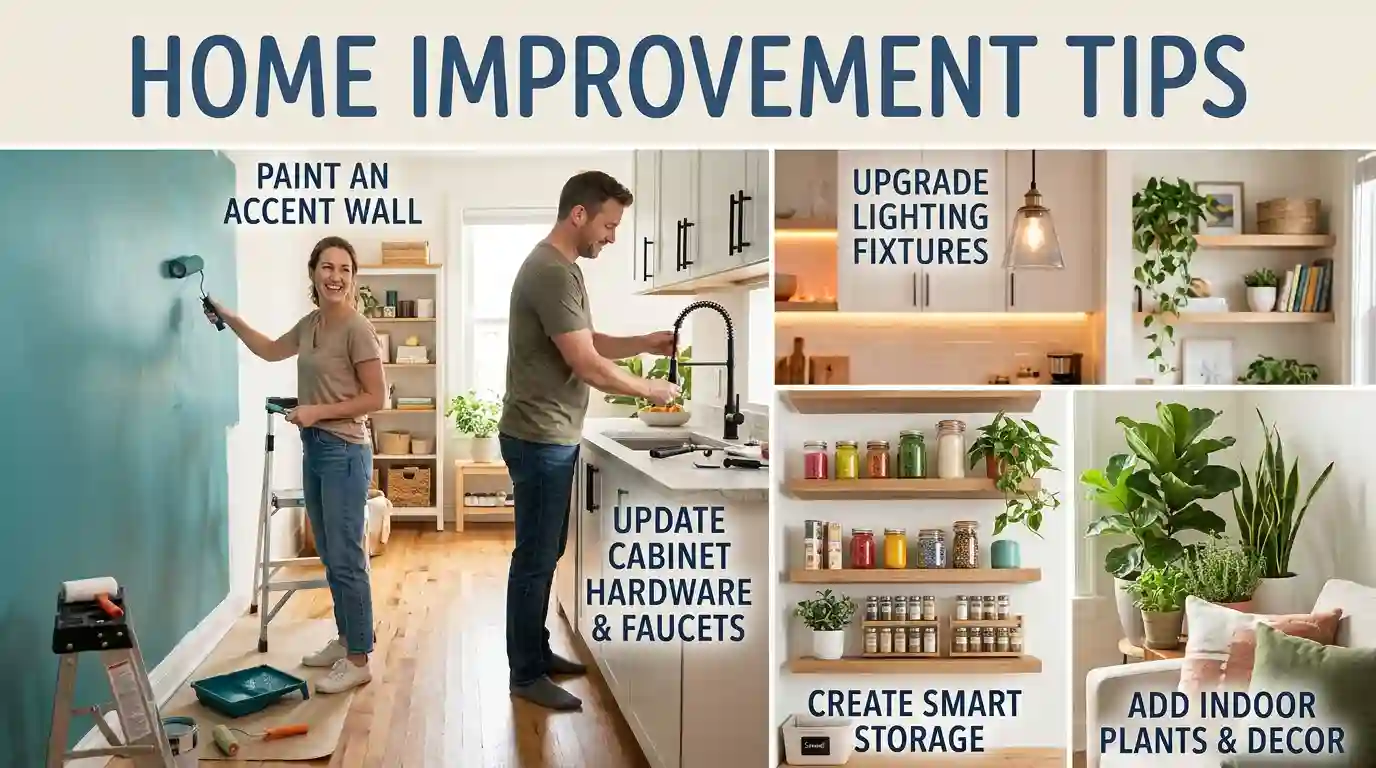
Choose warm white, soft beige, light gray, or other neutral shades if you want a flexible look. You can also create an accent wall with a deeper color to add personality.
Before painting, wash the walls, fill small holes, sand rough areas, and use painter’s tape around edges. Always choose paint designed for the surface and room conditions.
Money-saving tip: Paint smaller rooms yourself if you have the necessary time and preparation skills. Hire a professional for extensive repairs, difficult surfaces, or high ceilings.
3. Upgrade Your Home’s Lighting
Good lighting can change how a room looks and feels. Instead of depending on one overhead fixture, combine different light sources.
Consider these improvements:
- Replace outdated bulbs with suitable LED lighting.
- Add table lamps to dark corners.
- Install under-cabinet lighting in the kitchen.
- Use warm lighting in bedrooms and living rooms.
- Add brighter task lighting near desks and kitchen counters.
Choose bulbs based on their brightness, color temperature, and compatibility with existing fixtures. For new wiring or complex electrical work, use a licensed electrician.
4. Make Your Kitchen More Functional
You do not need a complete kitchen renovation to improve its appearance. Small changes can make cooking, cleaning, and organizing easier.
Start by replacing worn cabinet handles, cleaning backsplash tiles, and organizing crowded countertops. If your cabinets remain in good condition, consider painting them instead of replacing them.
Other useful upgrades include:
- Installing a simple backsplash.
- Adding drawer organizers.
- Replacing an outdated faucet.
- Improving pantry storage.
- Updating old cabinet hardware.
Focus on function before appearance. A kitchen with convenient storage and enough workspace is often more useful than one filled with decorative accessories.
5. Refresh Your Bathroom Without a Full Remodel
Bathrooms can become expensive renovation projects, but several smaller improvements can make a noticeable difference.
Replace worn shower curtains, update cabinet handles, clean grout, and install a modern mirror. You can also replace an outdated vanity light or add practical shelves for towels and toiletries.
Pay attention to ventilation and moisture. Repair leaking faucets, check for damaged caulk, and use an exhaust fan that properly vents outside.
Do not cover signs of water damage with new paint or decorative materials. Find and fix the source of moisture first.
6. Improve Your Home’s Storage and Organization
A cluttered home can feel smaller than it really is. Better storage helps you use available space more effectively without changing the floor plan.
Try these practical ideas:
- Install floating shelves on unused walls.
- Use storage boxes under beds.
- Add hooks behind doors.
- Organize kitchen cabinets with dividers.
- Use vertical shelving in small rooms.
- Create a dedicated space for shoes, bags, and coats.
Before purchasing storage products, remove items you no longer use. This prevents you from spending money organizing things you do not need.
7. Improve Energy Efficiency
Energy-efficient improvements can make your home more comfortable while helping control electricity and heating costs.
Start with simple changes such as replacing old bulbs with LEDs, sealing noticeable air leaks, and checking insulation in accessible areas.
You can also consider:
- Installing a programmable thermostat.
- Adding weatherstripping around doors.
- Sealing gaps around suitable window frames.
- Maintaining heating and cooling equipment.
- Choosing efficient appliances when replacements are necessary.
The U.S. Department of Energy recommends addressing air leaks and insulation as part of a whole-house energy improvement approach. The best upgrades depend on your climate and the current condition of your property.
8. Improve Your Home’s Curb Appeal
Your home’s exterior creates the first impression for visitors and potential buyers. Fortunately, improving curb appeal does not always require major landscaping or construction.
Keep the lawn trimmed, remove weeds, clean the walkway, and maintain outdoor lighting. A freshly painted front door can also give your entrance a more welcoming appearance.
Other affordable improvements include adding flower beds, cleaning the porch, replacing damaged house numbers, and arranging outdoor furniture neatly.
Remember to choose plants that suit your local climate and maintenance preferences.
9. Repair Small Problems Before They Become Expensive
Routine maintenance is one of the most valuable home improvement habits. Small problems can become costly when homeowners ignore them for too long.
Check your home regularly for:
- Leaking faucets and visible plumbing damage.
- Loose door handles and cabinet hinges.
- Cracked or damaged caulk.
- Roof or ceiling water stains.
- Blocked gutters and downspouts.
- Damaged window seals.
Create a simple monthly maintenance checklist. If you notice structural damage, persistent moisture, electrical problems, or serious plumbing issues, contact a qualified professional.
10. Update Flooring and Interior Details
Flooring has a major effect on a room’s overall appearance. However, replacing every floor in your home can become expensive.
First, clean and maintain your existing flooring. Repair loose trim, replace damaged sections where possible, and use suitable rugs to improve comfort.
If replacement is necessary, compare laminate, luxury vinyl plank, tile, and hardwood based on durability, maintenance, installation requirements, and budget.
Do not choose flooring based on appearance alone. Consider moisture levels, household traffic, pets, and the room’s intended use.
11. Make Bedrooms More Comfortable
A comfortable bedroom supports better rest and makes your home more enjoyable.
Start with simple changes such as better curtains, clean bedding, organized closets, and suitable bedside lighting. Rearranging furniture can also create more walking space without spending anything.
If you want a bigger improvement, consider replacing an old mattress, improving window coverings, or adding practical closet storage.
Choose changes that improve everyday comfort rather than following every passing interior design trend.
12. Know When to DIY and When to Hire a Professional
DIY projects can save labor costs, but not every home improvement task is suitable for beginners.
Painting, organizing, installing simple shelves, and replacing decorative hardware are often manageable for homeowners with basic skills.
However, electrical wiring, gas lines, structural changes, major plumbing work, and roofing can involve serious safety risks. These jobs may also require permits, inspections, or licensed contractors.
Before hiring someone, get written estimates, check references, verify insurance and licensing where required, and understand the payment schedule.
For older homes built before 1978, check EPA lead-safe renovation requirements before disturbing painted surfaces.
Citizens+1
13. Create a Simple Outdoor Living Space
Your backyard, porch, or balcony can become a useful extension of your living space. You do not need an expensive outdoor renovation to make it more inviting.
Add comfortable chairs, weather-resistant cushions, outdoor lighting, and a few potted plants. If you have enough room, create a small seating area for family meals or relaxing evenings.
Keep outdoor furniture suitable for your local weather, and inspect wooden decks, railings, and steps for damage before using them.
Common Home Improvement Mistakes to Avoid
Even simple renovation projects can become expensive when homeowners overlook basic planning. Avoid these five common mistakes:
- Ignoring your budget: Buying materials without calculating labor and additional expenses can leave a project unfinished.
- Choosing appearance over function: Attractive upgrades are less useful if they make everyday activities harder.
- Skipping preparation: Painting, flooring, and installation work often fail when surfaces are not prepared properly.
- Attempting complicated DIY repairs: Electrical, structural, gas, and major plumbing work can create serious safety problems.
- Following trends without considering your home: Choose materials and designs that suit your property’s layout, climate, and maintenance needs.
A little research before starting can save money, time, and frustration.
Frequently Asked Questions
1. What are the best home improvement tips for beginners?
Beginners can start with manageable projects such as painting walls, changing cabinet handles, organizing storage, replacing curtains, and updating decorative lighting. These improvements require fewer specialized skills than major renovations. Start with one small project, learn the necessary techniques, and gradually take on more challenging work.
2. How can I improve my home on a small budget?
Focus on changes that use your existing space and materials. Rearrange furniture, repaint walls, replace worn hardware, organize cabinets, and improve lighting. Compare prices before buying supplies and avoid replacing items that still work properly. Small improvements completed consistently can make your home feel noticeably better.
3. Which home improvements add the most value?
Value depends on your location, property condition, buyer preferences, and renovation costs. Projects such as improving curb appeal, maintaining the roof, updating kitchens and bathrooms, and fixing visible damage can make a property more attractive. However, no improvement guarantees a specific increase in resale value.
4. What home improvements can I do myself?
Many homeowners can handle painting, basic landscaping, furniture assembly, shelf organization, and replacing decorative hardware. Choose projects that match your experience and follow manufacturer instructions. Avoid electrical wiring, structural changes, gas work, and complicated plumbing unless you have the proper qualifications.
5. How often should I improve or maintain my home?
Home maintenance should happen throughout the year rather than during one major renovation. Check for leaks, inspect gutters, clean ventilation filters according to manufacturer instructions, and look for damaged surfaces regularly. Seasonal inspections help identify developing problems before they require expensive repairs.
6. What is the cheapest way to make a house look better?
Decluttering, cleaning, rearranging furniture, repainting worn walls, and updating small decorative details are affordable ways to refresh a home. You can also improve natural lighting by cleaning windows and using suitable curtains. Start with changes that cost little or nothing.
7. Should I hire a contractor or do home improvements myself?
The decision depends on the project’s difficulty, safety risks, and your experience. DIY work can suit simple cosmetic projects, while structural repairs, electrical installations, and major plumbing work generally require qualified professionals. Get multiple written estimates and verify relevant licensing and insurance before hiring.
8. What should I improve first in an older house?
Begin with safety and essential maintenance. Check the roof, foundation, plumbing, electrical systems, drainage, and signs of moisture damage. Address urgent problems before investing in decorative upgrades. If the property was built before 1978, consider lead-based paint risks before disturbing painted surfaces.
US EPA+1
Conclusion
Improving your home does not have to mean spending thousands of dollars on a complete renovation. The most effective home improvement tips focus on making practical changes that improve comfort, appearance, safety, and everyday convenience.
Start with essential repairs, then move toward affordable upgrades such as fresh paint, better lighting, improved storage, and kitchen or bathroom updates. If energy efficiency is a priority, consider insulation, weatherstripping, and suitable LED lighting.
Remember to plan your budget, compare materials, and choose projects that match your home’s condition. Do not hesitate to hire qualified professionals when a project involves specialized skills or safety risks.
The best home improvement project is one that makes your home more comfortable, functional, and enjoyable without putting unnecessary pressure on your budget.